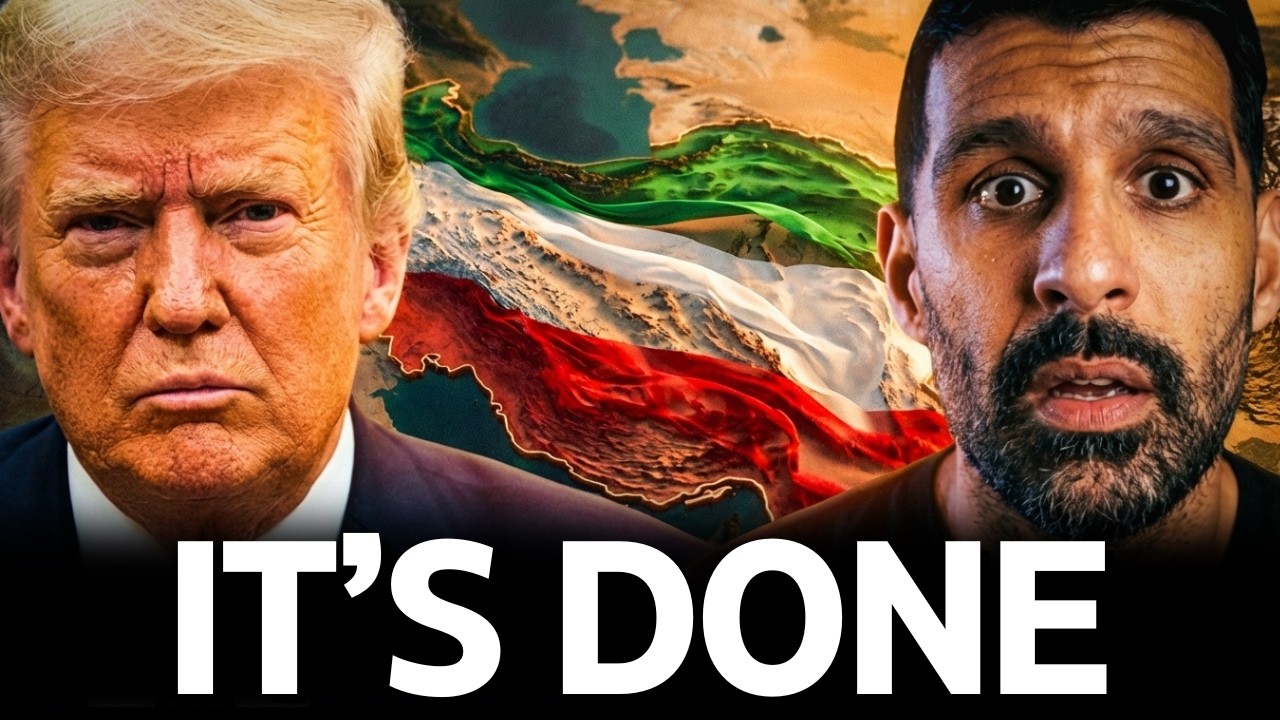
Don't Listen To Everyone's Lies About Iran
Title history
- Don't Listen To Everyone's Lies About Iran — observed on 20261110-0320 UTC (YouTube)
Keywords
Summary
158 words
Critical Evaluation
Value of the Information & Strength of the Argument
The video offers a compelling synthesis of historical facts and forward-looking analysis. Its value lies in reframing Iran from a geopolitically isolated nation to a potential AI and energy powerhouse. The argumentation is structured around concrete examples of other countries’ rapid development (South Korea, Singapore, UAE, Rwanda) and Iran’s unique combination of resources and educated population. However, the reasoning often relies on optimistic speculation and personal conviction rather than rigorous economic modeling. The creator’s passion is evident, which enhances engagement but may overshadow balanced analysis.
Scientific Rigor, Source Quality, Title Accuracy
The video cites specific historical facts and statistics, but many claims are not directly sourced. The creator mentions the Cyrus Cylinder, the Academy of Gondeshapur, and various statistical figures without formal references. The description contains links to the creator’s own products, a book, and a related video, which serve as promotional material. While the historical narrative is generally accurate, the lack of citations reduces scientific rigor. The title appropriately reflects the video’s contrarian stance and matches the content.
178 words
Title / Content Match
The title accurately signals that the video challenges mainstream narratives about Iran, presenting a counter-argument about the country's potential.
Quality & Reliability
6/10
The video combines historical facts with personal perspective and forward-looking speculation. While it references credible historical events and statistics, the economic and AI-related projections are speculative and not backed by formal research.
Key Moments
Markers derived by PSI from the transcript: the creator did not define chapters.
- Introduction: the creator's parents' story and the premise of a free Iran.
- Cyrus the Great and the Achaemenid Empire's achievements.
- Persian contributions during the Islamic Golden Age: al-Khwarizmi, Avicenna, Omar Khayyam.
- The Shah's era, White Revolution, and the 1979 revolution.
- The diaspora and successful Iranian entrepreneurs in tech.
- Economic transformation examples: South Korea, Singapore, UAE, Rwanda.
- The intersection of AI, energy, and Iran's resources.
Cited Sources
- Abundance or Collapse — Book by Farzad mentioned in the video.
- Farzad's article on Iran — Exclusive article referenced in the description.
- The Weird Reality No One Tells You About Getting Rich on Tesla — Related video on the channel.
- Farzad AI — The creator's AI tool for content creators.
- Farzad's website — Creator's official site.
External References
Contribution & Novelties
The original contribution lies in synthesizing Iran’s historical achievements with its future potential in the AI and energy sectors, arguing that the removal of geopolitical constraints will unleash a technological and economic boom. The video provides a fresh perspective by connecting the dots between the Iranian diaspora, educational achievements, and energy resources. While not academically rigorous, it offers a compelling narrative that encourages further exploration.
Pour aller plus loin :
- Cyrus Cylinder — Early declaration of human rights, mentioned in the video.
- Academy of Gondeshapur — World’s first university hospital, referenced.
- Al-Khwarizmi — Father of algebra, whose name gave rise to ‘algorithm’.
102 words
Radar Profile
The scores indicate a video with high information quantity but moderate quality and reliability. The radar profile shows a strong quantity, but lower technical level and reliability, reflecting the video's blend of factual narrative and speculative projections.
💬 On the 30 comments analyzed, the reaction is overwhelmingly positive and supportive, with viewers expressing hope for Iran's future and appreciation for the historical context. There is also a notable sentiment of solidarity from non-Iranians.