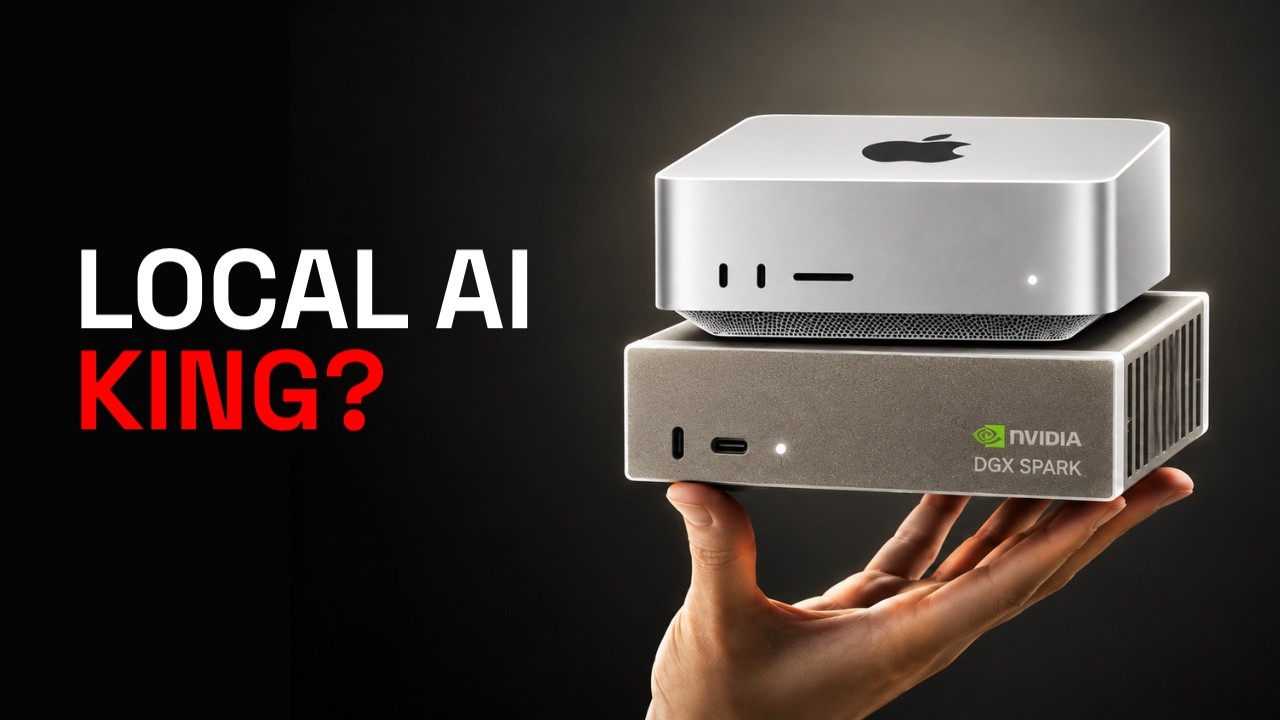
Mac Studio vs DGX Spark: Which Is Better for Local AI?
Title history
- Mac Studio vs DGX Spark: Which Is Better for Local AI? — observed on 20261101-0040 UTC (YouTube)
Keywords
Summary
183 words
Critical Evaluation
Value of the Information & Strength of the Argument
The video’s value lies in its practical, measured approach rather than spec-sheet extrapolation. It provides real tokens-per-second numbers for both prefill and decode, and highlights the often-overlooked prefill bottleneck. The argumentation is structured logically, using a clear analogy and acknowledging both strengths and weaknesses of each machine. The inclusion of community experiences and forum quotes adds credibility, and the creator honestly notes when data is from third-party claims. The main strength is the focus on real-world usability, such as setup time and agent concurrency, which most benchmarks ignore. The argument could be strengthened by referencing more standardized benchmarks, but the overall reasoning is sound and well-balanced.
Scientific Rigor, Source Quality, Title Accuracy
The video demonstrates scientific rigor by clearly stating its testing conditions (M3 Ultra vs. DGX Spark, Qwen 3.5 397B model) and distinguishing between measured data and vendor claims. It explicitly flags uncertainties, such as Apple’s unverified 4x prefill improvement and the reliance on forum posts for setup failures. The creator cites sources like Nvidia’s developer forum and community posts, and acknowledges the limitations of these sources. The title accurately reflects the content. The main weakness is the reliance on a single model (Qwen 3.5 397B) and the lack of reproducibility details (e.g., software versions, quantization methods), but the overall methodology is transparent and honest.
225 words
Title / Content Match
The title accurately reflects the content; the video directly compares the two systems for local AI workloads and reaches a nuanced conclusion based on measured data.
Quality & Reliability
8/10
The video provides measured benchmarks, transparently discloses limitations (M3 Ultra instead of M5 Ultra), and includes community feedback from Nvidia forums. However, some performance claims rely on vendor statements and forum posts that are not independently verified, slightly reducing the overall reliability.
Chapters
Cited Sources
- Channel: kaiexplainsYT — Link to the creator's YouTube channel in the video description.
- Membership page — Link to become a member of the channel, provided in the description.
- Twitter/X profile — Link to the creator's X (Twitter) profile, mentioned in the description.
Contribution & Novelties
The video contributes a practical comparison that emphasizes workflow and setup time over raw specs, which is often overlooked in hardware reviews. It provides a clear explanation of prefill vs. decode and how they map to hardware capabilities, and it incorporates community feedback to illustrate real-world issues. The hybrid setup suggestion is innovative, though it is presented as experimental.
Pour aller plus loin :
- MLX: Apple’s machine learning framework for Apple Silicon — Relevant for understanding Apple’s software stack and its influence on inference performance.
- TensorRT-LLM: NVIDIA’s inference library for LLMs — Directly related to the DGX Spark’s optimized runtime and the source of its prefill advantages.
- vLLM: Fast and easy-to-use LLM inference engine — Central to the Spark’s continuous batching and multi-agent capabilities discussed in the video.
128 words
Radar Profile
The radar profile shows high scores in quantity of information and technical level, indicating a data-rich and deeply technical video. The quality of information is also strong, but the overall reliability is slightly lower due to reliance on unverified vendor specs and forum anecdotes. This profile suggests a video that is highly informative and advanced but with some caveats regarding source verification.
💬 positif - The 30 comments analyzed reflect a generally positive reception, with viewers appreciating the detailed comparison and practical insights. Several acknowledge the trade-offs and share personal experiences, while a few point out minor inaccuracies, but overall the sentiment is favorable and supportive.