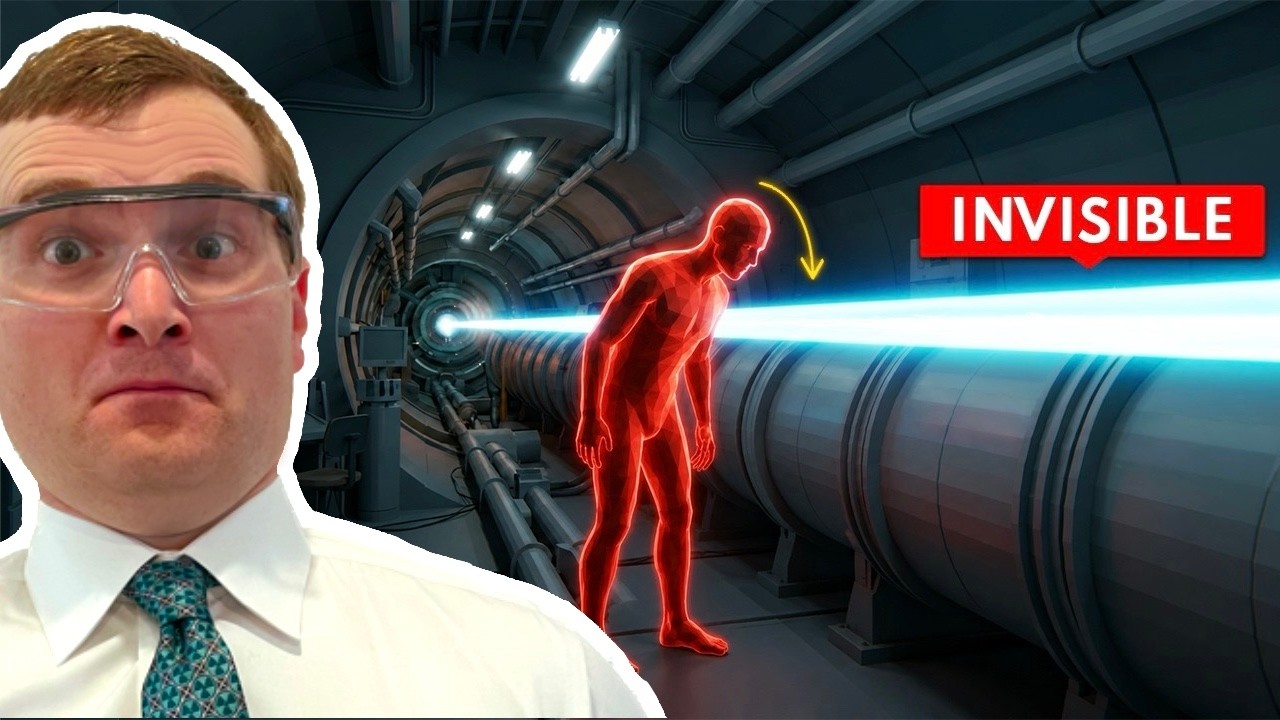
He Put His Head in a Proton Beam - Nuclear Engineer Reacts to Storified
Title history
- He Put His Head in a Proton Beam - Nuclear Engineer Reacts to Storified — observed on 20261119-1828 UTC (YouTube)
Keywords
Summary
174 words
Critical Evaluation
Value of the Information & Strength of the Argument
The video provides high educational value by demystifying the physics of particle accelerators and radiation units. The engineer’s argumentation is solid, grounded in his professional experience in nuclear power plants. He systematically corrects misconceptions in the original story, such as the improper use of Roentgen, and explains the Bragg peak’s role in proton therapy and the accident. His explanations on defense-in-depth and safety culture are authoritative and well-reasoned, offering practical insights applicable to nuclear and industrial safety.
Scientific Rigor, Source Quality, Title Accuracy
Scientific rigor is high: the engineer uses established physics and safety principles, referencing the original Storified video as the primary source. He explicitly mentions the Three Mile Island accident to illustrate configuration control issues. The title accurately captures the content, and the engineer’s corrections reflect a critical and professional approach. The absence of cited external sources beyond the original video is acceptable given the expert commentary format. The title/content alignment is strong, with the engineer’s reaction driving the narrative.
171 words
Title / Content Match
The title accurately reflects the content: the video focuses on the incident of a man putting his head in a proton beam, with an engineer's reaction and analysis. The title is descriptive and matches the video's subject.
Quality & Reliability
8/10
The nuclear engineer provides accurate expert commentary, corrects unit errors (Roentgen vs. Gray/Sievert), and offers detailed explanations of physics and safety culture. No significant factual errors detected, though the analysis is based on a third-party narrative.
Key Moments
Markers derived by PSI from the transcript: the creator did not define chapters.
- Introduction to the story and the engineer's role.
- Explanation of the proton beam energy and the accident scenario.
- Discussion of safety interlocks and configuration failures.
- Review of radiation units (Roentgen vs. Gray/Sievert) and dose calculations.
- Bragg peak explanation and application to proton therapy.
- Survival analysis, medical aftermath, and lessons for nuclear safety culture.
Cited Sources
- Original Storified video (He Put His Head in a Proton Beam) — The reacting video is based on this source, which tells the story of Anatoli Bugorski's accident.
Contribution & Novelties
The video’s original contribution lies in the expert nuclear engineer’s commentary, which corrects technical inaccuracies in the original story and provides deep context on accelerator physics, radiation dosimetry, and nuclear safety practices. The engineer’s insights on defense-in-depth and the importance of safety interlocks are valuable for understanding how such accidents occur and how to prevent them.
Pour aller plus loin :
- Bragg peak — The physical phenomenon central to proton therapy and explanation of the survivor’s reduced dose.
- Proton therapy — Medical application of the same principle, using lower-energy beams to target tumors.
- Defense in depth (nuclear engineering) — Key safety concept referenced in the video, explaining layered protections.
- Three Mile Island accident — Historical event cited by the engineer regarding configuration control.
123 words
Radar Profile
The radar profile shows high scores across all dimensions, with information quantity and quality particularly strong. Technical level is high, reflecting the expert nature of the content. Reliability is solid, as the engineer’s corrections are well-founded. The balanced profile indicates a thorough and trustworthy analysis.
💬 Positive — among the 30 comments analyzed, viewers largely praise the engineer's expertise and humor, with several expressing appreciation for the detailed breakdown and others making light-hearted jokes about the incident.