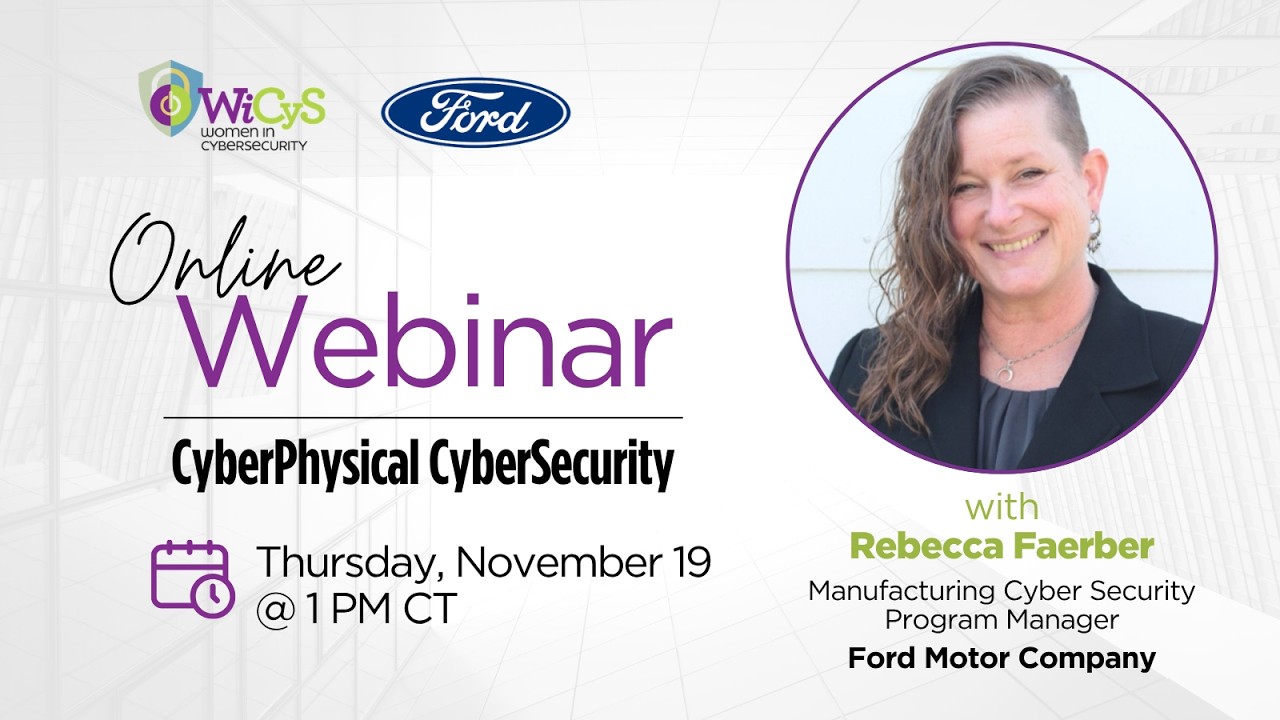
Ford | CyberPhysical CyberSecurity
Title history
- Ford | CyberPhysical CyberSecurity — observed on 20261121-1612 UTC (YouTube)
Keywords
Summary
178 words
Critical Evaluation
Value of the Information & Strength of the Argument
The presentation offers high value by bridging technical cybersecurity concepts with accessible explanations and compelling real-world incidents. Farber’s argumentation is strong in its use of concrete case studies that vividly demonstrate the consequences of cyber-physical vulnerabilities. However, the arguments are primarily anecdotal, relying on well-known events without deep technical analysis or quantitative evidence. Her personal career narrative effectively illustrates the importance of transferable skills and continuous learning, making a persuasive case for career flexibility. The emphasis on human factors as the weakest link is well-supported by examples like phishing and insider threats. Overall, the value lies in raising awareness and providing practical guidance, though the depth of technical argumentation is limited.
Scientific Rigor, Source Quality, Title Accuracy
Scientific rigor is moderate; the speaker draws on professional experience and historical cyber incidents but does not reference formal research papers or standards. The quality of sources is acceptable for a general audience, as the incidents are publicly documented, yet no citations are provided. The title ‘Ford | CyberPhysical CyberSecurity’ is highly adequate, clearly indicating the company sponsorship and the topic focus. No significant discrepancy between title and content exists. The video is a webinar with a clear structure, and the absence of formal academic references is compensated by the presenter’s domain expertise.
219 words
Title / Content Match
The title accurately reflects the content, which focuses on cyber-physical security, particularly in manufacturing and critical infrastructure contexts.
Quality & Reliability
7/10
The presenter, Rebecca Farber, is a Manufacturing Cybersecurity Program Manager at Ford with 24 years of experience, lending strong industry credibility. However, the talk relies on anecdotal case studies and personal experiences without formal citations, making it more informative than rigorously sourced.
Key Moments
Markers derived by PSI from the transcript: the creator did not define chapters.
- Rebecca Farber introduces herself and her career path, from English teacher to data architect to Manufacturing Cybersecurity Program Manager.
- Definition of cyber-physical cybersecurity: anything with digital input and physical output, with examples ranging from vehicles to medical devices.
- Overview of SCADA, ICS, and OT systems, highlighting their function-driven nature, proprietary technology, and patch challenges.
- Case studies of cyber-physical attacks: Ukrainian power grid, German steel mill, San Francisco transit system, and hydropower dam.
- Discussion on professional and personal applicability, including advice for software developers and securing home IoT devices.
- Practical security tips: changing default passwords, revoking access for departed employees, and the importance of segregation of duties.
Contribution & Novelties
The webinar offers an original contribution by combining a personal career narrative with an accessible overview of cyber-physical security, specifically from a manufacturing perspective. It emphasizes the human and organizational factors often overlooked in technical discussions. The presentation makes a compelling case for broader awareness and proactive measures in securing physical systems.
Pour aller plus loin :
- IEC 62443 - Industrial communication networks and system security — Relevant for understanding international standards for industrial automation and control systems security.
- NIST Cybersecurity Framework — A key reference for organizational cybersecurity practices, directly applicable to cyber-physical environments.
- Purdue Enterprise Reference Architecture — Foundational model for levels of control in industrial systems, useful for visualizing network segmentation and security zones.
117 words
Radar Profile
The radar profile shows a balanced but slightly below-average technical depth, with an emphasis on information quantity and moderate reliability. This suggests the content is accessible and broadly informative, but not highly specialized or deeply technical.