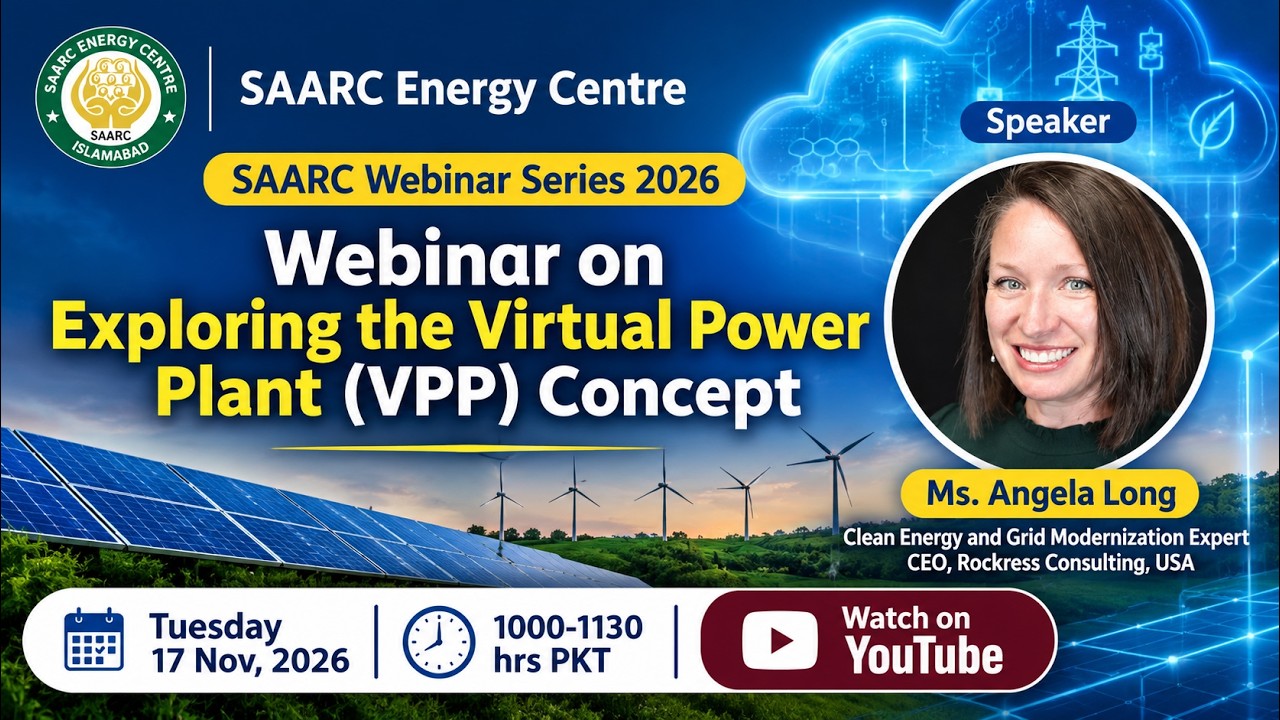
SAARC Webinar on Exploring the Virtual Power Plant (VPP) Concept
Title history
- SAARC Webinar on Exploring the Virtual Power Plant (VPP) Concept — observed on 20261117-0954 UTC (YouTube)
Keywords
Summary
168 words
Critical Evaluation
Value of the Information & Strength of the Argument
The presentation provides a comprehensive and accessible introduction to VPPs, valuable for stakeholders unfamiliar with the concept. The argumentation is coherent, logically progressing from definition to implementation challenges and recommendations. Long demonstrates credibility through her experience and reference to specific case studies, which strengthen the practical relevance. However, the argumentation relies heavily on anecdotal evidence and lacks quantitative data or comparative analyses, limiting the scientific rigor. The benefits are presented optimistically without in-depth discussion of potential drawbacks or costs, yet the overall value is high for an introductory webinar aimed at regional professionals.
Scientific Rigor, Source Quality, Title Accuracy
The scientific rigor is moderate: the presenter is an established expert, and the content aligns with current industry knowledge, but no external citations are provided beyond institutional links. The sources cited in the description are the SAARC Energy Centre website and the specific webinar page, which are organizational rather than peer-reviewed. The title matches the content precisely, as the webinar explores the VPP concept thoroughly. The institutional sponsorship adds a layer of reliability, though the lack of references reduces the ability to verify claims independently. No comments were provided for analysis.
199 words
Title / Content Match
The title accurately reflects the content, which focuses on exploring the VPP concept.
Quality & Reliability
8/10
The webinar provides a well-structured overview of VPPs, drawing on real-world examples and expert experience. However, it is a single expert's perspective and lacks peer-reviewed references, limiting the score.
Key Moments
Markers derived by PSI from the transcript: the creator did not define chapters.
- Opening remarks by SAARC Energy Centre Director
- Introduction of presenter Angela Long and her expertise
- Definition of Virtual Power Plant and Distributed Energy Resources
- Explanation of three VPP profiles: aggregated, integrated, orchestrated
- Benefits of VPPs for grid, consumers, and economy
- US examples: PGE, Pacific Power, National Grid, and US Virgin Islands program
- Challenges and barriers to VPP adoption, including terminology and technical standards
- Recommendations for utilities and regulators, and closing remarks
Cited Sources
- SAARC Energy Centre website — Main institutional website providing background on the center and its activities.
- Webinar on Exploring the Virtual Power Plant (VPP) Concept — Specific page for the webinar, including presentation materials and recording.
Contribution & Novelties
The webinar offers a rare, region-specific introduction to VPPs for South Asian energy professionals, drawing on international examples and providing practical recommendations. Its novelty lies in bridging global experience with local adaptation needs.
Pour aller plus loin :
- Virtual Power Plant - Wikipedia — Provides a comprehensive overview of VPP concepts and applications.
- Distributed Energy Resource - Wikipedia — Details the types and roles of DERs in modern grids.
- IEEE 1547 - Wikipedia — Standard for interconnection of distributed energy resources, key for VPP communication and reliability.
87 words
Radar Profile
The profile shows a balanced high performance across all dimensions, with slightly lower technical depth compared to information quality, indicating a well-structured yet not over-specialized presentation suitable for a broad professional audience.