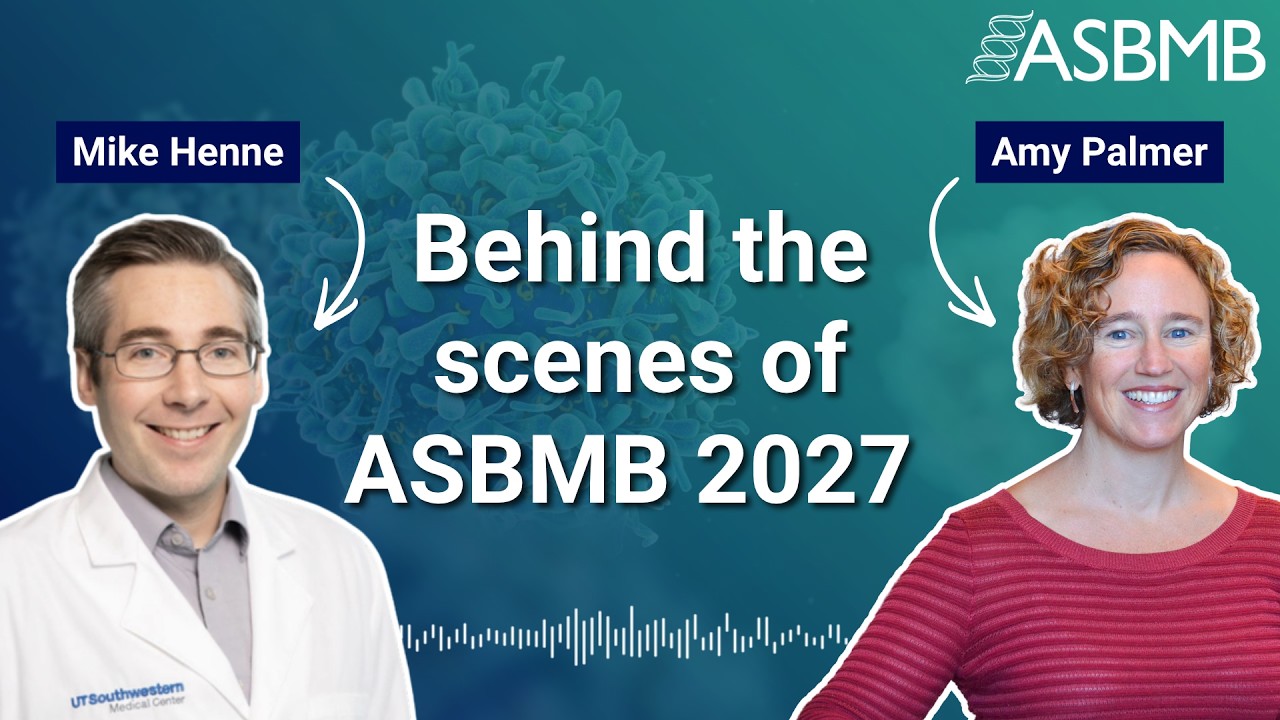
ASBMB 2027: Cutting-edge molecular bioscience in Boston | Mike Henne & Amy Palmer
Keywords
Summary
138 words
Critical Evaluation
Value of the Information & Strength of the Argument
The information provided is valuable for scientists considering attending the meeting, as it outlines the scientific themes and community aspects. The co-chairs argue convincingly that the meeting’s size and interdisciplinary scope facilitate meaningful networking and scientific exchange. However, the argumentation is largely anecdotal and lacks concrete data or past meeting outcomes. The speakers rely on personal experiences and general statements about the field’s evolution, without providing specific examples of how the program has adapted to new discoveries. The discussion of deep dives is descriptive but does not delve into the actual science behind these topics, limiting the depth for expert viewers.
Scientific Rigor, Source Quality, Title Accuracy
The scientific rigor is moderate: the speakers are experts, but no formal citations or references are given within the video. The sources provided in the description are official ASBMB links to the meeting and an accompanying article, which add credibility. The title accurately represents the content, as the video indeed previews the meeting and its focus on molecular bioscience. No external sources are cited, and the claims about the program are based on the co-chairs’ planning roles rather than peer-reviewed research. The discussion is more promotional than analytical, so the reliability of specific scientific claims is limited. No comments were provided for analysis, so public reception cannot be assessed.
225 words
Title / Content Match
The title accurately reflects the content: a preview of the ASBMB 2027 meeting in Boston, featuring the co-chairs discussing the program and community.
Quality & Reliability
6/10
The speakers are credible experts (co-chairs of the meeting) with direct knowledge, but the content is promotional and lacks detailed scientific evidence or citations. The discussion is informative but anecdotal, relying on personal experience rather than systematic analysis.
Key Moments
Markers derived by PSI from the transcript: the creator did not define chapters.
- Introduction of the interview and the first question about what attendees will experience.
- Discussion on the unique aspects of ASBMB's annual meeting, focusing on its size and community feel.
- Overview of cutting-edge science topics: AI in protein design, organoids, stem cells, and phase separation.
- How the scientific program has evolved, with a bottom-up approach of scientists selecting topics.
- Deep dive into the chosen topics: AI-guided protein design, gut microbiome, and organoids.
- Discussion on keynote speaker Peter Kim and his vaccine research.
- Importance of community and interdisciplinary exchange for researchers at all career stages.
- Personal memories from past meetings, highlighting multi-generational connections.
- Closing thoughts on the meeting's role in building bridges between academia and industry.
Cited Sources
- ASBMB 2027 Annual Meeting — Official meeting page referenced in the description for more information.
- ASBMB Today article on the meeting — Linked in the description for a full Q&A with the co-chairs.
Concurring Sources
- ASBMB Annual Meeting — Official source confirming the meeting details and program themes.
Contribution & Novelties
The video provides an insider perspective on the planning and goals of the ASBMB 2027 meeting, highlighting the integration of AI, protein design, organoids, and microbiome research. It emphasizes the meeting’s role in fostering interdisciplinary collaboration and community-building, which is not commonly discussed in scientific literature. The co-chairs explain how the scientific program is curated through a bottom-up process, ensuring relevance and cutting-edge content.
Pour aller plus loin :
- Protein structure prediction (AI) — Directly related to the deep dive on AI-guided protein design and its impact on biochemistry.
- Organoid — The video discusses organoids as model systems for physiology and disease; this page provides an overview.
- Gut microbiota — Related to the microbiome pharmacology deep dive; explains the role of microbial communities in health.
125 words
Radar Profile
The radar profile shows moderate scores across the board, with a slight peak in quantity of information and reliability, reflecting the informative yet promotional nature of the video. The balanced scores indicate a consistent but not outstanding performance in all assessed dimensions.