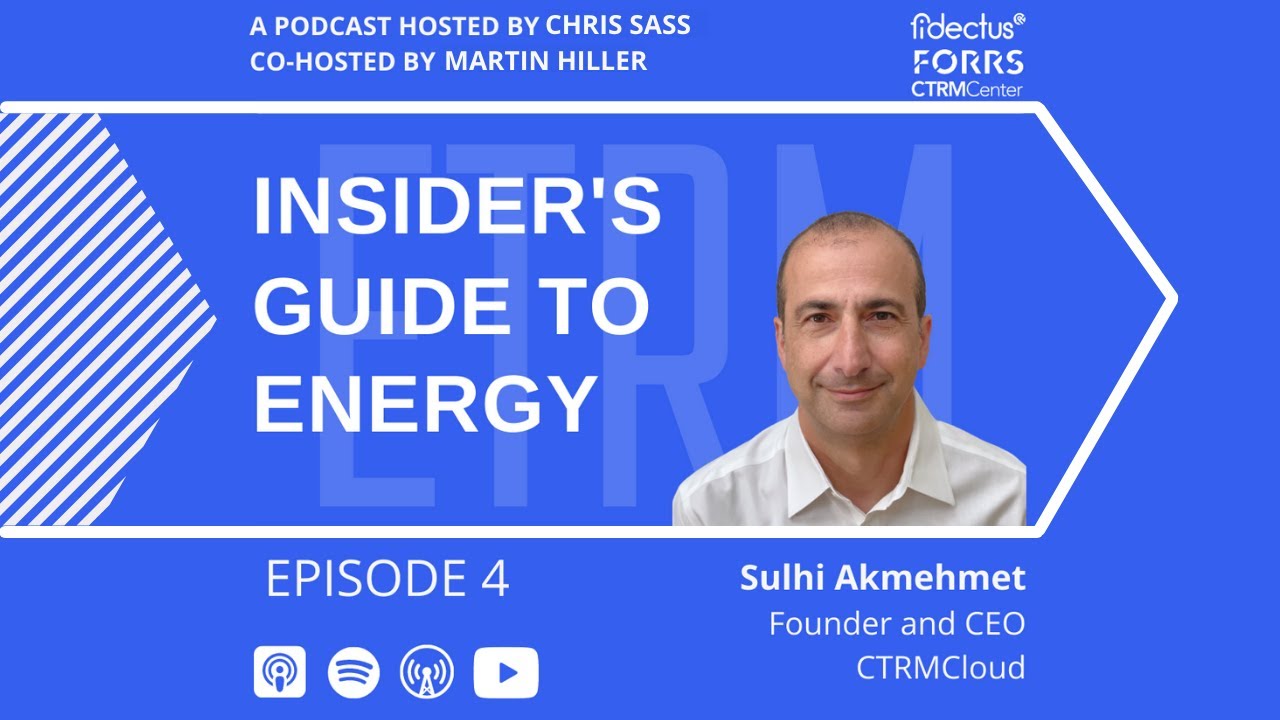
Episode 4 | ETRM Mini-Series with CTRMCloud
Keywords
Summary
166 words
Critical Evaluation
Value of the Information & Strength of the Argument
The interview offers valuable insights into the current state and future direction of the ETRM/CTRM industry. Akmehmet’s arguments are well-structured, drawing on his first-hand experience and providing concrete examples of client challenges and how CTRMCloud addresses them. His differentiation between cloud-hosted and true SaaS, and the explanation of multi-tenant architecture as a means to share public reference data while securing tenant-specific data, is persuasive and technically sound. The discussion of three client segments (small, point-solution, replacement) demonstrates a nuanced understanding of market dynamics. However, as a product promotion, the argumentation lacks independent validation and sometimes veers into marketing language without critical examination of potential drawbacks of SaaS in this high-stakes domain.
Scientific Rigor, Source Quality, Title Accuracy
The content’s scientific rigor is limited; it is an expert opinion piece rather than a peer-reviewed study. The sources used are primarily the company’s own claims and experience; no external references are cited within the conversation. The title accurately describes the episode, matching the content of an industry-focused interview. The description provides links to the ETRM series and CTRMCloud’s page, which serve as additional resources but not as rigorous academic references. While the insights are plausible and aligned with broader industry trends, the lack of external verification and the promotional context reduce the overall scientific credibility.
222 words
Title / Content Match
The title accurately reflects the content: an episode of the ETRM Mini-Series featuring the CEO of CTRMCloud, discussing the company and industry trends.
Quality & Reliability
7/10
The discussion is grounded in the presenter's extensive industry experience and presents a coherent view of the ETRM/CTRM software market and technology trends. However, it remains a promotional interview for CTRMCloud, lacking external citations or independent verification.
Key Moments
Markers derived by PSI from the transcript: the creator did not define chapters.
- Introduction of the ETRM Mini-Series and guest Sulhi Akmehmet.
- CTRMCloud's background and founding, with a distributed team across the US and Europe.
- Discussion of the three Ds - decarbonization, decentralization, digitization - and industry change.
- Differentiation between cloud-hosted and true software-as-a-service models.
- Exploration of renewables, PPAs, and their complexity in long-term and short-term trading.
- CTRMCloud's niche focus on electricity, natural gas, and renewables; customer categories.
- Cloud-native, multi-tenant architecture and the benefits of software-as-a-service for agility.
- Microservices architecture, integration via APIs, and serving clients with modularity.
Cited Sources
- ETRM Education - Insider's Guide to Energy — Main page for the ETRM Mini-Series, providing additional information about vendors.
- CTRMCloud - Insider's Guide to Energy — Dedicated page for CTRMCloud within the ETRM series, likely containing company details.
Contribution & Novelties
The video provides a fresh perspective on the ETRM/CTRM landscape, emphasizing the shift towards cloud-native SaaS and the importance of agility in response to renewable energy integration. The discussion of multi-tenant architecture as a way to share public reference data is an insightful angle that distinguishes true SaaS from hosted solutions. The segmentation of clients into three categories offers a practical framework for understanding market dynamics. Overall, the content adds value by articulating how modern software architecture addresses the limitations of legacy systems.
Pour aller plus loin :
- Software as a service — Foundation for understanding the SaaS model discussed.
- Microservices — Architectural approach central to CTRMCloud’s platform.
- Power purchase agreement — Key contract type in renewable energy trading mentioned in the episode.
- Renewable energy — Broader context for the industry shifts discussed.
133 words
Radar Profile
The radar profile shows moderate scores across all dimensions (quantity, quality, technical depth, reliability), indicating a balanced but not outstanding contribution. The highest scores are in information quantity and quality, reflecting a well-structured interview, while technical depth and reliability are slightly lower due to the promotional nature and lack of independent sources.