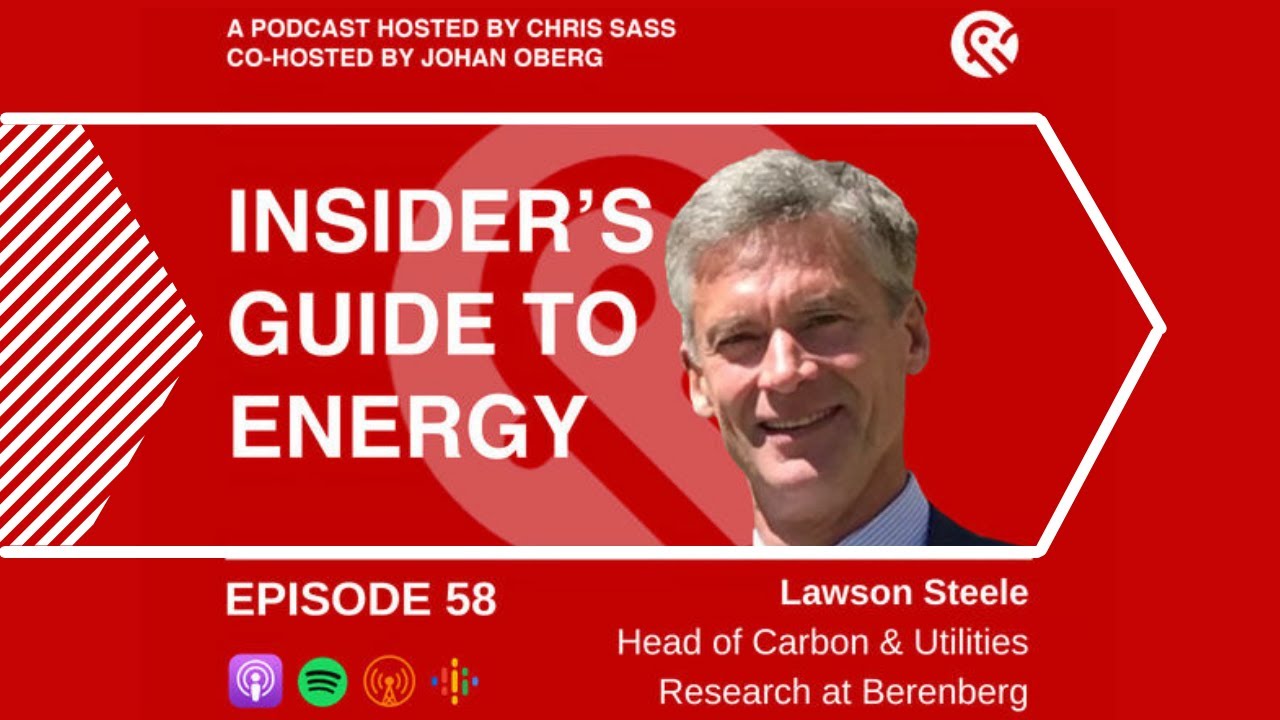
58 - Recent developments on the Carbon Markets with Lawson Steele
Keywords
Summary
228 words
Critical Evaluation
Value of the Information & Strength of the Argument
The video offers valuable insider knowledge from a professional carbon market analyst. Steele provides concrete numbers, forecasts, and clear explanations of market mechanisms, which adds practical value for viewers interested in carbon finance. His argumentation is well-structured, linking supply deficits, compliance deadlines, and price dynamics logically. However, the content is largely opinion-based and forward-looking, with limited discussion of counterarguments or uncertainties beyond the acknowledged noise. The strength of the argumentation lies in the detailed quantitative reasoning and the guest’s direct experience, though it remains subjective.
Scientific Rigor, Source Quality, Title Accuracy
Scientific rigor is moderate. The guest relies on market data and policy knowledge, but no formal citations or peer-reviewed sources are provided. The only external reference is the Berenberg website, which serves as the guest’s institutional affiliation. The title accurately reflects the content, which focuses on recent carbon market developments. The podcast includes a brief sponsorship mention at the start, which does not detract from the informational content. The lack of explicit sources limits verifiability, but the internal consistency of the argument is maintained.
184 words
Title / Content Match
The title accurately reflects the content: the episode discusses recent developments in carbon markets with Lawson Steele, including price drivers, market mechanics, and policy changes.
Quality & Reliability
7/10
The podcast features an expert analyst providing detailed insights and forecasts on carbon markets, but the information is primarily opinion and forward-looking, not peer-reviewed or empirically validated. The guest offers specific quantitative claims and references to market mechanisms, though no external citations are provided beyond the mention of the financial institution Berenberg.
Chapters
Cited Sources
- Berenberg (official website) — Steele's employer and the source of his expertise in financial and carbon market analysis.
Contribution & Novelties
The video provides a up-to-date expert perspective on carbon market dynamics post-2021, including specific supply deficit numbers, the 30 April compliance mechanics, and a critical view of voluntary carbon offsets. It offers actionable insights for investors and industry participants, and frames the EU ETS as a regulated alternative to less reliable offset mechanisms.
Pour aller plus loin :
- European Union Emissions Trading System (EU ETS) — Overview of the scheme’s design and history.
- Carbon offset — Discussion of voluntary offset projects and their credibility challenges.
- Carbon price — General concept of pricing carbon emissions and its economic rationale.
- Fit for 55 — EU legislative package to reduce emissions by 55% by 2030, relevant to future market tightening.
117 words
Radar Profile
The radar profile shows balanced moderate scores across information quantity, quality, and technical level, with slightly lower reliability due to the opinion-based nature. This indicates a useful but not rigorous source, suitable for market awareness rather than academic reference.