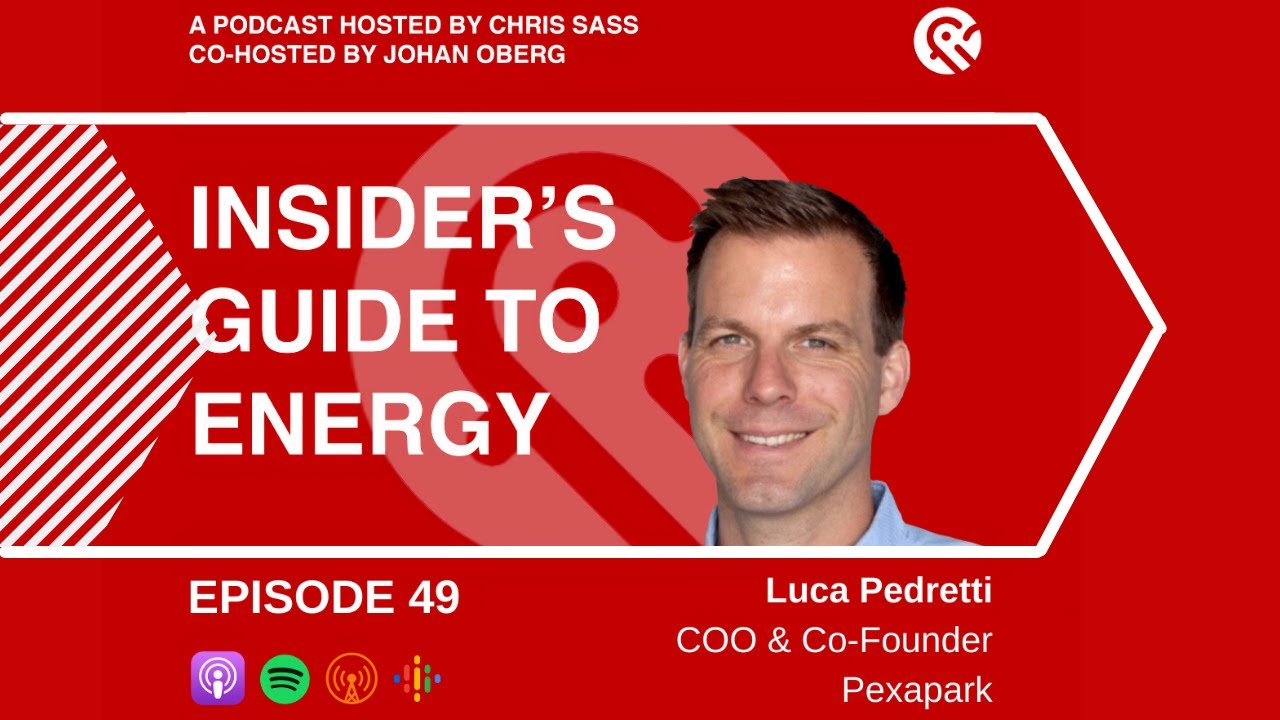
49 - Understanding Power Purchase Agreements
Keywords
Summary
193 words
Critical Evaluation
Value of the Information & Strength of the Argument
The episode provides substantial value by demystifying a complex topic. Luca’s explanations are grounded in practical experience, and he uses concrete examples (e.g., a 100 MW wind farm) to illustrate economic concepts. The argumentation is coherent: he logically progresses from why PPAs are needed, to the risks they entail, to how his company addresses those risks. He acknowledges counterarguments, such as the viability of long‑term contracts given corporate lifespans, and offers reasoned responses. The discussion is persuasive because it presents a balanced view of the challenges and potential solutions in the PPA market.
Scientific Rigor, Source Quality, Title Accuracy
The scientific rigor is appropriate for a podcast, relying on the expertise of the guest rather than formal citations. The only external source mentioned is Pexapark’s website, which is linked in the description. The title accurately reflects the content; the episode indeed focuses on understanding PPAs. No inconsistencies or unsupported claims were noted. The public comments were not provided, so no analysis of viewer feedback is possible.
175 words
Title / Content Match
The title accurately reflects the content, which focuses on explaining power purchase agreements and their role in the energy transition.
Quality & Reliability
8/10
The podcast features an industry expert with deep knowledge of PPAs, providing clear explanations and practical insights. The content is consistent and well-structured.
Key Moments
Markers derived by PSI from the transcript: the creator did not define chapters.
- Guest introduction – Luca Pedretti, co-founder and CEO of Pexapark, is welcomed.
- Definition of a PPA – Luca explains it as a simple contract for the transfer of electrons, with deeper financial implications.
- Why PPAs are replacing subsidies – technology cost reductions and feed-in tariff phase-outs make long-term private contracts attractive.
- The 'holy trinity' of renewable energy risks – price risk, volume risk, and cannibalization risk are explained.
- Market segments – Luca describes the three buyer segments: general corporate, industrial, and gargantuan future demand from electrolyzers/data centers.
- Pexapark's role – providing software and advisory to help clients capture value from PPAs, acting as a 'quant in a box'.
- Credit risk and contract durations – long-term PPAs face credit challenges; shift toward shorter-term agreements is emerging.
- Changing business model – move from project financing to balance-sheet financing, enabling more buyers to participate.
Cited Sources
- Pexapark (Official Website) — Referenced as the company of the guest, a provider of software and advisory for power purchase agreements.
Contribution & Novelties
The video offers an expert practitioner’s perspective on the rapidly evolving PPA market in Europe, clarifying how PPAs work, why they matter, and the key risks involved. It highlights the ‘holy trinity’ of renewable risks—price, volume, and cannibalization—and discusses the challenges of credit risk and changing contract tenors. This is valuable for professionals entering the space and for understanding the transition from subsidy-driven to market-driven renewable financing.
Pour aller plus loin :
- Power purchase agreement — A detailed overview and definition of PPAs.
- Renewable energy in the European Union — Context on the policy and market background.
- Merchant risk — Explanation of market price risk for power generators.
108 words
Radar Profile
The radar profile shows high scores for information quantity and quality, with a moderate technicality level, indicating that the content is both substantial and accessible. The global reliability is strong, making it a trustworthy educational resource on PPAs.