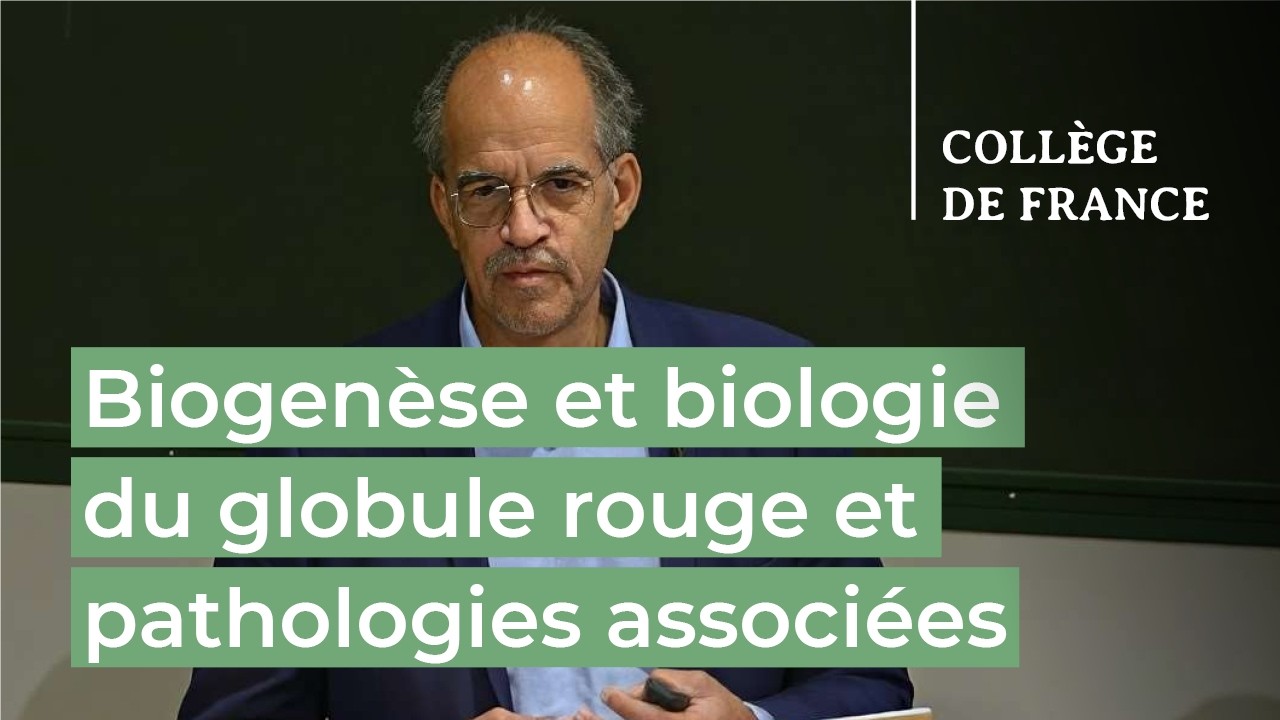
Biogenèse et biologie du globule rouge et pathologies associées - 2026-27 (2)
Biogenesis and biology of the red blood cell and associated pathologies - 2026-27 (2)
Title history
- Biogenèse et biologie du globule rouge et pathologies associées - 2026-27 (2) — observed on 20261118-1243 UTC (YouTube)
Keywords
Summary
201 words
Critical Evaluation
Value of the Information & Strength of the Argument
The lecture provides substantial educational value by synthesizing complex pathophysiological mechanisms into a coherent framework. The argumentation is solid, systematically building from basic biology to pathological consequences. The distinction between defective and ineffective erythropoiesis is clearly articulated with practical implications for treatment. The professor emphasizes the shift in understanding thalassemia as a protein aggregation disease rather than merely a deficiency in beta-globin, drawing parallels with Alzheimer’s and Parkinson’s diseases, which adds conceptual depth. The argument for targeting fetal hemoglobin reactivation is well-supported by molecular mechanisms (BCL11A repression) and clinical benefit. The explanation of erythroferrone’s role in iron regulation illustrates how ineffective erythropoiesis has systemic consequences, reinforcing the lecture’s integrated vision.
Scientific Rigor, Source Quality, Title Accuracy
Scientific rigor is high: the lecture is grounded in established hematology and molecular biology, delivered by an expert professor. Sources are not explicitly cited within the spoken content, but the institutional context (Collège de France) and the description provide links to the course series and the chair’s resources. The title accurately matches the content, which focuses on red blood cell biology and associated pathologies. No data or claims appear to contradict current scientific consensus. The presentation is methodical, referencing evidence explicitly where relevant (e.g., kinetics of erythropoiesis, gene dosage effects). The audience is clearly composed of advanced students or researchers, and the lecture respects that level.
231 words
Title / Content Match
The title accurately reflects the content: the course covers red blood cell biogenesis and biology, focusing on thalassemia as a model of ineffective erythropoiesis.
Quality & Reliability
9/10
Course delivered by Olivier Hermine, professor at the Collège de France, an internationally recognized expert in experimental medicine. The content is rigorously scientific, based on established physiological and pathological concepts, and presented in a structured pedagogical manner.
Key Moments
Markers derived by PSI from the transcript: the creator did not define chapters.
- Introduction: reminder of red blood cell production and the central role of oxygen transport
- Review of hematopoiesis and the regulation of erythropoiesis by erythropoietin and death receptors
- Concept of ineffective erythropoiesis vs. defective erythropoiesis; introduction to erythroferrone
- Hemoglobin structure and oxygen transport; allosteric regulation
- Developmental hemoglobin switching: embryonic, fetal, and adult hemoglobins; role of BCL11A
- Thalassemia as a model of ineffective erythropoiesis: alpha chain excess and protein aggregation
- Erythroferrone, hepcidin, and iron absorption; systemic consequences of ineffective erythropoiesis
- Therapeutic strategies: reactivating fetal hemoglobin; parallels with protein aggregation diseases
- Clinical implications and distinction between quantitative and qualitative hemoglobin defects
- Summary and outlook: upcoming lectures on myelodysplastic syndromes and somatic mutations
Cited Sources
- Course series page: 'Biogenèse et biologie du globule rouge et pathologies associées' — Official page for the 2026-2027 course series, providing access to recordings and materials.
- Olivier Hermine's chair page at Collège de France — Information about the Experimental Medicine chair held by Prof. Hermine.
- Collège de France official website — General resource for courses, seminars, and publications of the institution.
- YouTube playlist of the course series — Playlist containing the full series of lectures (2026-2027).
Concurring Sources
- Erythropoiesis - Wikipedia — General background that corroborates the description of red blood cell production and regulation.
- Thalassemia - Wikipedia — Supports the mechanisms of alpha and beta thalassemia described in the lecture.
- Hemoglobin - Wikipedia — Confirms hemoglobin structure and oxygen-binding properties mentioned.
Dissenting Sources
- No conflicting sources identified — The lecture content aligns with established scientific literature on erythropoiesis, hemoglobin synthesis, and thalassemia. No significant discrepancies were noted within the provided material.
External References
Contribution & Novelties
This lecture provides a modern, integrated view of red blood cell biology, emphasizing the concept of ineffective erythropoiesis as a central mechanism in thalassemia. It highlights the emerging role of erythroferrone in iron metabolism and the translational importance of fetal hemoglobin reactivation. An original contribution is the analogy between the pathophysiology of thalassemia (alpha-chain aggregation) and protein aggregation diseases such as Alzheimer’s, offering a unified perspective on toxic protein conformations.
Pour aller plus loin :
- Erythropoiesis (Wikipedia) — Background on red blood cell production.
- Thalassemia (Wikipedia) — Overview of the disease discussed in the lecture.
- Hemoglobin (Wikipedia) — Structure and function of the oxygen-carrying protein.
- Hepcidin (Wikipedia) — Hormone regulating iron absorption, suppressed by erythroferrone.
- BCL11A — Transcription factor implicated in hemoglobin switching (no URL provided due to uncertainty on exact page).
132 words
Radar Profile
The radar profile shows very high scores across all dimensions (information quantity, quality, technical level, and global reliability), indicating a comprehensive and authoritative lecture. The weakest point, relatively, is information quality, but it remains excellent. This suggests an exceptionally well-structured and scientifically sound course.