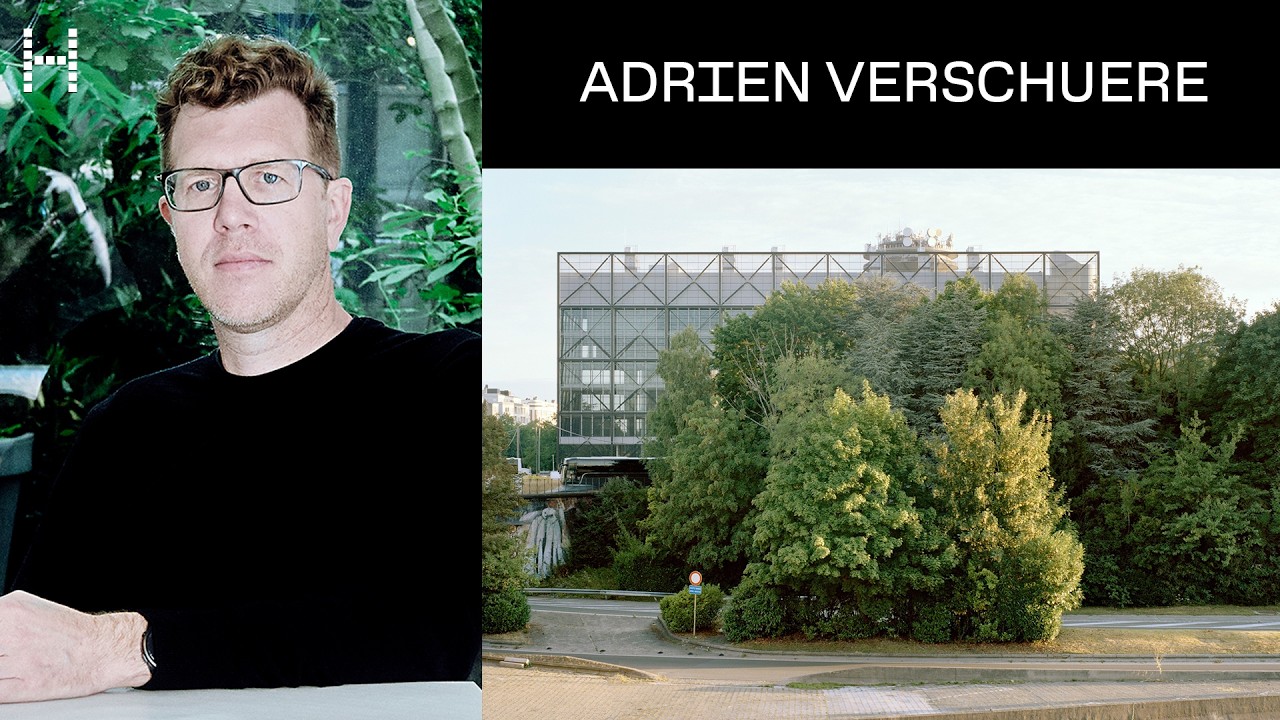
John Portman Lecture: Adrien Verschuere, "Recent Work"
Title history
- John Portman Lecture: Adrien Verschuere, "Recent Work" — observed on 20261120-2140 UTC (YouTube)
Keywords
Summary
135 words
Critical Evaluation
Value of the Information & Strength of the Argument
The lecture provides a clear and thoughtful exploration of how temporal considerations can reshape architectural practice. Verschuere supports his argument with detailed project examples, showing how particular decisions about structure, program, and materiality arise from a concern for adaptability and change. His argumentation is logical, moving from theoretical reflections to specific built works, and is persuasive in demonstrating the pragmatic benefits of designing for uncertainty. The value lies in its integration of theoretical concepts with practical application, offering a model for architects to rethink their role.
Scientific Rigor, Source Quality, Title Accuracy
Verschuere references several credible sources, including the essay by Yaneva and Latour, Michel Serres’ philosophy, and Stewart Brand’s concept of shearing layers. These are used appropriately to support his arguments. The title ‘Recent Work’ accurately describes the lecture, which indeed focuses on recent projects by BAUKUNST. The lecture is not a formal scientific presentation but rather an expert’s professional reflection, so the evidence is primarily drawn from his own practice and design decisions. Within that scope, the lecture is rigorous and well-organized.
183 words
Title / Content Match
The title accurately reflects the content, which focuses on recent architectural projects and theoretical considerations by Adrien Verschuere.
Quality & Reliability
7/10
The lecture is delivered by an established architect with international recognition, providing a coherent and well-structured presentation of professional projects. While not peer-reviewed, it is grounded in theoretical references and detailed practical examples, making it reliable within the domain of architectural practice.
Chapters
Cited Sources
- Give Me a Gun and I Will Make All Buildings Move — Essay cited by Verschuere to discuss buildings as movement.
- How Buildings Learn — Stewart Brand's concept of shearing layers mentioned in relation to building adaptability.
- Michel Serres' work on topology — Referenced to argue for history as a topological geography.
Contribution & Novelties
Verschuere’s contribution lies in articulating a design philosophy that treats architecture as a temporal, evolving entity rather than a static object. By presenting a range of projects that prioritize adaptability, disassembly, and engagement with historical context, he offers a concrete alternative to conventional practice. His approach challenges architects to consider the future and the past simultaneously, and to design for uncertainty. The lecture also highlights a method of using representation and image-making not just for presentation but as a design tool to explore possibilities.
Pour aller plus loin :
- How Buildings Learn — Stewart Brand’s book details the concept of shearing layers, directly relevant to Verschuere’s emphasis on adaptable building components.
- Bruno Latour — Latour’s work on actor-network theory underlies the essay co-authored with Yaneva about buildings in movement.
- Michel Serres — Serres’ philosophical ideas on time and topology inform Verschuere’s approach to history.
144 words
Radar Profile
The radar profile indicates high scores in quantity of information and technical level, reflecting a dense and specialized lecture. Quality and reliability are moderate, as the content is based on personal experience and theoretical references rather than empirical data.