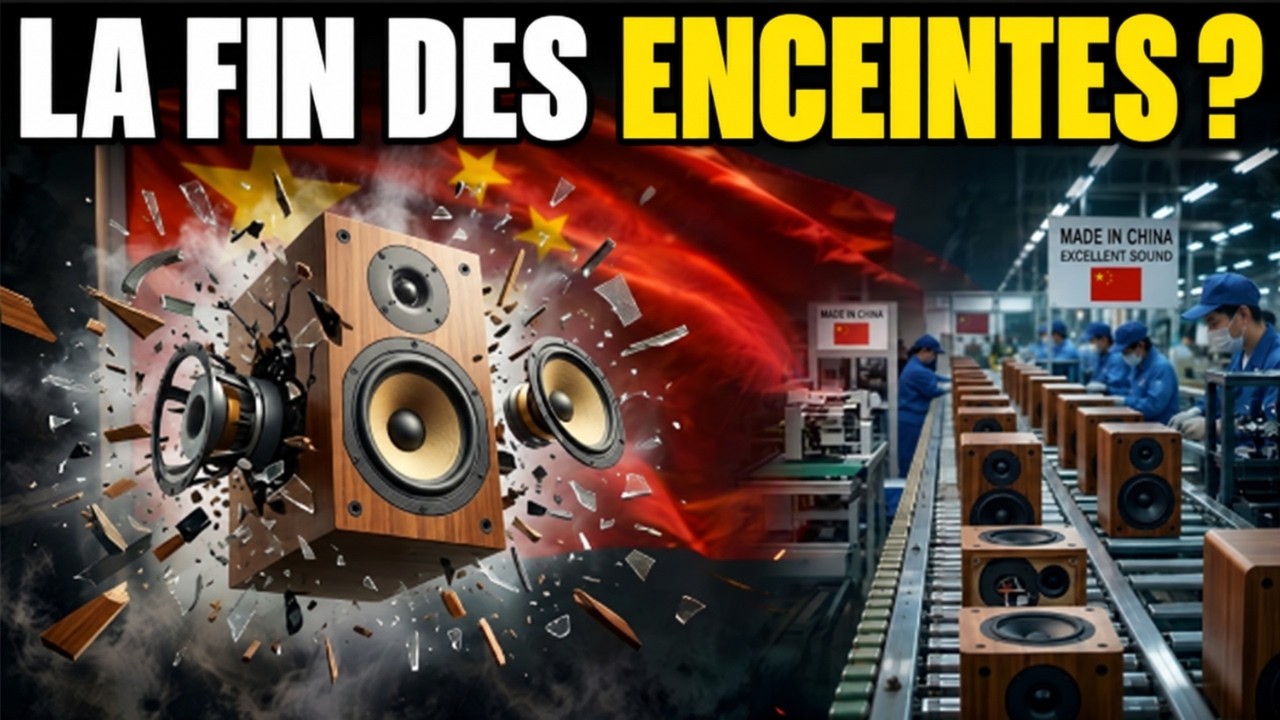
Les haut-parleurs à 40 $ de Chine détruisent un monopole Hi-Fi de 68 milliards $ - Découvrez…
China's $40 speakers destroy a $68 billion Hi-Fi monopoly - Find out more…
Title history
- Les haut-parleurs à 40 $ de Chine détruisent un monopole Hi-Fi de 68 milliards $ - Découvrez… — observed on 20261031-2325 UTC (YouTube)
Keywords
Summary
168 words
Critical Evaluation
Value of the Information & Strength of the Argument
The video provides valuable insights into the economics of the audio industry, including production costs, brand consolidation, and legal strategies. Its argument is coherent: Chinese manufacturing scale has enabled low-cost competition that challenges incumbent monopolies. The use of specific examples (e.g., Hosman Audio, Anker) and cost tables strengthens the narrative. However, the argumentation sometimes oversimplifies complex market dynamics, and the claim that a ‘68 billion dollar monopoly’ is being ‘destroyed’ is hyperbolic. The video effectively connects historical events (Harman’s formation, Samsung acquisition) to the current competitive landscape, offering a compelling story backed by illustrative data points.
Scientific Rigor, Source Quality, Title Accuracy
The video cites several concrete sources: madeinchina.com as a sourcing directory, court documents related to the Harman-Klipsch lawsuit, and corporate financial figures (e.g., acquisition prices). However, it does not provide direct links to primary sources, reducing its scientific rigor. The title accurately reflects the content, and the video is well-structured with a clear narrative arc. While the content is informative, it lacks academic citations and relies heavily on industry estimates (e.g., 80% of world audio production, market size projections). The title’s provocative wording is appropriate for YouTube but may overstate the impact. Overall, the video is reliable for general awareness but not for detailed research.
216 words
Title / Content Match
The title accurately reflects the central theme of the video—cheap Chinese speakers challenging the traditional Hi-Fi market dominated by established brands like Harman. The $68 billion figure refers to the expected global speaker market by 2030, which is mentioned in the video. The title is slightly sensationalist but remains faithful to the content.
Quality & Reliability
6/10
The video presents a well-structured narrative with specific data points (production costs, market figures, legal timelines) and references to public sources like madeinchina.com and legal filings. However, some claims are presented without direct citation, and the tone is sensationalist (e.g., 'destroy a monopoly'). The resolution of the lawsuit is based on court documents, but the video does not provide external verifiable links for all statements, justifying a moderate reliability score.
Key Moments
Markers derived by PSI from the transcript: the creator did not define chapters.
- Introduction: the disparity between low-cost Chinese speakers and branded versions, tease of the monopoly disruption.
- History of Sidney Harman and founding of Harman International, creation of the first integrated hi-fi receiver.
- Acquisition spree of audio brands (JBL, AKG, etc.) and transformation into automotive audio supplier.
- 2017 Samsung acquisition of Harman for $8 billion, expansion into luxury audio with Sound United purchase.
- Focus on Shenzhen and Guangzhou as global manufacturing hubs, cost breakdown of Bluetooth speakers, and rise of Anker.
- Resolution of the Harman-Klipsch lawsuit with a confidential settlement, and concluding thoughts on the real disruptor.
Cited Sources
- madeinchina.com — Cited as an online sourcing directory listing thousands of speaker factories and models.
Concurring Sources
- Harman International — Corroborates Harman's history, acquisitions, and Samsung acquisition.
- Anker (company) — Supports the account of Anker's founding and growth.
- Shenzhen — Confirms Shenzhen's status as a special economic zone and electronics manufacturing center.
Contribution & Novelties
The video contributes a concise and engaging overview of the audio industry’s structural shift, connecting historical corporate strategies (Harman’s acquisitions) with modern low-cost manufacturing in China. It offers specific production cost figures and a clear explanation of white-label, ODM, and OEM models. The narrative underscores the decoupling of manufacturing from branding, which is a key insight for understanding market disruption.
Pour aller plus loin :
- Harman International - Wikipedia — Provides detailed history and corporate structure of Harman.
- Anker Innovations - Wikipedia — Background on Anker and its Soundcore brand, illustrating direct-to-consumer model.
- Shenzhen Special Economic Zone - Wikipedia — Context on Shenzhen’s transformation into a manufacturing hub.
108 words
Radar Profile
The profile shows a high quantity of information (8) balanced by moderate quality (6) and reliability (6), reflecting a well-sourced but not academically rigorous presentation. Technical depth is lower (5), indicating accessibility to a general audience. Overall, the video is informative but not highly authoritative.