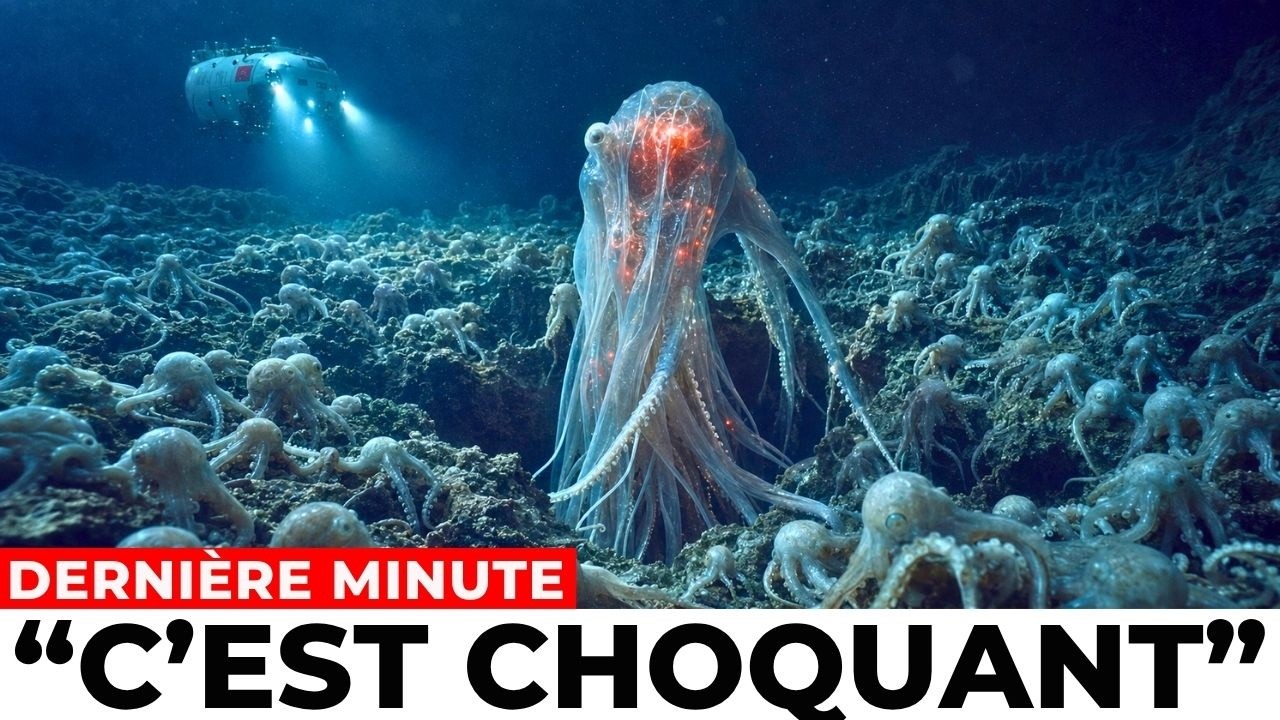
La Chine a atteint 7 Miles sous l’océan — sa découverte dans la fosse des Mariannes a choqué
China reached 7 Miles under the ocean — its discovery in the Mariana Trench shocked
Title history
- La Chine a atteint 7 Miles sous l’océan — sa découverte dans la fosse des Mariannes a choqué — observed on 20261101-0056 UTC (YouTube)
Keywords
Summary
118 words
Critical Evaluation
Value of the Information & Strength of the Argument
The video effectively communicates the excitement and significance of deep-sea exploration. It provides a clear narrative arc, from the historical context of early dives to China’s technological leap and the surprising biological discoveries. The argumentation is persuasive, using vivid imagery and specific numbers to convey the scale of the findings, such as 7,000 species and the density of chemosynthetic communities. However, the lack of explicit citations and the reliance on a dramatic tone weaken the scientific rigor. The inclusion of microplastics offers a balanced perspective, highlighting both the promise of discovery and the threat of pollution.
Scientific Rigor, Source Quality, Title Accuracy
The video does not cite specific scientific papers or provide URLs in the description, relying instead on general claims and historical accounts. While the events described are based on real expeditions, the omission of verifiable sources reduces its reliability. The title is appropriate and not misleading, as it correctly presents the dive depth and the surprising nature of the discoveries. The video’s own disclaimer acknowledges simplification, which tempers expectations for academic precision.
183 words
Title / Content Match
The title accurately reflects the core content: the video covers China's dive to about 11 km (≈7 miles) in the Mariana Trench and the surprising discoveries, including biodiversity and pollution.
Quality & Reliability
6/10
The video presents plausible scientific expeditions and discoveries, but it lacks direct citations to peer-reviewed sources and relies on a popular science narrative. Specific numbers such as 7,000 species and 89% new species are mentioned without verifiable references.
Key Moments
Markers derived by PSI from the transcript: the creator did not define chapters.
- Introduction to China's record-breaking dive in the Mariana Trench.
- Description of the trench's depth and extreme pressure conditions.
- History of Jiaolong and Shenhai Yongshi submersibles.
- The 2020 dive and subsequent campaign with 33 dives.
- Discovery of chemosynthetic ecosystems and new species.
- Findings of microplastics and implications for astrobiology.
Contribution & Novelties
The video synthesizes recent Chinese deep-sea research into an engaging narrative, highlighting the discovery of extensive chemosynthetic life at depths previously considered near-lifeless. It connects these findings to broader astrobiological implications and raises awareness about plastic pollution in the most remote marine environments. The original contribution lies in its accessible presentation of a complex scientific story, though it does not offer new data beyond what is publicly reported.
Pour aller plus loin :
- Mariana Trench — Essential background on the geology and exploration history.
- Chemosynthesis — Explains the biological process powering deep-sea communities.
- Fendouzhe — Details on the Chinese submersible and its missions.
- Microplastics in the deep sea — Context on plastic pollution reaching oceanic depths.
116 words
Radar Profile
The radar profile shows relatively high scores for information quantity, but moderate for quality, technical level, and reliability. This suggests an engaging and content-rich documentary that sacrifices scientific depth for narrative impact.