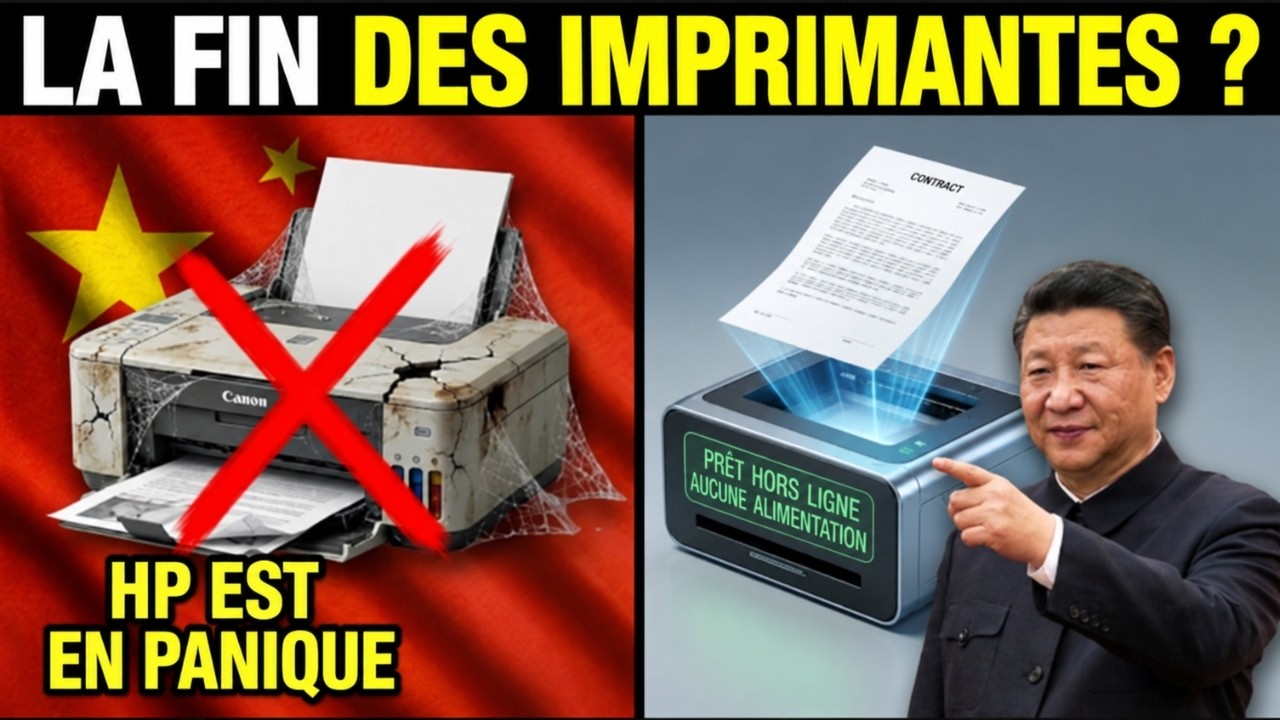
La Nouvelle Invention Chinoise Pourrait Remplacer Les Imprimantes Pour Toujours
The New Chinese Invention Could Replace Printers Forever
Title history
- La Nouvelle Invention Chinoise Pourrait Remplacer Les Imprimantes Pour Toujours — observed on 20261031-2332 UTC (YouTube)
Keywords
Summary
171 words
Critical Evaluation
Value of the Information & Strength of the Argument
The video provides valuable insights into the ink cartridge business model and introduces the scientific concept of structural color in an accessible way. The argumentation is persuasive but relies heavily on speculation and rhetorical devices rather than concrete data. The narrator builds a logical chain from the high cost of ink to the disruptive potential of laser-based printing, but often overstates the immediacy of market impact. The economic analysis is simplistic, overlooking factors such as the cost of special paper and the challenges of mass production. The geopolitical framing is interesting but may exaggerate the strategic threat. Overall, the video is thought-provoking but lacks rigorous evidence.
Scientific Rigor, Source Quality, Title Accuracy
The video does not cite specific scientific papers or reports, and the description provides no external links. It makes broad claims about the technology and its implications without sourcing them. The title accurately reflects the content, but the video includes extended commentary on business and geopolitics beyond the invention itself. The production quality is good, but the lack of verifiable references reduces its scientific credibility. The comments section shows that viewers are skeptical about the practicality of the special paper required, which aligns with the video’s omission of cost and availability details.
213 words
Title / Content Match
The title accurately reflects the content, though the video expands into geopolitical and economic analysis beyond the mere invention.
Quality & Reliability
5/10
The video is engaging and covers a real scientific topic, but lacks specific citations, relies on sensationalism, and presents speculative economic scenarios without evidence.
Key Moments
Markers derived by PSI from the transcript: the creator did not define chapters.
- Introduction to the high cost of ink and the printer industry's business model.
- Explanation of the razor-and-blades strategy and digital locks on cartridges.
- Introduction of the morpho butterfly and structural color as inspiration.
- Description of the femtosecond laser technology and the special paper requirement.
- Discussion of industrialization in China and potential market disruption in the US.
- Conclusion on the geopolitical consequences and a question to viewers.
Contribution & Novelties
This video’s original contribution lies in framing a niche scientific innovation as a potential economic and geopolitical disruptor. It connects the physics of structural color to the business model of printer manufacturers, offering a novel narrative that combines technology, economics, and international competition. However, it does not provide in-depth technical details or original research.
Pour aller plus loin :
- Structural color — Explanation of the physical phenomenon that the video references, without which the core concept is hard to grasp.
- Femtosecond laser — Overview of the laser technology used in the proposed printer, detailing its principles and applications.
- Razor and blades business model — The economic strategy described in the video as the foundation of the ink cartridge industry.
119 words
Radar Profile
The radar profile shows a balanced but moderate performance: information quantity is decent, but quality and reliability are lower, indicating a sensationalist rather than rigorous approach. Technical level is moderate, making it accessible to general audiences.
💬 Skeptical. Sur les 30 commentaires analysés, le climat est largement sceptique, de nombreux commentateurs soulignent que les imprimantes sans encre nécessiteront un papier spécial coûteux, remplaçant un monopole par un autre. Certains commentaires expriment un espoir de rupture avec les cartouches traditionnelles, mais la majorité doute de la viabilité économique réelle.