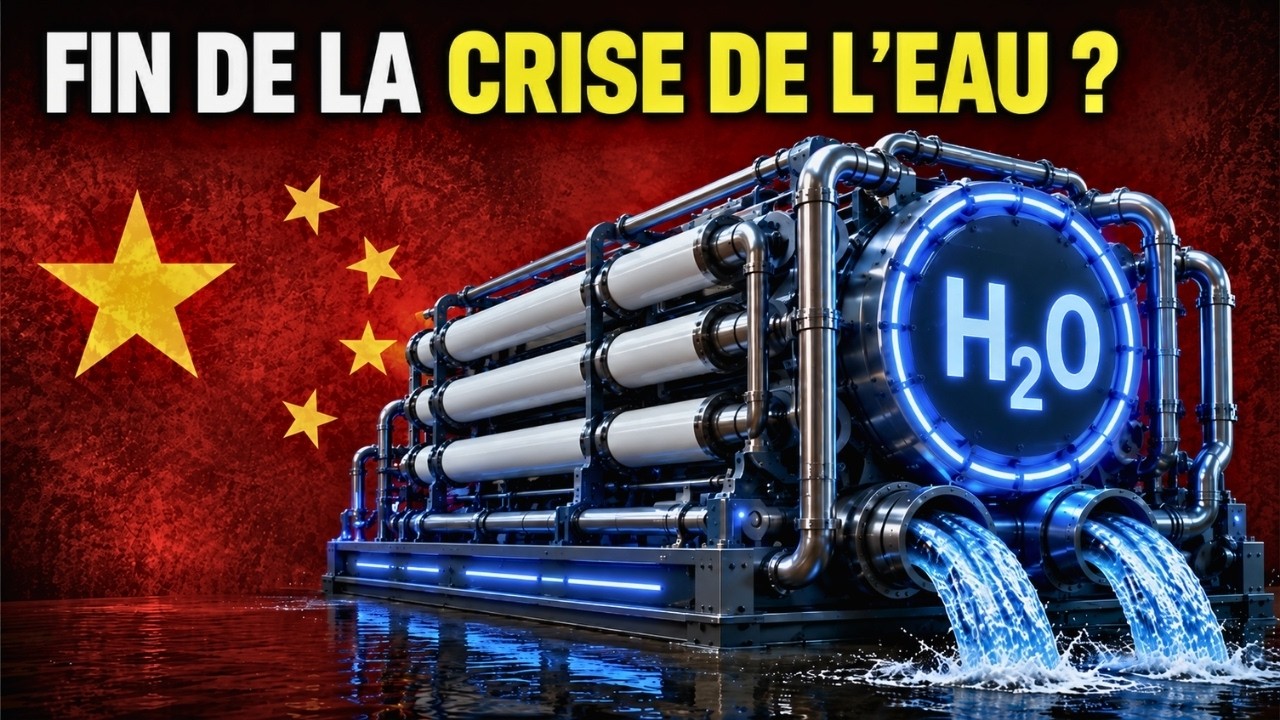
La Chine a créé une machine qui pourrait résoudre la crise mondiale de l’eau
China has created a machine that could solve the global water crisis
Title history
- La Chine a créé une machine qui pourrait résoudre la crise mondiale de l’eau — observed on 20261101-0050 UTC (YouTube)
Keywords
Summary
143 words
Critical Evaluation
Value of the Information & Strength of the Argument
The video provides a clear and accessible explanation of a novel desalination approach, highlighting its potential benefits over traditional reverse osmosis. However, the argumentation is largely based on claims from Chinese engineers without concrete evidence or peer-reviewed sources. The reasoning about economic advantages is plausible but speculative, lacking quantified comparisons. The narrative is engaging but often oversimplifies complex engineering challenges, potentially misleading viewers about the readiness of the technology.
Scientific Rigor, Source Quality, Title Accuracy
The video does not cite any specific research papers or official sources, relying on general knowledge and assumptions. Key facts, such as the Colorado River supplying 40 million people, are stated without references. The title promises a solution to the global water crisis, which is an overstatement given the early stage of the technology. While the content is coherent, its scientific rigor is limited by the absence of verifiable data and the promotional tone towards Chinese innovation.
161 words
Title / Content Match
The title accurately reflects the central topic of a Chinese machine aimed at water crisis, though it overstates the potential impact by implying a definitive solution.
Quality & Reliability
5/10
The video presents an overview of a claimed Chinese desalination technology but lacks specific citations, peer-reviewed references, or independent verification. It relies on broad narrative and assertions, making its reliability moderate at best.
Key Moments
Markers derived by PSI from the transcript: the creator did not define chapters.
- Introduction of the paradox: being thirsty while surrounded by ocean water.
- Importance of water for economies and the Colorado River crisis.
- Explanation of reverse osmosis failures, including fouling and brine.
- Introduction of the new Chinese technology and its thermal crystallization process.
- Economic implications and comparison with the US water challenges.
Contribution & Novelties
The video offers an original perspective on a nascent desalination technology, framing it as a potential game-changer in water supply. It introduces the concept of thermal crystallization without contact and connects it to broader geopolitical and economic implications. However, the novelty is presented without rigorous backing, as it does not reference specific patent applications, pilot results, or published studies.
Pour aller plus loin :
- Reverse osmosis — Provides foundational knowledge on the traditional method that the video contrasts.
- Thermal desalination — Covers the broader category of evaporation-based desalination, relevant to the discussed technology.
- Zero liquid discharge — Addresses the recovery of solids and elimination of brine, aligning with the video’s claims.
- Waste heat recovery — Explains the use of industrial waste heat, a key component of the proposed economic advantage.
130 words
Radar Profile
The radar profile shows moderate scores across quantity and quality, with lower reliability, indicating a broad but not particularly deep or verified piece of science communication.