Autour des Grands âges
Exploring the Great Ages
Keywords
Summary
130 words
Critical Evaluation
Value of the Information & Strength of the Argument
The value lies in the interdisciplinary crossover, offering insights from both empirical science and humanistic art. The argumentation is based on personal experiences and expert testimony, making it compelling but lacking systematic data. The scientific contributions are credible but presented in an accessible manner, while the artistic reflections add emotional depth. The discussion effectively argues that aging must be understood both biologically and socially, and that the current demographic shift calls for renewed societal attention.
Scientific Rigor, Source Quality, Title Accuracy
The scientific rigor is moderate; it is a conversational format rather than a structured presentation, but the speakers rely on their expertise and reference the exhibition’s themes. The sources are the official museum pages, which are authoritative. The title is appropriate and directly linked to the exhibition. No contradictions were identified in the content.
144 words
Title / Content Match
The title accurately reflects the content, which centers on the theme of advanced ages (old age) blending scientific and artistic perspectives.
Quality & Reliability
8/10
The discussion relies on a trained biodemographer and credible cultural institution, providing reliable scientific and artistic insights without systematic verification. The conversation is informative but not exhaustive.
Key Moments
Markers derived by PSI from the transcript: the creator did not define chapters.
- Introduction to the conference by the moderator Aurélie and presentation of the exhibition 'Les grands âges'.
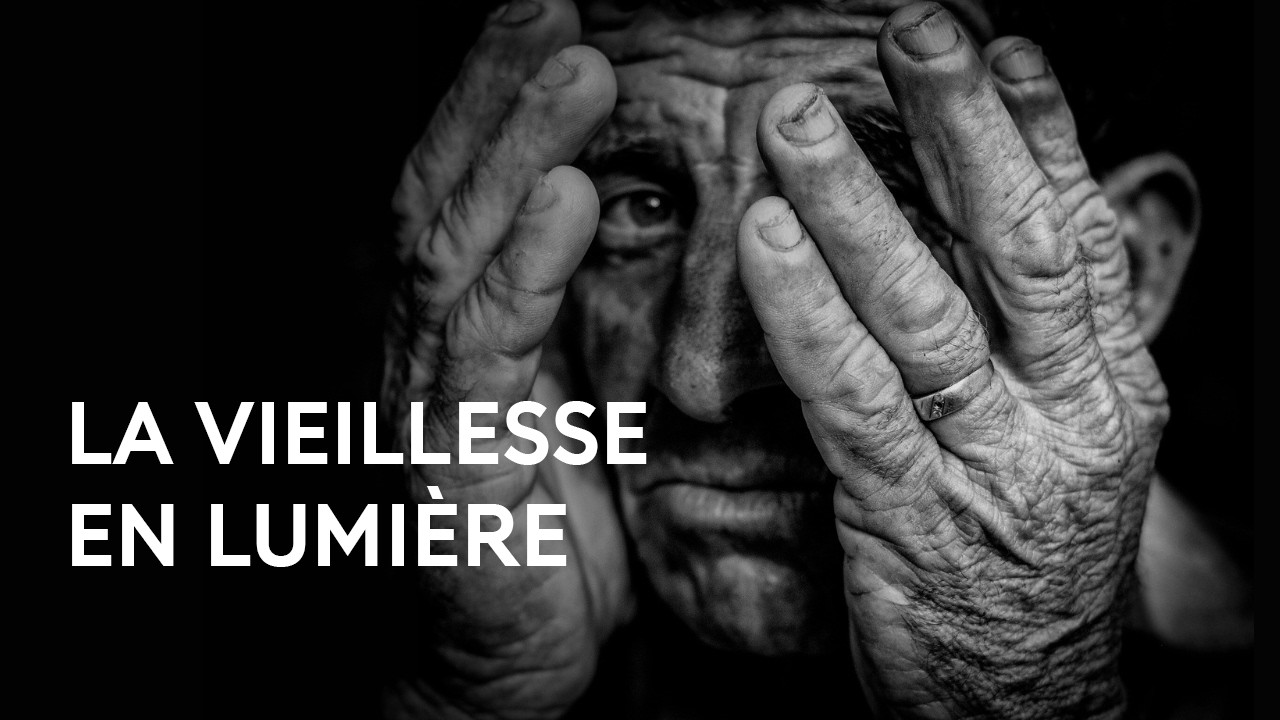
- Nikos Aliagas explains his motivation for photography and his preference for black and white.
- Samuel Pavard introduces biodemography and his research on the evolution of aging.
- Discussion on the relativity of age across species and the concept of generation time.
- Anecdote about visiting a retirement home and meeting a 104-year-old resident.
- Samuel highlights the unprecedented demographic situation of large elderly populations in history.
- Nikos reflects on the reciprocal gaze between photographer and subject and the concept of transmission.
- Samuel explains his motivation for the exhibition and the collaboration with Nikos.
Cited Sources
- Autour de l'exposition Les grands âges - Conference page — Official page describing the conference.
- Exposition 'Les grands âges' — The exhibition that this conference is part of.
Concurring Sources
- Biodemography — Supports the biological and demographic aspects discussed.
- Senescence — Biological aging process, aligns with Pavard's research.
Contribution & Novelties
The video offers a unique dialogue between art and science on aging, highlighting the importance of emotional and humanistic perspectives alongside empirical data. It underscores the unprecedented nature of current demographic changes and the need to reframe society’s view of the elderly. The collaboration between a photographer and a biodemographer provides a fresh perspective on a universal yet often neglected topic.
Pour aller plus loin :
- Senescence — Biological basis of aging, directly related to the scientific content.
- Biodemography — The study of aging and mortality, central to Pavard’s work.
- Grandmother hypothesis — Evolutionary explanation for human longevity and intergenerational care.
- Demographic transition — Historical shift in population age structure relevant to the societal changes discussed.
116 words
Radar Profile
The radar profile shows high reliability and moderate information quality, with a lower technical level suitable for a general audience. The balance between scientific depth and accessibility is evident.