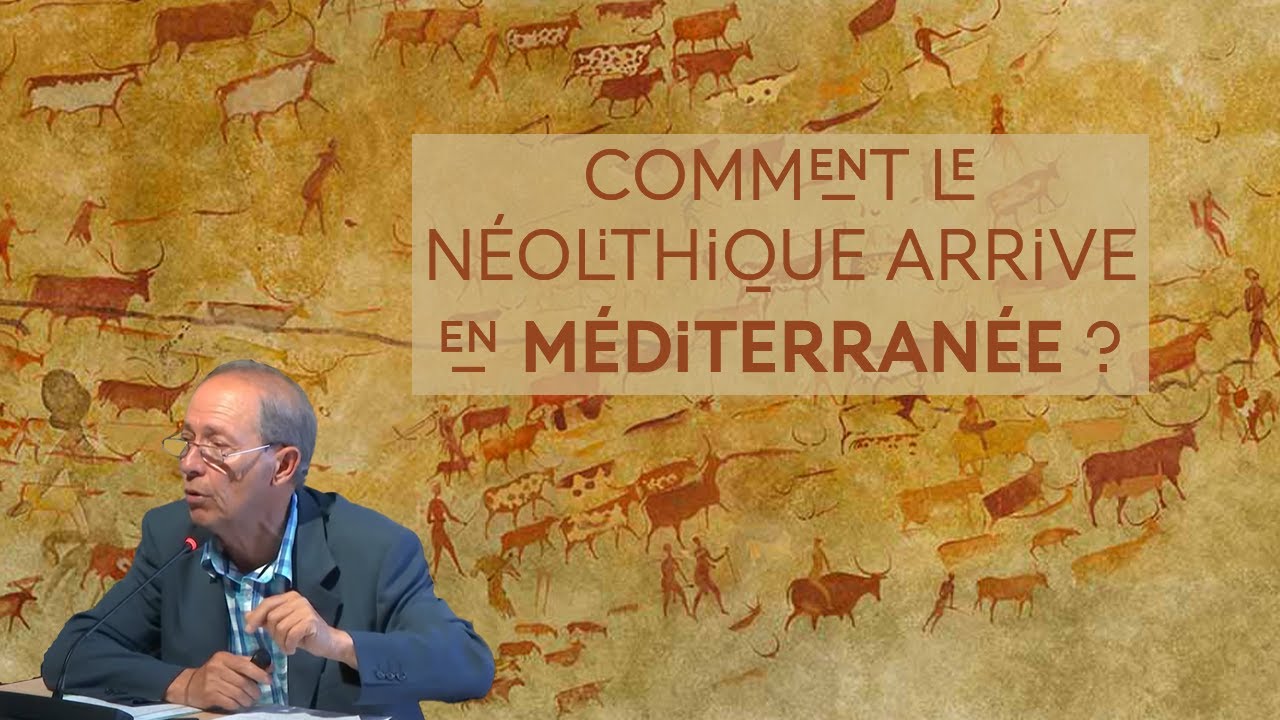
La diffusion du néolithique en méditerranée
The Spread of the Neolithic in the Mediterranean
Keywords
Summary
165 words
Critical Evaluation
Value of the Information & Strength of the Argument
The video offers a solid scientific synthesis of current knowledge on the Neolithisation of the Mediterranean. It is valuable for its clear enunciation of the archaeological evidence and its balanced treatment of competing hypotheses (e.g., demic vs. cultural diffusion). The argumentation is rigorous: Guilaine systematically presents sites, phases, and material culture, and carefully distinguishes established facts from working hypotheses. For example, he nuances the notion of a single origin by acknowledging multiple centres, and he critically evaluates the environmental and social drivers of migration. The lecture is particularly effective in demonstrating the complexity of the process, avoiding oversimplification while remaining accessible to a non-specialist audience.
Scientific Rigor, Source Quality, Title Accuracy
The presentation is methodologically sound, based on a vast amount of archaeological data from excavations in the Near East and the Mediterranean. Guilaine cites numerous specific sites (e.g., Jericho, Çayönü, Khirokitia, Shillourokambos) and archaeological periods (PPNA, PPNB), grounding his statements in verifiable research. He also references the work of colleagues (e.g., Daniel Stordeur, Ofer Bar-Yosef) and genetic studies (implied in a comment). The title accurately reflects the content; there is no sensationalism or exaggeration. The talk is delivered in a formal but engaging manner, with occasional personal anecdotes that do not detract from scientific rigour.
215 words
Title / Content Match
The title accurately reflects the content: the lecture details the origin and spread of the Neolithic across the Mediterranean, with a focus on the Near East and Cyprus.
Quality & Reliability
9/10
The lecture is delivered by Jean Guilaine, Professor at the Collège de France, a leading archaeologist specialising in the Neolithic. The content is supported by numerous archaeological sites and well-established scientific findings. The presentation is clear, methodical, and strictly archaeological in approach, avoiding unfounded speculation.
Key Moments
Markers derived by PSI from the transcript: the creator did not define chapters.
- Introduction to the multiple origins of agriculture worldwide, with emphasis on the Near East as the first centre.
- Detailed explanation of the PPNA phase: the beginning of sedentary villages, communal buildings, and early cultivation.
- Discussion of the PPNB period: domestication of animals, development of rectangular houses, and the spread of obsidian trade networks.
- Focus on Cyprus: the early maritime expansion and the excavation of Shillourokambos, including the oldest known domesticated cat.
- Evaluation of push-and-pull factors for diffusion: climatic changes, social pressures, and ideological motivations.
- Mapping of the diffusion routes and dates across the Mediterranean, culminating in the arrival of the Neolithic in Western Europe.
Cited Sources
- La diffusion du néolithique en méditerranée - YouTube video — Primary source; the entire lecture presented by Jean Guilaine.
Concurring Sources
- The Neolithic Revolution in the Near East — General agreement on the Near East as the earliest centre of domestication.
Dissenting Sources
- Diffusionism vs. independent invention — Some researchers argue for stronger independent invention of agriculture in various regions, whereas Guilaine emphasises diffusion from the Near East, though he acknowledges multiple centres.
Contribution & Novelties
The lecture provides a comprehensive and up-to-date synthesis of the Neolithisation process in the Mediterranean, integrating recent archaeological discoveries (e.g., Shillourokambos, Göbekli Tepe) and offering a balanced view on the mechanisms of diffusion. It also highlights the role of Cyprus as a crucial stepping-stone, and the significance of maritime networks.
Pour aller plus loin :
- Pre-Pottery Neolithic — Overview of the PPN phases and their characteristics.
- Göbekli Tepe — A key site illustrating communal architecture and early ritual practices.
- Shillourokambos — The Cypriot site with early cat domestication evidence.
- Neolithic Revolution — General context and implications of the transition to farming.
101 words
Radar Profile
The profile shows high scores in information quantity, quality, and reliability, with a slightly lower technical level that still requires some background knowledge. The overall balance reflects a scientifically rigorous yet accessible presentation suitable for a broad audience interested in prehistory.
💬 The overall sentiment is very positive, with admiration for the speaker's expertise and clarity (e.g., “Magistral”, “Très belle conférence”). Several viewers express gratitude for the educational value. Some criticisms focus on the camera work, noting that often the speaker is filmed instead of the slides, making it hard to see the images. A few comments also touch on the speaker's accent and personal charisma. Based on the 30 comments analyzed, the majority (about 25) are positive, 4 mention the camera issue, and 1 includes a supplementary reference (haplogroup G2a).