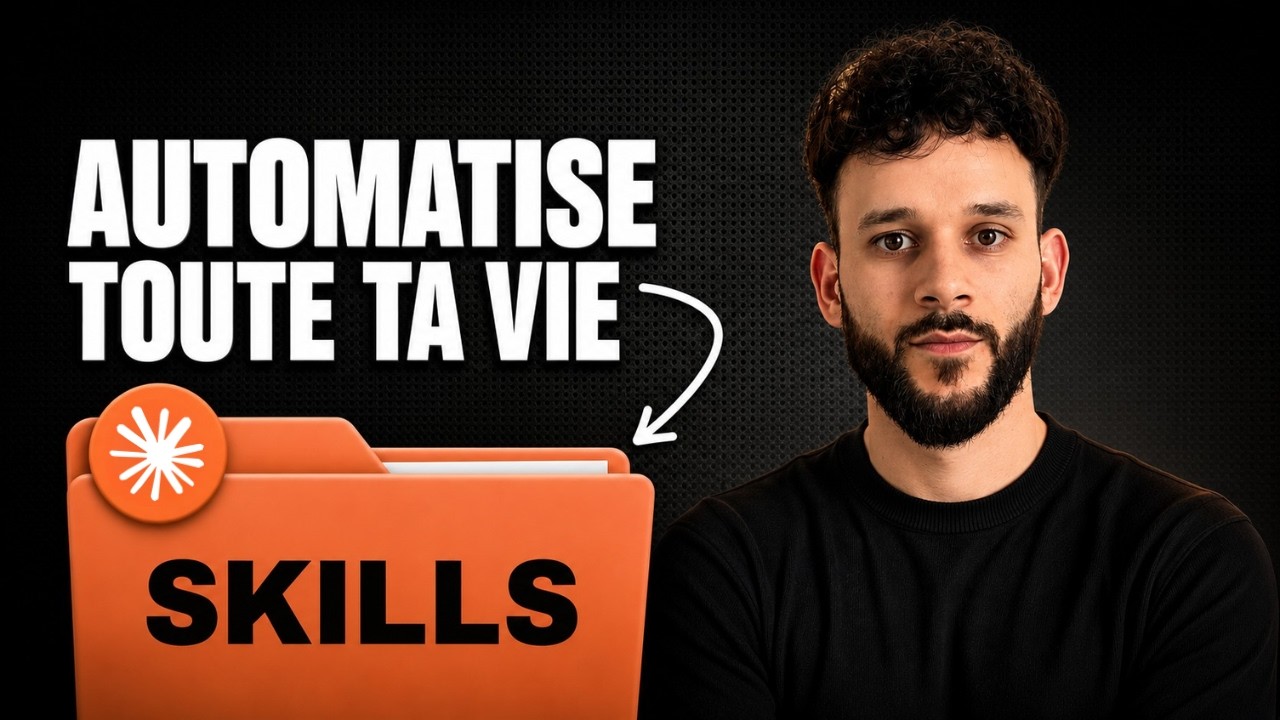
Comment Créer des Skills Claude comme un PRO (tuto complet)
How to Create Claude Skills Like a PRO (Full Tutorial)
Title history
- Comment Créer des Skills Claude comme un PRO (tuto complet) — observed on 20261101-0104 UTC (YouTube)
Keywords
Summary
173 words
Critical Evaluation
Value of the Information & Strength of the Argument
The value of this video lies in its practical, experience-based guidance. The author effectively conveys the importance of context and specific tools in maximizing AI performance. He presents a clear rationale for creating skills, with a strong emphasis on iteration and avoiding common pitfalls such as context rot and overloading a single skill. The argumentation is persuasive for practitioners, drawing on his own business experience and references to Anthropic’s official documentation. However, the claims are not empirically validated and rely heavily on personal anecdote, reducing scientific rigor. The tutorial is structured logically, moving from definition to creation methods to structural best practices, making it a useful resource for users looking to enhance their AI workflows.
Scientific Rigor, Source Quality, Title Accuracy
The scientific rigor is moderate: the video references Anthropic’s official documentation but does not provide direct URLs, and the only links in the description are promotional to the author’s own websites. The content is not peer-reviewed and lacks formal citations, relying instead on the author’s credibility and experience. The title accurately reflects the content—it is indeed a tutorial on creating Claude skills. However, the phrase ’like a PRO’ is somewhat subjective, though the depth and detail may justify it. Overall, the title-content alignment is strong, but the sourcing is weak from a scientific perspective.
224 words
Title / Content Match
The title accurately reflects the content: a comprehensive tutorial on creating Claude skills, covering definitions, methods, and best practices.
Quality & Reliability
7/10
The video provides practical, hands-on advice from an experienced practitioner, referencing Anthropic's official documentation and best practices. However, it is largely anecdotal and self-promotional, lacking formal citations or peer-reviewed evidence.
Key Moments
Markers derived by PSI from the transcript: the creator did not define chapters.
- Introduction: Importance of context and tools for AI, definition of skills.
- Explanation of skill.md and reference files, example of Anthropic's Skill Creator.
- Two types of skills: general and specific; when to create a skill (repetitive tasks).
- Three methods of creation: single prompt, brainstorming, and converting a workflow; fourth method using Skill Creator.
- Structure of a good skill: trigger, steps, routing, minimalism; avoiding context rot.
- Invocation methods (manual vs automatic) and integration with connectors and MCP.
Cited Sources
- Telegram prompt resource — Link mentioned for downloading prompt files used in the video.
- Wolph AI income guide — Promotional link to the author's guide on making money with AI.
Contribution & Novelties
The video offers a structured, practitioner-centric approach to creating custom skills for Claude, particularly emphasizing the importance of specific, single-task skills and minimalistic design to avoid context rot. It also introduces a novel method of converting an existing successful workflow into a skill, which is not commonly discussed.
Pour aller plus loin :
- Model Context Protocol (MCP) — A protocol for connecting AI models to external tools, directly related to the video’s discussion of tool integration.
- Prompt engineering — The practice of designing prompts to optimize AI responses, core to the creation of effective skills.
- Anthropic’s official documentation on skills — Referenced in the video as the basis for skill structure; no direct URL provided, but the information is foundational to understanding practical skill creation.
125 words
Radar Profile
The radar profile shows a balanced video with strong quantitative content and technical level, but slightly lower reliability due to the lack of third-party sources and promotional nature of the links.