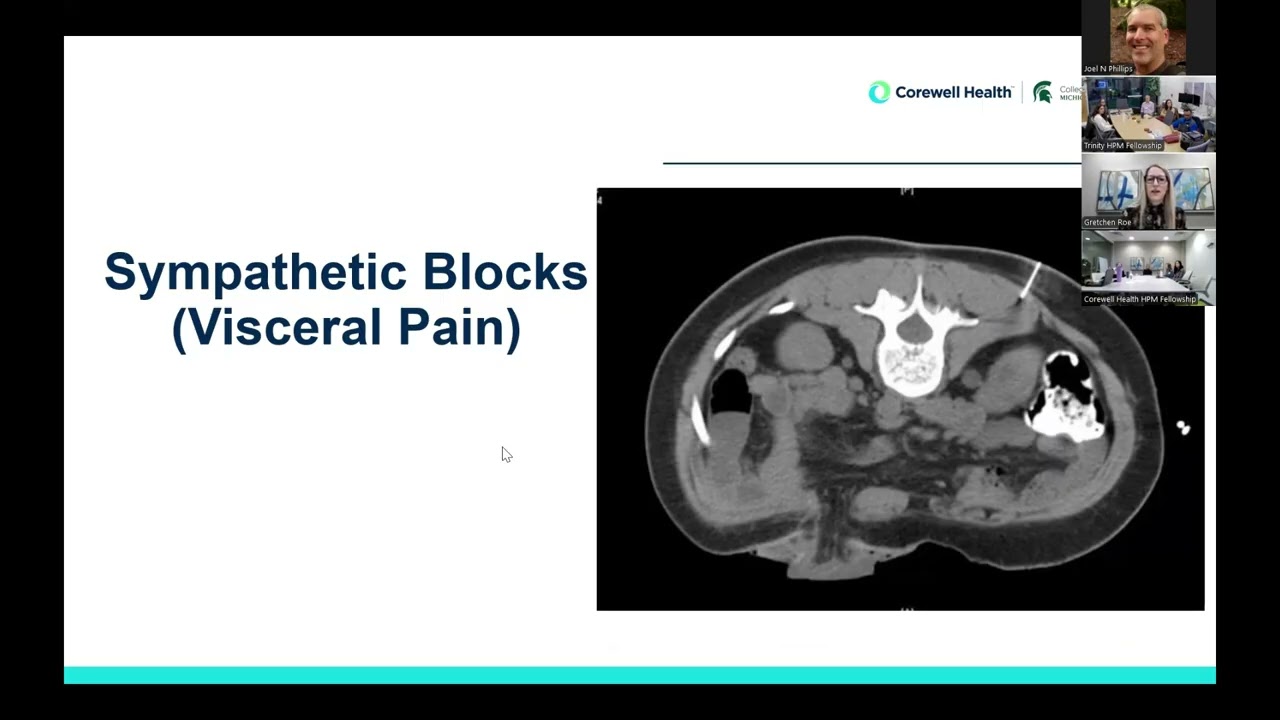
2026 11 05 Interventional Procedures in Palliative Medicine
Title history
- 2026 11 05 Interventional Procedures in Palliative Medicine — observed on 20261106-1423 UTC (YouTube)
Keywords
Summary
167 words
Critical Evaluation
Value of the Information & Strength of the Argument
The lecture offers valuable, practical information on interventional procedures, with a strong emphasis on clinical application. The speaker argues convincingly that these procedures should be considered earlier in pain management, not solely as a final step. She supports her points with clinical reasoning, personal cases, and references to a specific guideline article, providing evidence levels. The argumentation is coherent and well-structured, addressing risks, benefits, and patient selection. The use of case examples (e.g., the chest wall wound patient) strengthens the practical value. However, the evidence is largely based on the speaker’s experience and one review article, lacking deeper citation of primary studies. The lecture effectively conveys the utility of these procedures but could benefit from more quantitative outcome data.
Scientific Rigor, Source Quality, Title Accuracy
The scientific rigor is moderate: the lecture references a review article from the American Society of Pain and Neuroscience, but only elevates it without providing specific study details. Evidence levels are mentioned for some blocks (e.g., celiac plexus 1A, superior hypogastric 2B, ganglion impar 3B), but the source is not directly cited in the video description. The title clearly matches the content, being a straightforward description of the lecture’s scope. The speaker’s expertise lends credibility, but lack of detailed citations reduces the overall rigor. No additional external sources are mentioned, limiting independent verification. The content is accurate and align with established palliative care practice, but the sources are not fully transparent.
245 words
Title / Content Match
The title accurately reflects the content; it is a lecture on interventional procedures in palliative medicine.
Quality & Reliability
8/10
Expert lecture based on clinical experience and references to a review article from the American Society of Pain and Neuroscience. Mentions evidence levels but provides limited specific citations.
Key Moments
Markers derived by PSI from the transcript: the creator did not define chapters.
- Introduction and lecture objectives
- Overview of pain types and indications for interventional procedures
- Discussion on sympathetic blocks, including stellate ganglion block
- Celiac plexus block: indications, technique, and evidence level
- Superior hypogastric and ganglion impar blocks for pelvic/perineal pain
- Lumbar sympathetic block and peripheral nerve blocks
- Intercostal nerve block and case examples
- Continuous catheters and programmed intermittent boluses
Cited Sources
- Best Practices and Guidelines for Interventional Management of Cancer-Associated Pain — Mentioned as a review article from the American Society of Pain and Neuroscience, providing evidence levels for various blocks.
Concurring Sources
- Best Practices and Guidelines for Interventional Management of Cancer-Associated Pain — The lecture's claims align with the referenced guidelines on interventional pain management.
Contribution & Novelties
The lecture provides a practical, clinician-oriented overview of interventional procedures in palliative care, with attention to early intervention and evidence-based selection. Its novelty lies in consolidating a broad range of blocks (from stellate ganglion to ganglion impar) into a single educational format, while sharing clinical pearls and personal experiences. The emphasis on considering procedures earlier in the pain trajectory is a useful perspective for practitioners.
Pour aller plus loin :
- Celiac Plexus Block — Overview of one of the most commonly used blocks for upper abdominal cancer pain.
- WHO Analgesic Ladder — The traditional stepwise approach to cancer pain, which now often includes interventional procedures as a fourth step.
- Palliative Care — General principles of symptom management and quality of life in serious illness.
124 words
Radar Profile
The radar profile shows high scores in information quantity, quality, and fiability, with a moderate technical level. This indicates a comprehensive and reliable educational lecture, though not extremely technically demanding. The balance across scores suggests a well-rounded resource for palliative care clinicians.