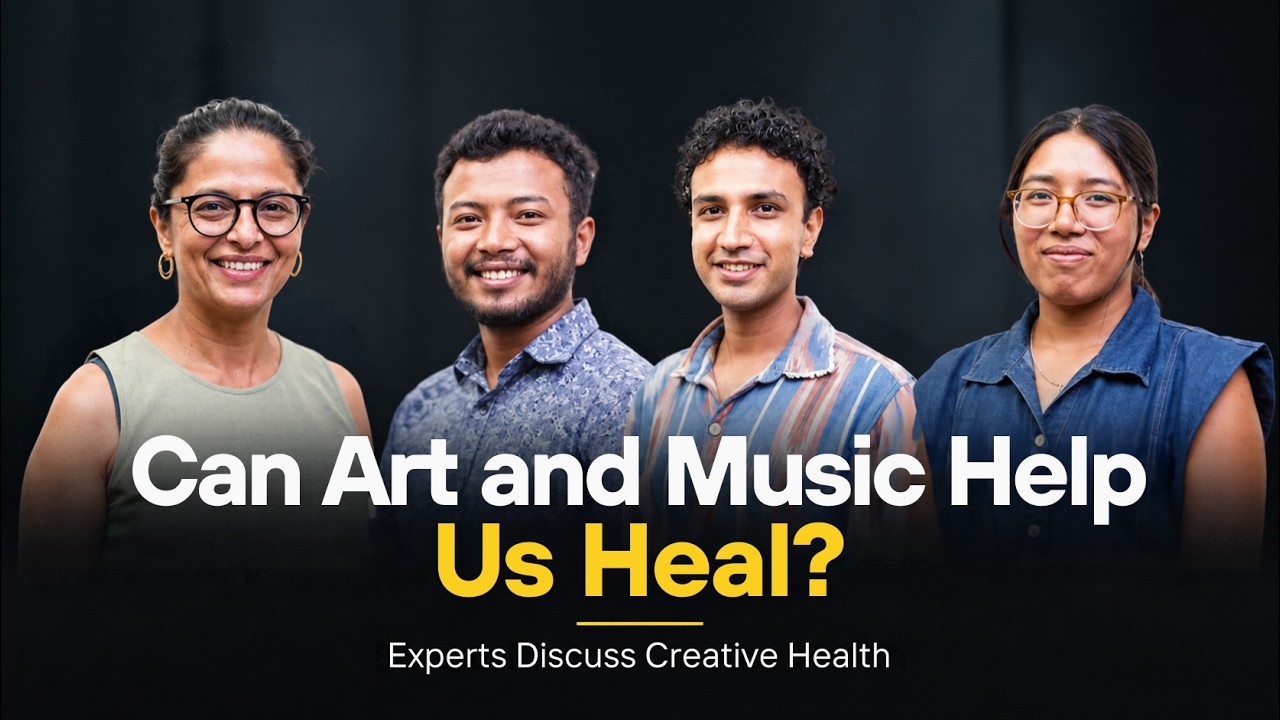
Can Art and Music Help Us Heal? Experts Discuss Creative Health | KU Falcha
Keywords
Summary
148 words
Critical Evaluation
Value of the Information & Strength of the Argument
The video provides valuable insights into alternative research methodologies, particularly for public health in non-Western contexts. The argumentation is persuasive on a qualitative level, relying on vivid descriptions of the pilot course and personal testimonials. The speakers effectively challenge Eurocentric research norms and demonstrate the potential of arts-based approaches to engage communities. However, the argumentation lacks quantitative evidence or outcome measurements, making it more suggestive than conclusive. The emphasis on process over results is a strength, but it limits the scientific rigor.
Scientific Rigor, Source Quality, Title Accuracy
The panel consists of qualified experts, but no formal citations or references are given. The course is described in detail, yet no data on effectiveness or participant feedback is presented in a systematic way. The title is a direct question that is addressed in a nuanced manner, but the content remains at an introductory level without delving into empirical verification. This reduces the scientific robustness, though the video succeeds as an awareness-raising conversation.
170 words
Title / Content Match
The title promises a discussion on healing through art and music, which aligns well with the video's focus on arts-based approaches to health and well-being. The content directly addresses the topic, though it does not provide direct scientific evidence of healing effects.
Quality & Reliability
6/10
The video features experts in health, art, and music therapy discussing a pilot creative health research course. The content is based on personal experiences and qualitative observations, with no peer-reviewed studies or quantitative data provided. While the speakers are credible professionals, the lack of empirical evidence limits the reliability.
Key Moments
Markers derived by PSI from the transcript: the creator did not define chapters.
- Introductions of the team members and their backgrounds
- Dr. Dhital explains the rationale for integrating arts into public health research in Nepal
- Puja and Hitesh describe the co-design process and the cultural richness of Bhaktapur
- Sarak discusses the role of music therapy and the preventive aspect of health
- Participants' positive feedback on the course and the playful, accessible nature of creative research
Cited Sources
- KU Dialogue Series Facebook — Channel contact and social media page
Contribution & Novelties
The video presents a pioneering effort to decolonize public health research methods by grounding them in Nepali culture and arts. It showcases a co-designed, non-hierarchical course that integrates local knowledge, artisans, and everyday practices, offering a model for other Global South contexts. This approach challenges the universal applicability of Western research paradigms.
Pour aller plus loin :
- Arts-based research — Overview of arts-based methods in social research.
- Transdisciplinarity — Concept of integrating knowledge across disciplines, central to the course design.
- Music therapy — Clinical practice discussed by Sarak Dhungana, linking music to health outcomes.
94 words
Radar Profile
The radar chart would show moderate to high scores in quantity and quality of information (7 and 6) but lower in technical level (5) and reliability (5), reflecting an accessible, expert-led discussion that is informative but lacks hard evidence.