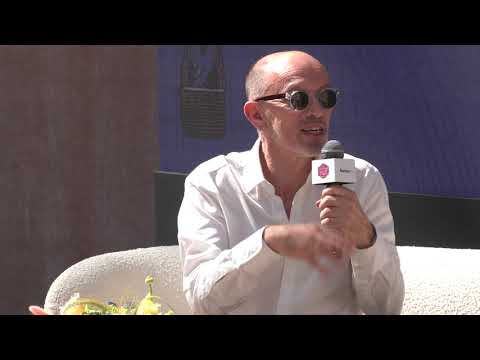
La Maison vide, grand entretien avec Laurent Mauvignier
The Empty House, an in-depth interview with Laurent Mauvignier
Title history
- La Maison vide, grand entretien avec Laurent Mauvignier — observed on 20261026-0151 UTC (YouTube)
Keywords
Summary
150 words
Critical Evaluation
Value of the Information & Strength of the Argument
The value of this interview lies in its authentic, first-hand account of the author’s creative process and the personal motivations behind his novel. Mauvignier’s argumentation is coherent and compelling, as he connects personal memories with broader historical phenomena, such as the continuum between the two world wars and the social constraints on women. He demonstrates a reflective and self-aware stance, acknowledging the ambiguity of memory and the difficulty of reconstructing family history. While the discussion is subjective, it offers substantial insight into how a literary work can emerge from fragmented family narratives, making it valuable for readers and scholars of contemporary French literature.
Scientific Rigor, Source Quality, Title Accuracy
The interview maintains strong intellectual rigor in its handling of historical references. Mauvignier cites specific events like the Maillé massacre and draws on his own research into archival records, although he does not provide explicit sources. He references literary works such as ‘Radetzky March’ and his earlier novels, which adds depth. The title is perfectly aligned with the content, as the entire discussion revolves around the novel and its themes. No external sources are formally cited beyond the works mentioned in conversation, but the author’s credibility and the consistency of his narrative contribute to the overall reliability. The interview is not scientifically sourced, but it is a trustworthy account of the author’s own intentions and experiences.
234 words
Title / Content Match
The title exactly reflects the content: an in-depth interview with Laurent Mauvignier about his novel 'La Maison vide'.
Quality & Reliability
7/10
Content is a sincere first-person account by the author, offering deep insight into the creative process and historical context, but it remains subjective and non-verifiable; reliability is high for literary introspection but not for objective facts.
Key Moments
Markers derived by PSI from the transcript: the creator did not define chapters.
- Introduction by the moderator and initial remarks about cemeteries and Baudelaire.
- Mauvignier discusses the origin of the novel, beginning with images from his previous book 'Histoire de la nuit'.
- Exploration of the grandmother's story, including the cut-out photographs and the impact of the heroic ancestor.
- Discussion of the role of women in transmitting family stories and the relationship between Marie-Ernestine and her daughter.
- Reflection on the continuum between WWI and WWII and the social constraints on bodies.
Cited Sources
- La Maison vide — The novel discussed in the interview, published by Les Éditions de Minuit.
- Histoire de la nuit — Mauvignier's previous novel, which contains the first appearance of the 'Maison Vide' name.
- Quelque chose d'absent qui me tourmente — Interviews with Laurent Mauvignier, mentioned by the moderator as a source on his writing journey.
- La marche de Radetzky — Joseph Roth's novel, cited by Mauvignier as a literary precursor on the theme of heroic legacy.
Contribution & Novelties
The interview provides an original perspective on how family history and national trauma intertwine in literary creation. Mauvignier explicitly elaborates on the psychological consequences of military heroism on descendants, a theme rarely addressed so personally. The discussion also highlights the role of gender in memory transmission, offering a nuanced view of patriarchy’s effects on both men and women.
Pour aller plus loin :
- Collective memory — Useful for understanding the social dimension of family stories.
- Transgenerational trauma — Directly relevant to how the grandmother’s experience echoes across generations.
- Radetzky March — The novel Mauvignier cites as a predecessor, illustrating the same theme of heroic legacy.
- damnatio memoriae — The practice of erasing someone from memory, a striking parallel to the cut-out photographs.
122 words
Radar Profile
The profile shows high quantity and quality of information, with moderate technical level and moderate reliability, reflecting a personal, literary narrative rather than scientific analysis. The scores indicate a rich and coherent discussion, albeit subjective and non-verifiable.