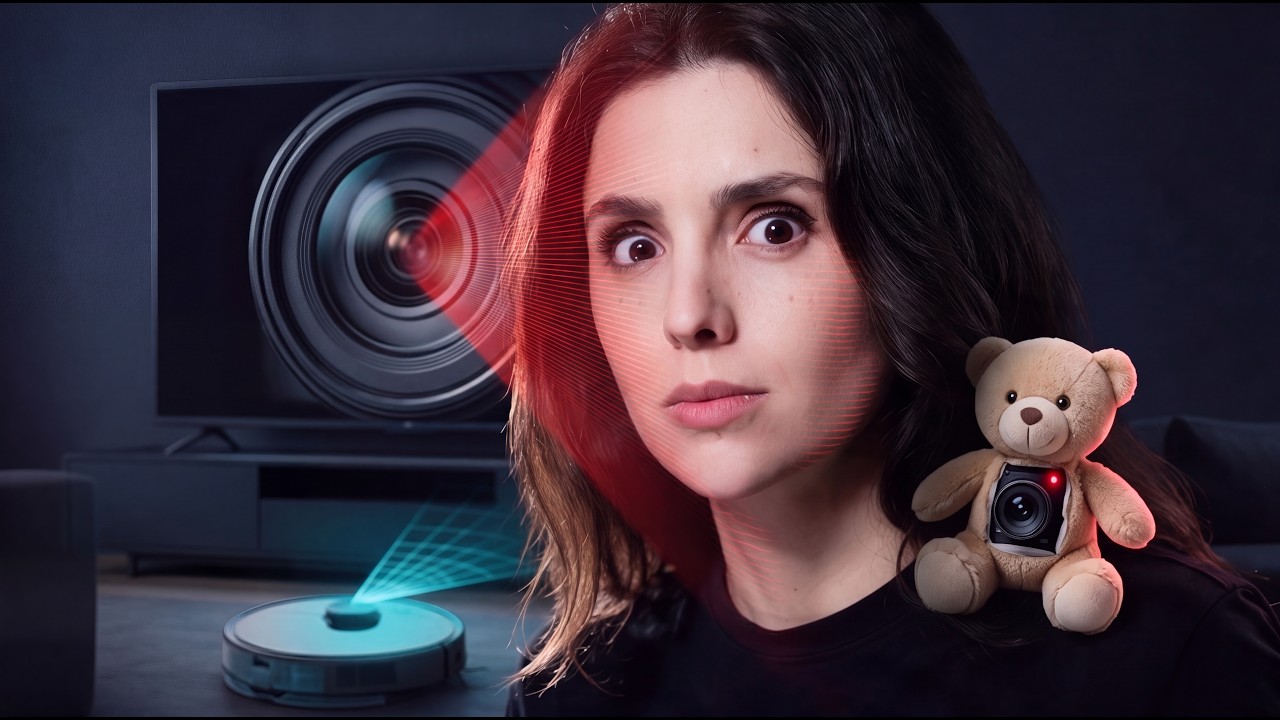
Peut-on faire confiance à nos objets connectés ? (NON)
Can we trust our connected objects? (NO)
Keywords
Summary
175 words
Critical Evaluation
Value of the Information & Strength of the Argument
Valeur: The video synthesizes several high-profile investigations into a coherent overview of the IoT privacy landscape, providing concrete examples and authoritative sources. It highlights systemic issues rather than isolated incidents, and offers actionable steps for users. Argumentation: The reasoning is well-structured, moving from specific cases to a general pattern, effectively linking corporate incentives to data collection. The presenter adopts a critical stance, uses direct quotes, and contrasts official denials with technical evidence. However, some claims rely on secondary reporting without direct access to the primary data, and the sponsor segment disrupts the flow, though it is clearly marked.
Scientific Rigor, Source Quality, Title Accuracy
Rigueur scientifique: The video references credible investigations (Gamers Nexus, Which?, Mozilla Foundation, New York Times) and names specific researchers and whistleblowers. It distinguishes between LG’s denial and published technical evidence, demonstrating a balanced approach. Quality of sources: Sources are reputable, but the video does not provide direct URLs in the description; viewers would need to search for the original reports. The sponsor segment is disclosed. Adéquation titre/contenu: The title is accurate and catchy, reflecting the video’s thesis that connected objects are not trustworthy. The content matches the title’s promise.
202 words
Title / Content Match
The title accurately reflects the content and tone, which argues that connected objects are not trustworthy.
Quality & Reliability
7/10
The video draws on multiple documented investigations (Gamers Nexus, Which?, Mozilla Foundation, New York Times) but some claims are second-hand and lack direct links. The sponsor segment is clearly separated.
Key Moments
Markers derived by PSI from the transcript: the creator did not define chapters.
- Introduction: hook about TV spying
- Details of Gamers Nexus investigation on LG TVs
- Discussion on other TV brands and legal actions
- Sponsor segment for Mammouth AI
- Connected fryers and unnecessary permissions
- Robot vacuum vulnerability and access to 7,000 devices
- Voice assistants and human review of recordings
- Connected cars and Mozilla Foundation's negative assessment
- Teddy bear leak of 50,000 children's conversations
- Practical advice to protect privacy
- Conclusion and call to action
Cited Sources
- Mammouth AI (sponsor) — Sponsored product promoting privacy-oriented AI interface
- Newsletter subscription form — Channel's newsletter for additional analysis
Concurring Sources
- Gamers Nexus investigation on LG TVs — Primary investigation cited in the video, showing LG smart TVs recording audio and screen captures.
- Which? test on connected fryers — Consumer association test revealing unauthorized permissions and data transmission to China.
- Mozilla Foundation – Privacy Not Included (cars) — Report giving all car manufacturers a failing grade for privacy practices.
- New York Times investigation on General Motors — Report on GM sharing driving data with insurers, leading to higher premiums.
Dissenting Sources
- LG official response — LG denied the allegations and claimed no recording occurs, but provided no technical evidence.
External References
Contribution & Novelties
Apport original: The video provides a comprehensive and accessible synthesis of recent IoT privacy failures, connecting individual incidents to a broader economic incentive structure. It offers practical mitigation steps for consumers, filling a gap between technical reports and public awareness.
Pour aller plus loin :
- General Data Protection Regulation (GDPR) — The EU framework that sets standards for data privacy and consent, relevant to the discussed issues.
- Internet of things (IoT) — Background on the technology and its security/privacy challenges.
- Smart TV — Information on smart TV features and privacy concerns.
- GrapheneOS — Privacy-focused mobile operating system mentioned in the video as a protective option.
105 words
Radar Profile
The profile shows high scores in information quantity and quality, with moderate technical depth and reliability. The video is informative and well-researched, but some claims depend on external reports and the technical level is kept accessible.