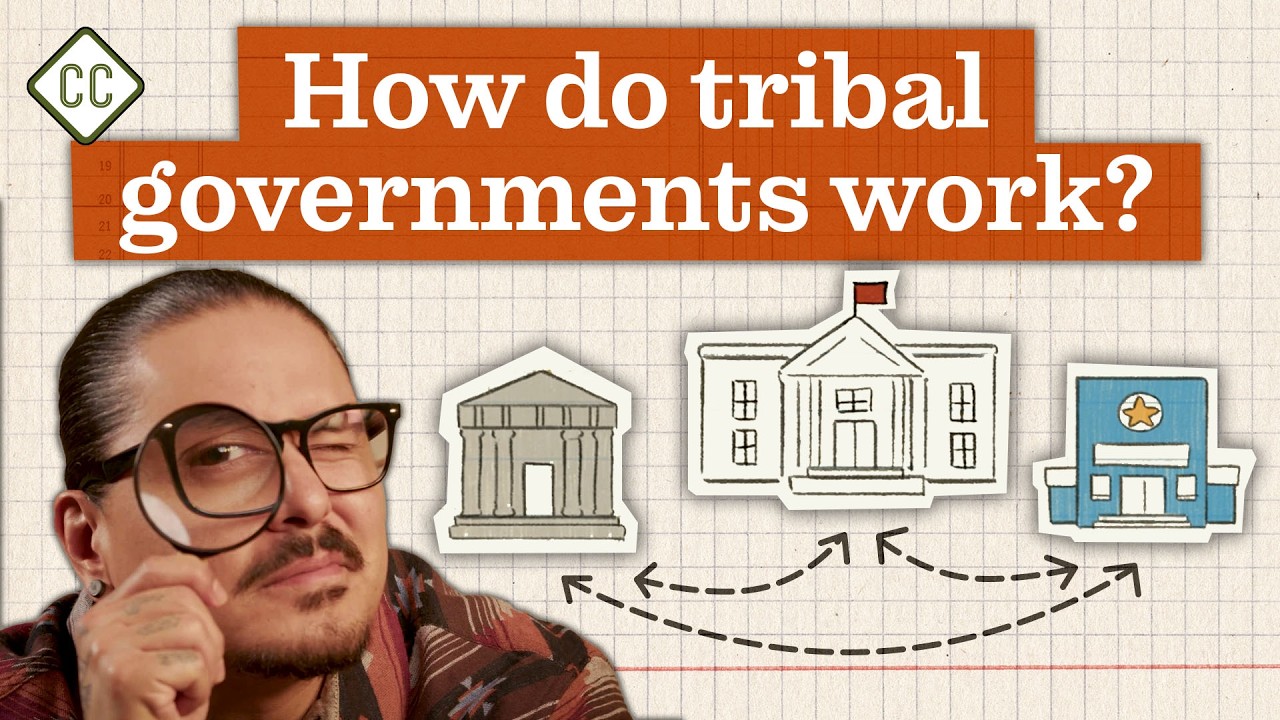
Modern Tribal Governments Explained: Ep 20 of Crash Course Native American History
Keywords
Summary
183 words
Critical Evaluation
Value of the Information & Strength of the Argument
The video offers clear and accurate explanations of complex legal and political concepts, supported by concrete examples like the conflict with Governor Noem, the IRA, and the Dakota Access Pipeline. The argumentation is logically structured: it starts with a current event, explains historical background, details structural variations, and illustrates sovereignty in action. The use of contrast between traditional consensus and majority rule effectively highlights cultural differences in governance. The example of the Crow Tribe’s hybrid system adds depth, showing how tribes can adapt while preserving values. The discussion of federal bureaucracy and consultation failures provides critical context without veering into activism. The argument is balanced, acknowledging both progress and ongoing challenges. Overall, the information is highly valuable for understanding the contemporary status of tribal governments, and the reasoning is solid and evidence-based.
Scientific Rigor, Source Quality, Title Accuracy
The video adheres to high standards of scientific rigor for an educational series. It cites a Google Docs source list in the description, providing transparency. The content aligns with established historical and legal facts, such as the Indian Reorganization Act’s impact and court rulings on tribal gaming. The title precisely matches the content, which covers the operation and challenges of tribal governments. The production includes clear citations for the series’ methodology, and the host carefully distinguishes between legal mandates and actual practices. While the video is introductory, it does not oversimplify the complexities of tribal sovereignty. The only minor limitation is the reliance on a single source document, but the historical accuracy appears sound. Overall, the title is perfectly adequate, and the sourcing is commendable for a public-facing educational product.
277 words
Title / Content Match
The title accurately reflects the content, which explains the structure, responsibilities, and challenges of modern tribal governments in the United States.
Quality & Reliability
8/10
The video is produced by CrashCourse, a reputable educational channel, and is based on documented sources provided in the description. The content is balanced and clearly explained, with references to historical events and legal cases.
Key Moments
Markers derived by PSI from the transcript: the creator did not define chapters.
- Introduction: Conflict between South Dakota tribes and Governor Noem.
- Overview of tribal governments and sovereignty.
- The Indian Reorganization Act and its effects on tribal governance.
- Modern and hybrid tribal government structures explained.
- Responsibilities of tribal governments and bureaucratic challenges.
- The Dakota Access Pipeline case and lack of consultation.
- Tribal sovereignty today, including gaming compacts and legal victories.
- Review of key points and credits.
Cited Sources
- Sources for Modern Tribal Governments Explained — List of sources and references used in the episode.
- How this series was made — Documentation on the production and methodology of Crash Course Native American History.
External References
Contribution & Novelties
The video provides an accessible and up-to-date synthesis of how tribal governments operate in the 21st century, using recent examples like the 2024 South Dakota dispute and ongoing Dakota Access Pipeline litigation. It clarifies the distinction between traditional consensus-based governance and imposed majority-rule systems under the IRA, and highlights hybrid models that blend both. The explanation of federal consultation obligations and bureaucratic hurdles offers a realistic view of challenges. The episode is part of a series, so its novelty lies in condensing complex legal-political information into an engaging educational format.
Pour aller plus loin :
- Indian Reorganization Act — Overview of the 1934 law that reshaped tribal governance.
- Tribal sovereignty in the United States — Key concept framing the entire video.
- Dakota Access Pipeline — Details on the case discussed, including the Standing Rock protests.
135 words
Radar Profile
The radar profile shows high scores on quantity, quality, and reliability, with a moderate technical level. This indicates the video is informative, trustworthy, and well-suited for a general audience, while still offering enough depth to be useful for students of political science or Native American studies.