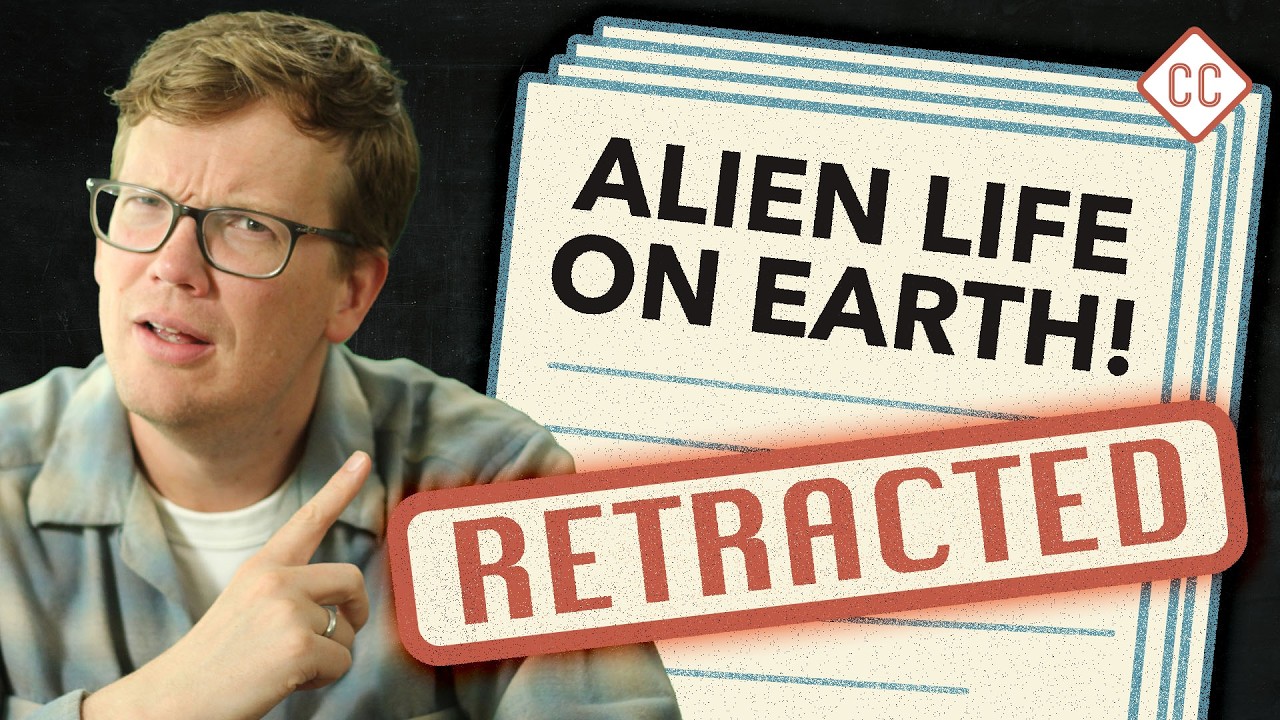
Peer Review and the Quest for Truth: Crash Course Scientific Thinking #4
Keywords
Summary
169 words
Critical Evaluation
Value of the Information & Strength of the Argument
The video provides valuable educational content by clearly explaining the roles of peer review and replication in science. Its argumentation is solid, grounded in a concrete and well-documented case study that effectively demonstrates the abstract concepts. The narrative is coherent, starting with a media-fueled misinterpretation and following the scientific process to its resolution, thereby illustrating how science self-corrects. The use of a real-world example strengthens the pedagogical impact and helps viewers understand the practical application of scientific methods. While not advancing new research, it excels in synthesizing existing knowledge into an accessible format, making a compelling case for the reliability of the scientific process.
Scientific Rigor, Source Quality, Title Accuracy
The video demonstrates scientific rigor by referencing actual studies, including the 2010 Science paper and subsequent replication attempts. It accurately describes the peer review process and the eventual retraction, aligning with published accounts. The title is apt, as it directly addresses peer review and the pursuit of truth. The linked sources document offers a comprehensive list of references, indicating careful preparation. The presentation is factually sound, and the host distinguishes between media hype and scientific reality. Overall, the video maintains high standards of accuracy and transparency, appropriate for an educational channel.
210 words
Title / Content Match
The title accurately captures the central theme of the episode, which explores peer review as a means to pursue truth in science.
Quality & Reliability
8/10
The video presents a well-researched and accurate account of the arsenic-based life controversy, peer review, and replication, consistent with established scientific understanding. The linked sources document provides additional references, enhancing reliability.
Key Moments
Markers derived by PSI from the transcript: the creator did not define chapters.
- Introduction: Alien Life? - Hank Green introduces the topic of supposed alien life discovery.
- Arsenic-based Life - The study about GFAJ-1 bacteria and its media coverage.
- Peer Review - Explanation of the peer review process with an analogy using sunscreen.
- Replication - The importance of reproducing results and the failure to replicate arsenic-based life.
- The Scientific Process - Reflection on how science self-corrects and builds on successes and failures.
Cited Sources
- Crash Course Scientific Thinking #4 Sources — A document containing the sources referenced in the video, including the original arsenic study and subsequent critiques.
External References
Contribution & Novelties
The video’s original contribution lies in its pedagogical approach: it uses the arsenic-based life controversy as a concrete case to demystify the peer review process and highlight the importance of replication in science. It effectively communicates how scientific corrections and retractions are integral to the advancement of knowledge. The episode adds value by clarifying common misconceptions about peer review and the media’s role in oversimplifying scientific findings. It does not present new data but recontextualizes existing information in an accessible narrative, making it a useful educational tool.
Pour aller plus loin :
- Peer review (Wikipedia) — An in-depth overview of the peer review process, its history, and critiques.
- Reproducibility (Wikipedia) — Discussion on the concept of reproducibility in science and the replication crisis.
- Arsenic life (Wikipedia) — Details on the specific controversy and the scientific outcome, though note the page title may vary; current page is ‘Arsenic DNA’. Alternatively, search ‘GFAJ-1’ for specifics.
153 words
Radar Profile
The radar profile shows balanced scores across information quantity, quality, technical level, and reliability, with a slight emphasis on quality and reliability. This indicates a well-structured educational content that is both informative and trustworthy, though with a moderate technical depth suitable for general audiences.