How Humans Changed the Earth: Crash Course Geology #24
Title history
- How Humans Changed the Earth: Crash Course Geology #24 — observed on 20261112-1730 UTC (YouTube)
Keywords
Summary
194 words
Critical Evaluation
Value of the Information & Strength of the Argument
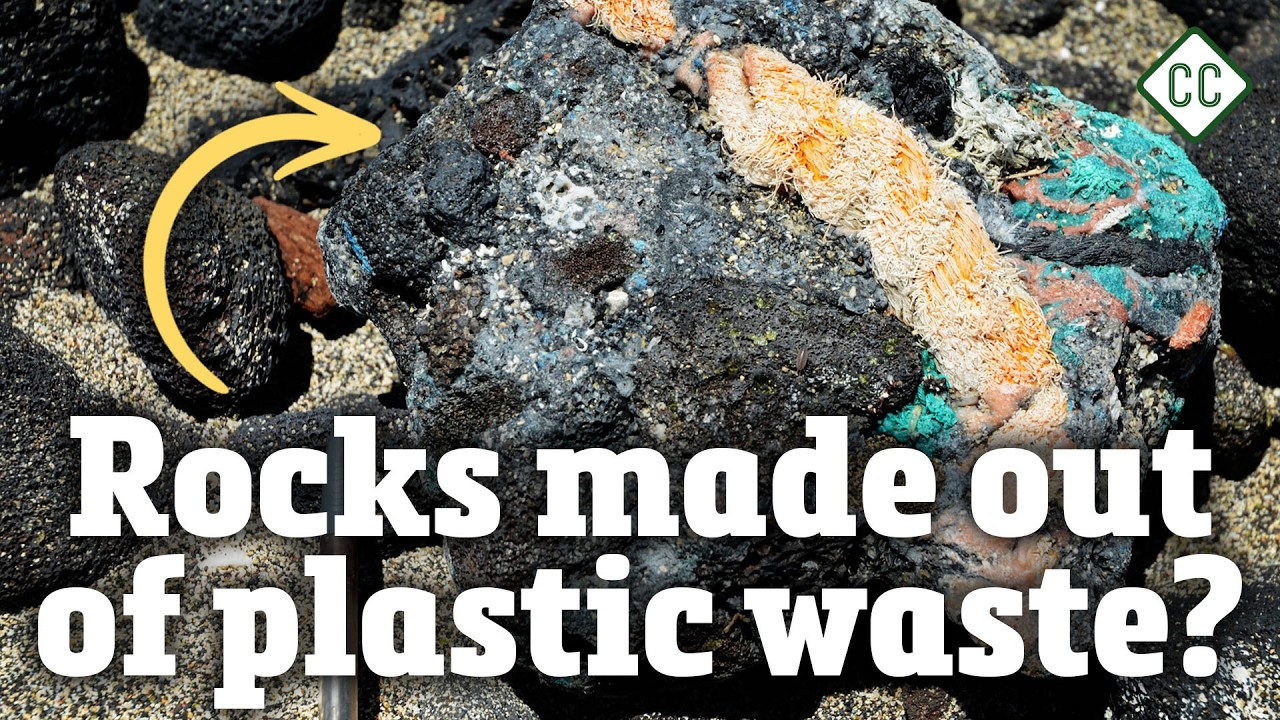
The video provides valuable information by synthesizing complex geological concepts into an accessible format. It explains the Anthropocene debate with clarity, presenting arguments from both proponents and opponents of the epoch designation. The argumentation is well-structured: it starts with evidence of human impact (plastic rocks, land transformation, sediment movement), then explores the scientific process of defining geological epochs, and finally shifts to solutions and adaptation strategies. The inclusion of specific case studies (dam removal, Netherlands flood management) strengthens the argument that adaptation is feasible, while acknowledging that some changes are irreversible. The reasoning is sound and reflects current scientific consensus, though the simplification might omit some nuances.
Scientific Rigor, Source Quality, Title Accuracy
The scientific rigor is high for an educational video. The content aligns with established geological research and the 2024 ICS decision. Sources are properly acknowledged via a linked Google Document, which contains detailed references. The video avoids misinformation and presents a balanced view of the Anthropocene debate. The title accurately reflects the content, covering human-induced geological changes and the ongoing discussion about epochs. The production quality is typical of Crash Course, with clear visuals and expert-reviewed scripting. No sponsored content is present, and the Patreon support mention is a standard call-to-action, not an advertisement. The video does not overstate claims, and the tone is objective.
227 words
Title / Content Match
The title accurately reflects the video's focus on human-driven geological changes and the Anthropocene debate.
Quality & Reliability
8/10
Crash Course is a well-established educational channel with rigorous fact-checking. The episode presents both sides of the Anthropocene debate and clearly attributes sources via a linked document. The scientific content is accurate and balanced, though simplified for a general audience.
Key Moments
Markers derived by PSI from the transcript: the creator did not define chapters.
- Introduction to plastic rocks and human impact on geology.
- Overview of human transformation of Earth's land surface and sediment movement.
- Discussion of the Anthropocene proposal and the ICS vote in 2024.
- Exploration of whether humans can reverse or adapt to changes, with examples of dam removal and nature-based solutions.
- Review of key points and credits.
Cited Sources
- Crash Course Geology Anthropocene Sources — The video's factual claims and references are compiled in this Google Document, which serves as the primary source list.
External References
Contribution & Novelties
The video provides a concise update on the state of the Anthropocene debate after the 2024 ICS vote, making it a relevant resource for understanding recent geological nomenclature discussions. It also bridges the gap between geological evidence and practical adaptation strategies, showing how geology informs climate solutions. The examples of dam removal and ecosystem restoration illustrate actionable approaches to mitigating human impact.
Pour aller plus loin :
- Anthropocene — Wikipedia article offering a thorough overview of the concept and its history.
- International Commission on Stratigraphy — The body responsible for defining geological time units, including the formal rejection of the Anthropocene.
- Enhanced rock weathering — A carbon dioxide removal technique mentioned in the video, undergoing active research.
- Elwha River Dam Removal — Case study of the successful dam removal and ecosystem recovery discussed in the episode.
136 words
Radar Profile
The radar profile shows a balanced performance with higher scores in quality and reliability, moderate in quantity and technical level. This indicates a well-produced educational video that is accurate but not overly dense, suitable for a general audience.