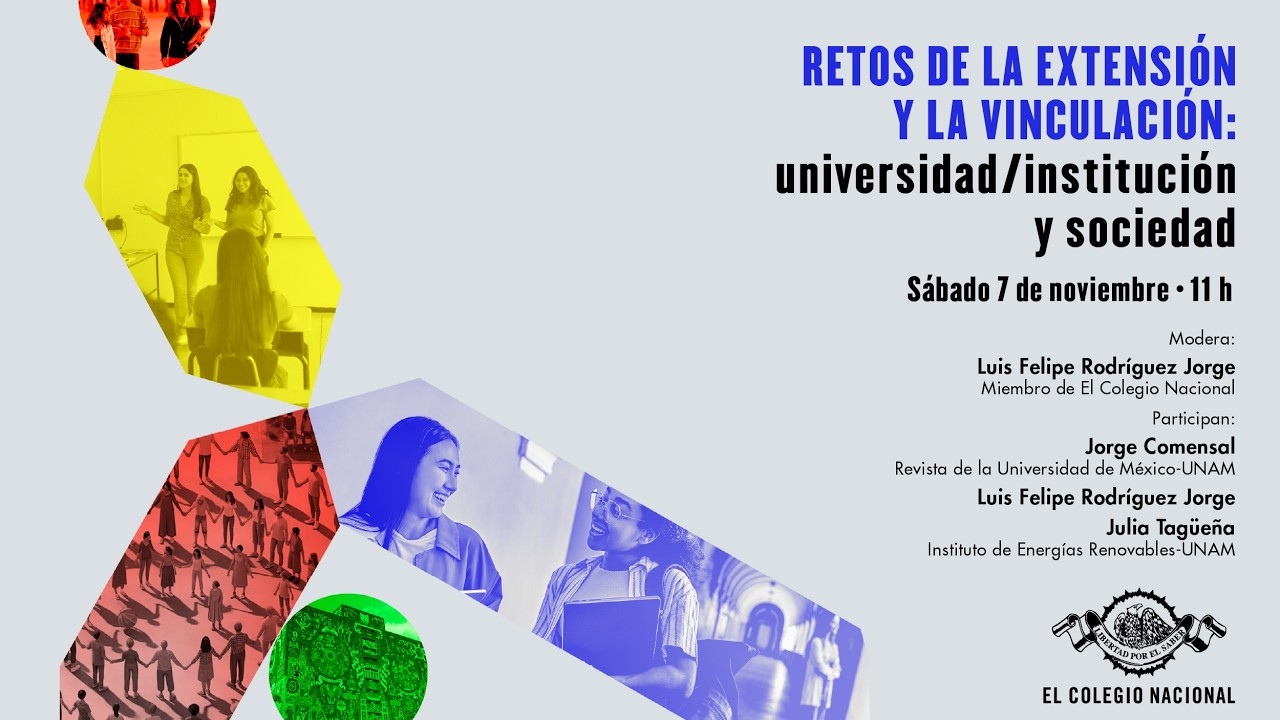
Retos de la extensión y la vinculación: universidad / institución y sociedad
Challenges of extension and linkage: university / institution and society
Title history
- Retos de la extensión y la vinculación: universidad / institución y sociedad — observed on 20261108-0800 UTC (YouTube)
Keywords
Summary
160 words
Critical Evaluation
Value of the Information & Strength of the Argument
The value of the information lies in its synthesis of well-established concepts—such as the deficit vs. dialogic models of science communication and C.P. Snow’s two cultures—with practical examples from the speakers’ own institutional experiences. Tagüeña’s argument for science communication as a human rights issue is compelling and grounded in international legal documents. Comensal’s advocacy for interdisciplinary approaches is persuasive, linking historical philosophical debates to contemporary challenges. Rodríguez’s presentation of citizen science provides a concrete approach to public engagement. The arguments are coherent and supported by credible references, though they remain largely opinion-based rather than evidence-driven. The panel avoids sensationalism and maintains a balanced, academic tone.
Scientific Rigor, Source Quality, Title Accuracy
The scientific rigor is high given the speakers’ credentials and the institutional context of El Colegio Nacional. Tagüeña references specific legal articles (UDHR, ICESCR) and mentions her own published work, while Comensal draws on C.P. Snow’s lectures and philosophical discussions. However, specific citations are not provided in the video description beyond the event page. The title accurately describes the content, which directly addresses the challenges and strategies for university extension and societal linkage. The discussion is well-structured but lacks formal references or empirical data, reducing its technical rigor. The speakers rely on personal experience and authoritative statements, which is appropriate for a panel of experts.
225 words
Title / Content Match
The title accurately reflects the content: a panel discussion on the challenges of university extension and societal linkage.
Quality & Reliability
8/10
The video features expert speakers from prestigious Mexican institutions (UNAM, El Colegio Nacional) discussing substantive topics with references to legal frameworks and established theories. The content is well-structured and grounded in experience, though it represents opinion and discussion rather than original empirical research.
Key Moments
Markers derived by PSI from the transcript: the creator did not define chapters.
- Introduction and presentation of panel members by Luis Felipe Rodríguez
- Julia Tagüeña begins her talk on science communication models and human rights
- Discussion of the deficit model and transition to dialogic model in science communication
- Jorge Comensal's presentation on the two cultures and the separation of sciences and humanities
- Comensal advocates for a new renaissance uniting arts, humanities, and sciences
- Luis Felipe Rodríguez introduces citizen science and its role in public engagement
- Q&A and open discussion with the audience
Cited Sources
- XI Encuentro Libertad por el Saber: La educación superior en un mundo cambiante — Official event page from El Colegio Nacional providing context and program details.
Contribution & Novelties
The video offers a thoughtful integration of science communication theory, human rights perspectives, and practical insights from leading Mexican academics. Its originality lies in framing university extension as both a human right and a democratic necessity, and in proposing a renewed interdisciplinary approach to overcome the fragmentation of knowledge. The inclusion of citizen science adds a forward-looking dimension to public engagement.
Pour aller plus loin :
- Science communication — Overview of the field and its models.
- The Two Cultures — C.P. Snow’s influential lecture on the science-humanities divide.
- Citizen science — Details on public participation in scientific research.
98 words
Radar Profile
The profile shows high scores in quality and reliability, moderate in information quantity, and lower in technical rigor, reflecting an expert panel discussion that is substantive but not highly technical. The balance suggests a content focused on conceptual and societal aspects rather than methodological precision.