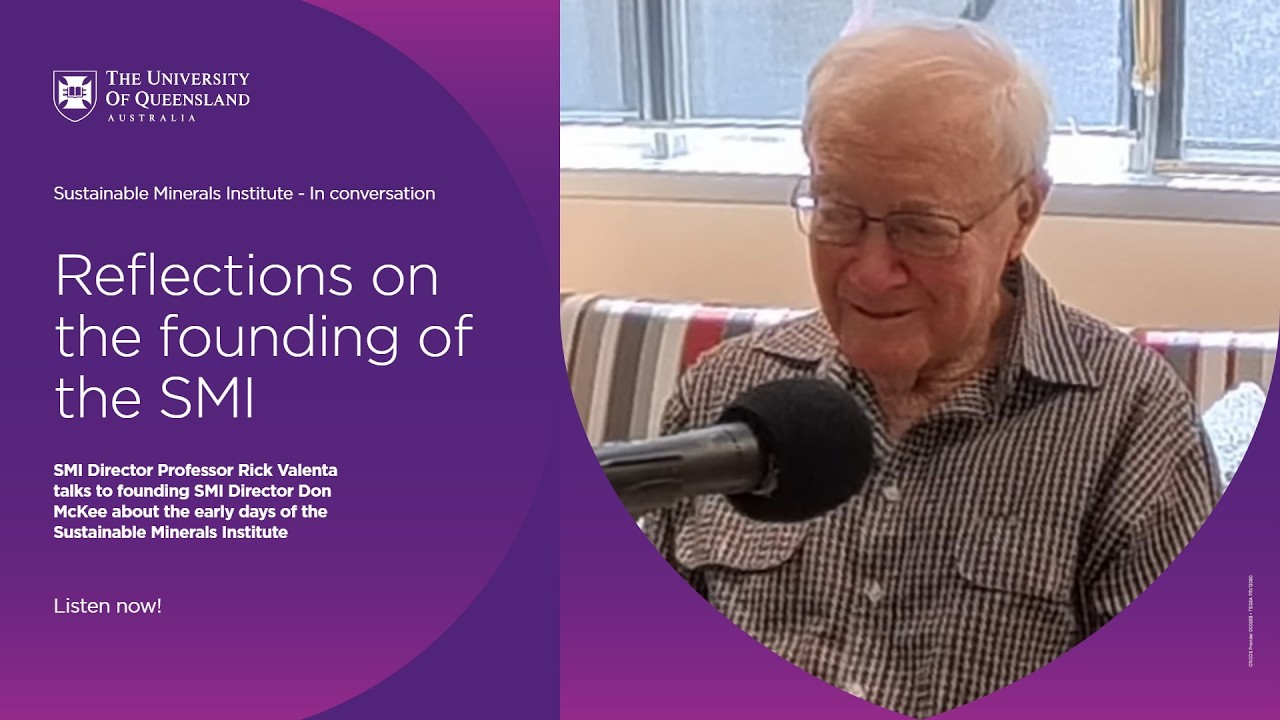
In conversation: Reflections on the founding of the Sustainable Minerals Institute
Keywords
Summary
207 words
Critical Evaluation
Value of the Information & Strength of the Argument
The value of this interview lies in its insider perspective on how a major research institute was conceived and established. McKee provides concrete details about the negotiation, funding, and strategic decisions, offering a rich case study of institutional entrepreneurship. The argumentation is coherent, emphasizing the iterative model of identifying industry needs, appointing non-traditional leaders, and fostering independence. However, the account is anecdotal and relies on memory, without mentioning any formal documents or external evidence. The discussion is forward-looking, suggesting areas like cost control as future research directions, but these are presented as opinions rather than substantiated analyses.
Scientific Rigor, Source Quality, Title Accuracy
The video is a first-person testimony, which inherently has limitations regarding objectivity. McKee names specific individuals and organizations (e.g., Jim Joy, David Brereton, Chris Moran, ICMM, MMSD) but does not provide citations or references. The title accurately describes the content as a conversation and reflections on founding, which is appropriate. No external sources are cited in the description, so the evidential base is entirely oral. The institutional affiliation (UQ) adds some credibility, but as a promotional video, it may present a favorable narrative. Overall, the scientific rigor is moderate; it is more a historical recollection than a rigorously researched account.
212 words
Title / Content Match
The title accurately reflects the conversational retrospective on the institute's founding.
Quality & Reliability
7/10
First-hand account by the founding director, providing historically grounded detail but relying on memory and anecdote; no external sources cited.
Key Moments
Markers derived by PSI from the transcript: the creator did not define chapters.
- Introduction by Rick Valenta, setting the context of SMI's 25th anniversary.
- McKee begins describing the origins in the Julius Kruttschnitt Centre and other centers.
- Establishment of the Minerals Industry Safety and Health Centre; appointment of Jim Joy.
- Development of the proposal for a minerals institute; funding from Queensland government.
- Discussion of the global MMSD project and industry attitude toward sustainability.
- Priority on social issues; establishment of the Centre for Social Responsibility in Mining with David Brereton.
- Funding model and self-sustainability expectations; comparison with the JK Centre.
- Challenges in the first year; company memberships and KPIs.
- Creation of the water centre with Chris Moran; recruitment of non-traditional leaders.
- Reflections on future directions, including cost control in mining.
Contribution & Novelties
The video offers a unique oral history of the founding of an influential research institute, detailing the entrepreneurial approach to establishing industry-funded research centers. It provides insights into the culture of the JK Centre and its influence on SMI’s model. The discussion of MMSD and ICMM situates the institute within a broader global movement, but without external references.
Pour aller plus loin :
- Sustainable Minerals Institute - University of Queensland — Official website, current research and history.
- Mining, Minerals and Sustainable Development (MMSD) — The project mentioned by McKee, relevant context.
- International Council on Mining and Metals (ICMM) — Organization that emerged from MMSD, directly related.
- Julius Kruttschnitt Mineral Research Centre — Predecessor institute, central to the interview.
118 words
Radar Profile
The profile shows moderate to high scores across information quantity, quality, and reliability, but lower technical level. This reflects a narrative and reflective interview rather than a technical exposé. The reliability is moderate due to anecdotal nature, while the information quantity is good for a historical account.