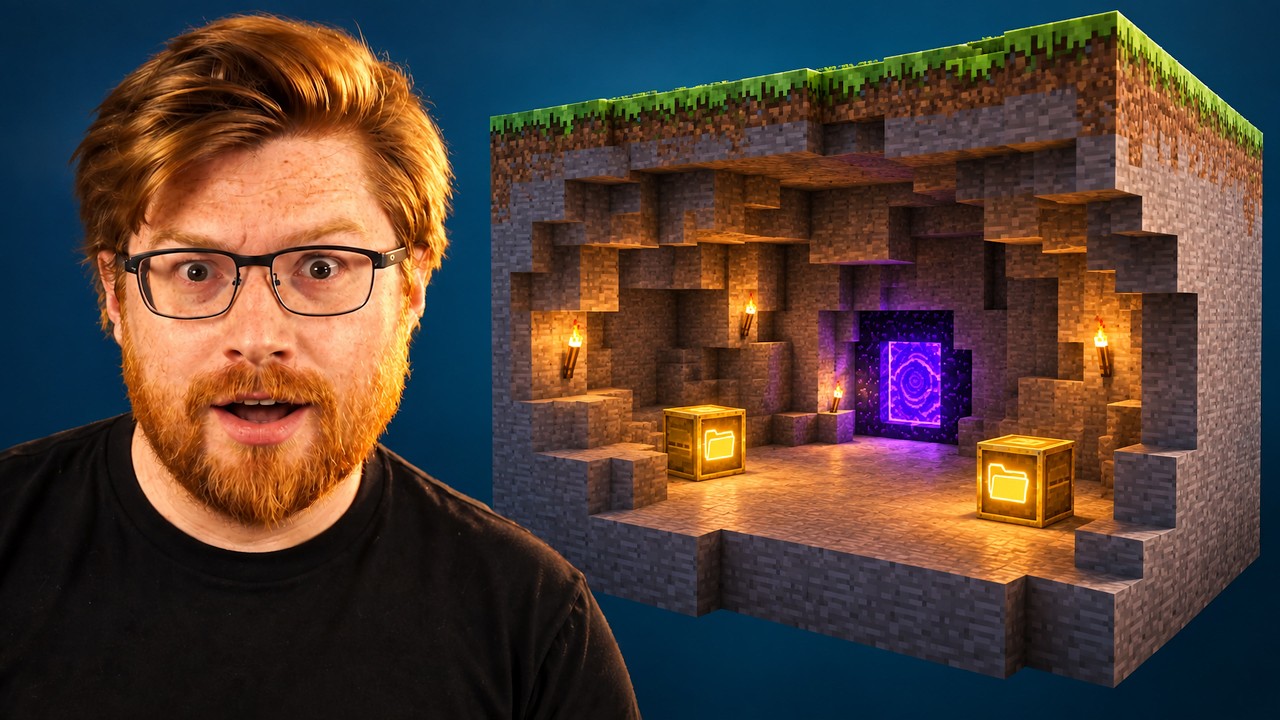
My AI Cybersecurity Mod Finally Looks Like a Real Game
Keywords
Summary
157 words
Critical Evaluation
Value of the Information & Strength of the Argument
The video provides insight into the practical use of AI code generation for game development, demonstrating both its capabilities and limitations. The creator’s argumentation is based on hands-on testing and iterative refinement, which adds credibility to the process. However, the content is more about documenting a personal project than presenting a rigorous technical study, and the lack of structured analysis or benchmarks weakens the argumentation’s scientific value.
Scientific Rigor, Source Quality, Title Accuracy
The video does not cite academic sources; it relies solely on the creator’s experience and community input. The description links to training resources and tools, but they are not directly referenced in the video content. The title is honest and descriptive, accurately reflecting that the mod has reached a more polished, game-like state. No public comments were provided, so community reception could not be assessed.
147 words
Title / Content Match
The title accurately reflects the content: the mod visibly evolves from basic boxes to more immersive cave and space-station environments, meeting the promise of a game-like experience.
Quality & Reliability
6/10
The video is a transparent development log of an AI-assisted Minecraft mod, showing real code and iterative testing. However, it lacks formal sources, scientific rigor, or verifiable claims; it is anecdotal and based on personal experience.
Key Moments
Markers derived by PSI from the transcript: the creator did not define chapters.
- Introduction and confession about vibe coding the Minecraft mod
- Discussion of world generation issues and chat suggestions for chamber types
- Chat proposes various enclave designs (caves, castles, aquariums) and the idea of schematic files
- Exploration of schematic file concept and decision to build a registry of chamber types
- Codex implements the registry with a working cave chamber and testing begins
- Portal teleportation issues lead to accidental Nether entry; decision to reset world
- Request for invisible light blocks to improve cave visibility
- Vote for space station as second chamber type, with ideas for gravity effects
- Final thoughts: next steps involve file representation and interactivity, and call to action
Cited Sources
- Just Hacking Training — Training resource mentioned in the video description.
- Newsletter — Link to John Hammond's newsletter, from the description.
- Infosec Map — Resource for cybersecurity events, from the description.
- CodeCrafters — Coding learning platform, advertised in the description.
- OpenVPN — VPN hosting resource, mentioned in the description.
- CyberDefenders — Blue team training and SOC analyst certifications, from the description.
Contribution & Novelties
The video’s original contribution lies in demonstrating a practical, iterative workflow combining AI code generation (Codex) with community-driven design for a cybersecurity-themed Minecraft mod. It highlights how AI can be leveraged for rapid prototyping and problem-solving in game development, while also exposing pitfalls like handling world generation complexity. The approach of using a registry for different environment types is a modular design idea that could be reused in similar projects.
Pour aller plus loin :
- Minecraft modding — Overview of modding concepts and history, relevant to understanding the technical background.
- Procedural generation — Technique used for creating random environments, directly applicable to the cave and space-station generation.
- Ethical hacking — Context behind the cybersecurity theme, as the mod simulates exploring open directories for malware.
124 words
Radar Profile
The radar profile shows balanced but modest scores, with information quality and technical level slightly higher than quantity and reliability. This reflects a video that is technically informative and well-presented, yet lacks rigorous sourcing and comprehensive coverage.