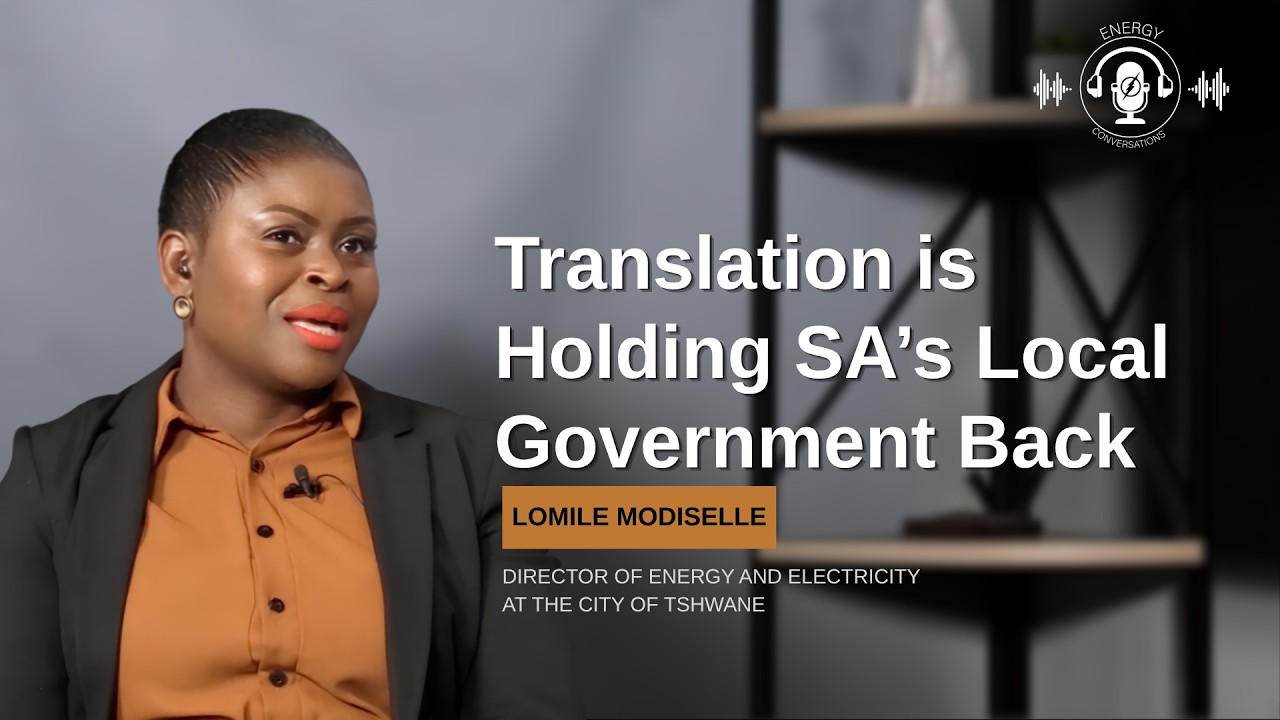
Are South Africa's municipal grids ready for the energy transition?
Keywords
Summary
188 words
Critical Evaluation
Value of the Information & Strength of the Argument
The primary value of this episode lies in its focused attention on municipal-level challenges, which are often overshadowed by national debates on Eskom. The interviewee presents a structured argument based on her research, using analogies and examples to illustrate points. The argumentation is coherent and grounded in practical experience, though it relies heavily on a single researcher’s perspective and qualitative findings, without presenting quantitative data or comparative analysis. The discussion of skills gaps and institutional silos offers useful insights for policy makers and energy professionals.
Scientific Rigor, Source Quality, Title Accuracy
The scientific rigor is moderate. The research is a master’s study, which is credible but not peer-reviewed. The video does not cite specific publications or external sources; it references the African Energy Leadership Centre and Wits Business School as supporting institutions. The description includes no links to reports or papers, limiting verifiability. The title is appropriate and matches the content. No comments were provided to gauge public reception.
168 words
Title / Content Match
The title accurately reflects the content, which discusses the readiness of municipal grids for the energy transition in South Africa.
Quality & Reliability
6/10
The episode is based on a master's research project and expert opinion, but lacks verifiable citations within the video or description. The discussion is informative but limited in depth and source referencing.
Chapters
- Introduction
- The relay race: why the municipality is the last mile
- Inside the research: SDG7 and why Gauteng
- The findings: policy is ready, implementation isn't
- The structural silos holding municipalities back
- Grid modernisation: from grid muscle to grid intelligence
- Fix the roof first: prioritising infrastructure investment
- The real skills gap: retention and succession planning
- Why energy professionals now need "translation skills"
- Applying an African lens to the energy transition
- What to realistically expect by 2030
- Closing thoughts: coordination, elections and accountability
Cited Sources
- African Energy Leadership Centre, Wits Business School — Mentioned as the research hub supporting the study and producing the podcast.
Contribution & Novelties
The episode sheds light on the underappreciated role of municipalities in the energy transition, emphasizing that policy readiness does not guarantee implementation. It introduces concepts like ’translation skills’ needed for energy professionals, and stresses the importance of retention and succession planning in addressing skills gaps. The African lens offers a reminder that challenges are context-specific.
Pour aller plus loin :
- Sustainable Development Goal 7 — Closely related to the research framework on affordable and clean energy.
- Just Transition — Contextualises the broader energy transition in South Africa.
- Grid Modernisation — Relevant to discussions on updating grid infrastructure.
97 words
Radar Profile
The radar profile shows moderate scores across quantity and quality of information, with lower technical depth and credibility. This reflects an expert discussion that is accessible but lacks formal citations and detailed data.