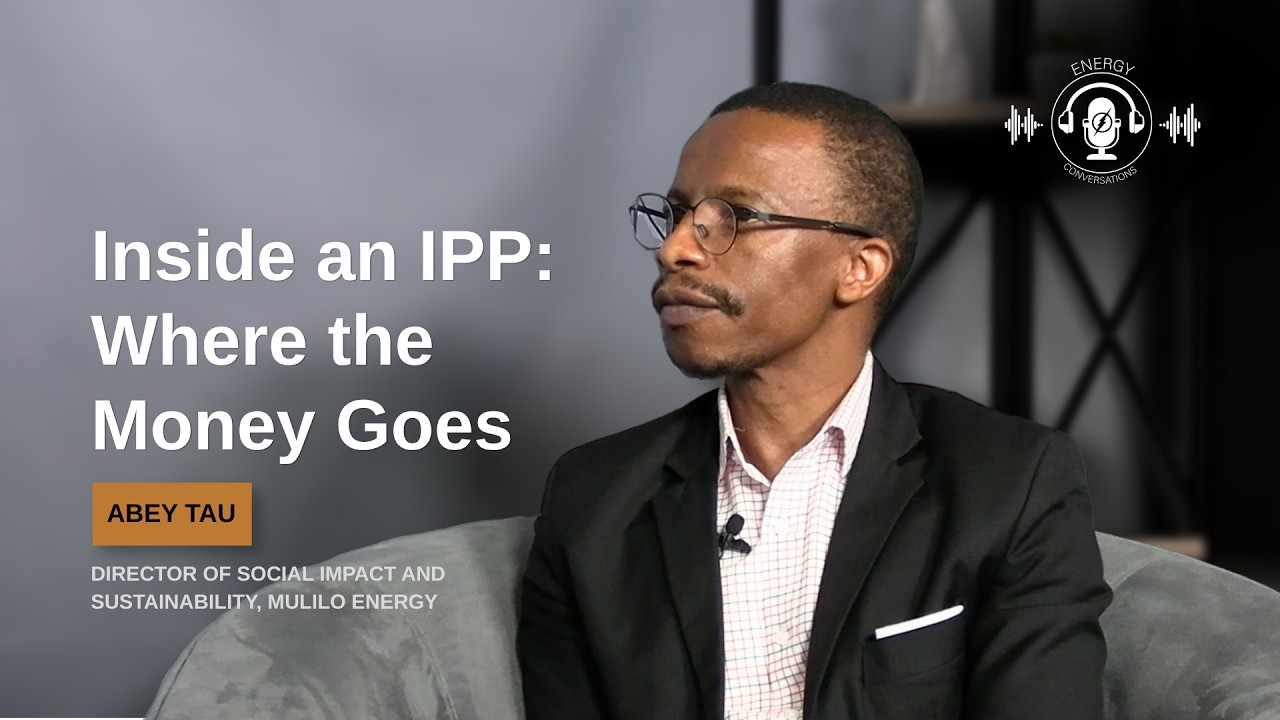
Inside an IPP: The real path from project commitment to community benefit | Abey Tau
Keywords
Summary
170 words
Critical Evaluation
Value of the Information & Strength of the Argument
The value of this conversation lies in its practitioner perspective. Abey Tau provides concrete insights into how IPPs operationalize community commitments, clarifying jargon like SED, ESD, and supplier development. He explains the mechanics of community trusts, including trustee selection and fund flow, which is rarely covered in accessible media. The argumentation is coherent and grounded in real-world experience, but it remains at a descriptive level without quantitative evidence or systematic analysis. Tau’s arguments are persuasive because they reflect the practical realities of navigating both public and private energy projects in South Africa. However, the discussion would benefit from specific examples or case studies to strengthen its claims. Overall, the value is high for someone seeking to understand the social dimension of IPP projects, but the argumentation lacks critical scrutiny of potential pitfalls beyond reputation and neighborliness.
Scientific Rigor, Source Quality, Title Accuracy
The video relies entirely on the guest’s professional expertise; no external sources are explicitly cited. The description provides links to the podcast’s social media and WhatsApp channel, which are promotional rather than informational references. The title is faithful to the content, which delivers a detailed narrative of IPP project cycles and community engagement. The rigour is acceptable for an expert opinion format, but the lack of documented sources limits its scientific verifiability. The inclusion of a mid-roll subscription push (around 10-15 minutes) is noted but does not detract from the substance. The conversation adheres to the stated premise and provides a coherent insider account.
255 words
Title / Content Match
The title accurately reflects the content, which details the journey from project commitments to tangible community benefits, including SED, ESD, community trusts, and long-term impact strategies.
Quality & Reliability
8/10
The guest, Abey Tau, is Director of Social Impact and Sustainability at Mulilo Energy, directly involved in IPP community engagement. The discussion draws on his professional experience and knowledge of South African energy procurement frameworks, lending practical credibility. However, the content is largely opinion-based without written sources or data, which limits its overall reliability.
Key Moments
Markers derived by PSI from the transcript: the creator did not define chapters.
- Host introduces the topic of what communities should expect from IPP projects.
- Tau explains the three-pronged benefits: jobs, enterprise development, and social funding.
- Comparison of public REIPPPP obligations vs. private PPAs and the role of reputation.
- Detailed walkthrough of the project life cycle, from EIA to community engagement.
- Discussion of construction phase, community liaison officers, and grievance processes.
- Examination of community trusts: structure, funding, and administration.
- Differentiation between 'changing lives' and 'impact', with a call for strategic long-term planning.
Cited Sources
- Energy Conversations WhatsApp Channel — Channel for engaging with the podcast community.
- Energy Conversations LinkedIn — Professional network page for the podcast.
Contribution & Novelties
The video brings an insider’s view on IPP community engagement, clarifying the practical differences between SED, ESD, and supplier development, and detailing the governance of community trusts. It also presents a useful framework for distinguishing short-term aid (‘changing lives’) from long-term strategic impact. This is valuable for students, policymakers, and community members grappling with energy project expectations.
Pour aller plus loin :
- Renewable energy in South Africa — Overview of the sector, including IPP programs and policy context.
- Corporate social responsibility — Framework relevant to socio-economic development and enterprise development.
- Community trust administration in renewable energy projects — concept without URL, but directly relevant to the trust governance discussed.
109 words
Radar Profile
The radar profile shows high scores in information quantity and quality, with moderate technical level and slightly lower reliability. This reflects a content that is rich in experiential detail and well-explained, but lacking formal citations and systematic verifiability, which is typical of expert interviews.