CCU Graduate Algorithm 2015 NP-completeness
Title history
- CCU Graduate Algorithm 2015 NP-completeness — observed on 20261028-0452 UTC (YouTube)
Keywords
Summary
205 words
Critical Evaluation
Value of the Information & Strength of the Argument
The value of the information is high as it provides a clear, accessible explanation of a fundamental concept in computational complexity. The argumentation is solid: the instructor builds the idea of reduction step-by-step, using simple examples that are easy to follow, then logically progresses to the formal definitions and their consequences. The claim that solving any NP-complete problem in polynomial time would collapse P=NP is correctly articulated and well-justified through the transitivity of reductions. The historical narrative is engaging and reinforces the importance of the concepts without undermining the technical rigor.
Scientific Rigor, Source Quality, Title Accuracy
The lecture is scientifically rigorous; the definitions are precise and the reasoning is sound. The instructor does not cite external sources, but the content aligns with established theoretical computer science knowledge. The title accurately mirrors the content, with no misleading elements. The lecturer occasionally apologizes for technical glitches, but they do not affect the scientific validity. The historical anecdotes about Cook and Karp are accurate according to common knowledge, though no specific references are given.
181 words
Title / Content Match
The title exactly matches the content: the lecture focuses on the definition and implications of NP-completeness. Excellent alignment.
Quality & Reliability
8/10
The lecture is a thorough, structured explanation of NP-completeness, including formal definitions, illustrative examples, and historical context. The instructor demonstrates deep understanding and the arguments are logically coherent. No misleading claims or unsupported assertions are present.
Key Moments
Markers derived by PSI from the transcript: the creator did not define chapters.
- Introduction: recall of P and NP, and their relationship.
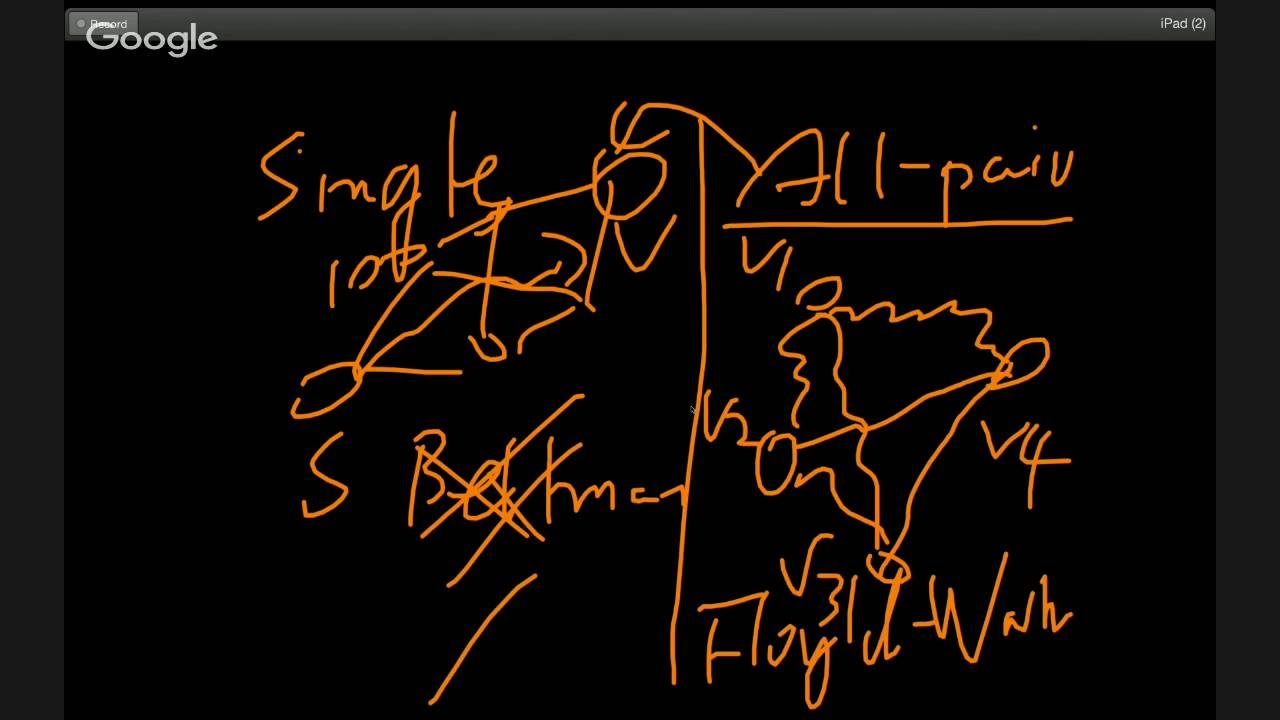
- First example of reduction: single-source to all-pairs shortest path.
- Second example: Boolean variables to integer sum.
- Third example: LIS reduced to LCS.
- Formal definitions of NP-hard and NP-complete.
- Cook's theorem: first NP-complete problem (circuit satisfiability).
- Karp's 21 NP-complete problems and their historical impact.
- Conclusion: significance and interconnectedness of NP-complete problems.
Contribution & Novelties
This lecture provides a comprehensive and pedagogical introduction to NP-completeness, making abstract concepts accessible through concrete examples and a clear narrative. It emphasizes the key role of polynomial-time reductions and illustrates how to prove a problem is NP-complete by reducing from an already-known one. The inclusion of historical context enriches the understanding of why these concepts are central to computer science.
Pour aller plus loin :
- NP-completeness — Overview of definition, examples, and implications.
- Cook–Levin theorem — The first proof that a problem (SAT) is NP-complete.
- P versus NP problem — The central open question related to NP-completeness.
- Richard M. Karp — Biography and his contribution of 21 NP-complete problems.
110 words
Radar Profile
The radar profile shows high scores in information quantity and quality (8), a good technical level (7), and high reliability (8). This indicates a well-balanced and informative lecture that is technically sound and based on solid scientific ground, though not extremely advanced in terms of mathematical formalism.