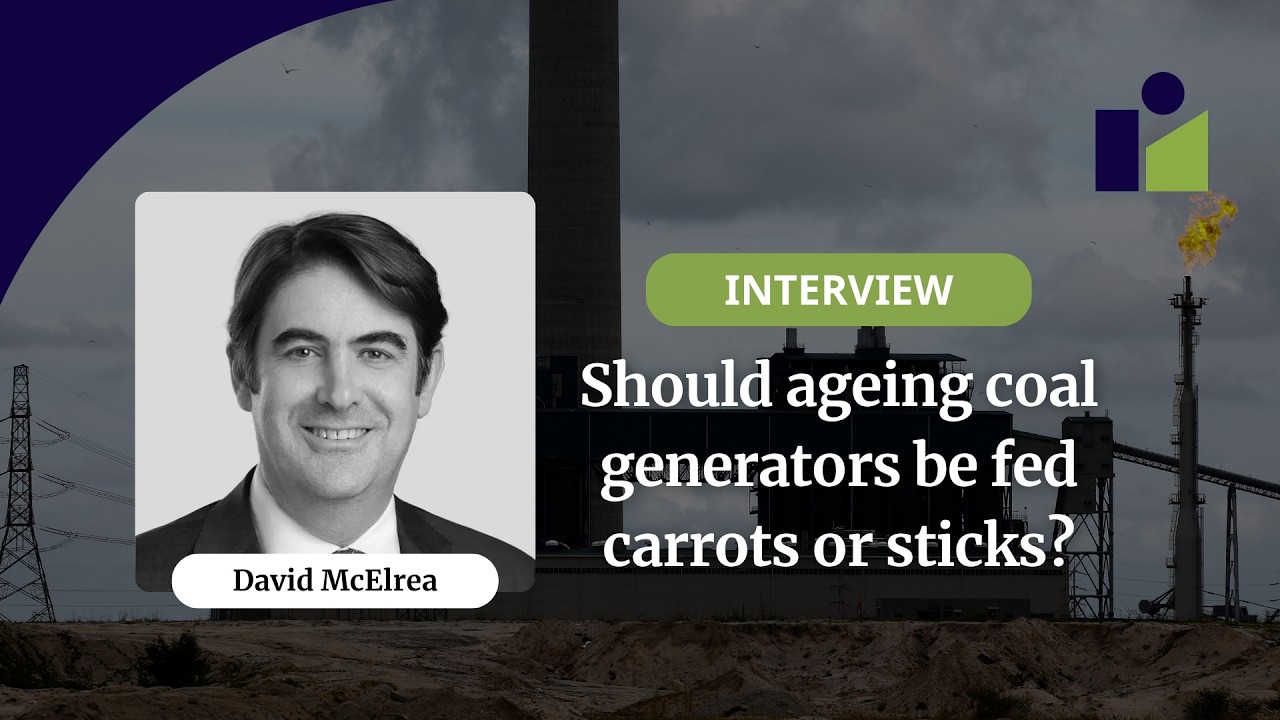
Should ageing coal generators be fed carrots or sticks?
Keywords
Summary
191 words
Critical Evaluation
Value of the Information & Strength of the Argument
The value of the information lies in McElrea’s insider perspective on Australian energy politics and his clear articulation of industry concerns. He provides specific data points—such as the baseline of 198 million tons under the Safeguard Mechanism and the current 133 million tons—that ground his argument. His argumentation is coherent and logical, linking government policy to market effects and presenting a concrete policy proposal (zero baseline after closure dates) that could have real impact. However, the arguments are one-sided, representing the renewable industry’s viewpoint without hearing from the Queensland government or utilities. The hosts challenge some points, but the overall tone is advocacy-driven, which may reduce perceived neutrality.
Scientific Rigor, Source Quality, Title Accuracy
The episode relies on personal testimony and industry knowledge rather than cited academic or official sources. McElrea references the Safeguard Mechanism review, specific projects like CopperString and Barumba, and financial figures (e.g., CS Energy’s $450 million subsidy for Gladstone Power Station), but these are not formally sourced within the podcast. The description provides only social media and newsletter links, offering no additional references. The title is well-matched: the metaphor of carrots and sticks accurately captures the debate between incentivizing renewable builds and penalizing coal extensions. The hosts maintain a professional tone, and while the discussion is expert, it lacks formal citations, making it more of an opinion piece than a rigorously sourced analysis.
236 words
Title / Content Match
The title poses a policy question that is directly addressed throughout the episode, with both sticks (carbon pricing) and carrots (incentives) discussed practically.
Quality & Reliability
7/10
Discussion features a senior industry leader with direct knowledge of policy and market conditions, but the content is explicitly advocative and lacks independent verification of claims.
Key Moments
Markers derived by PSI from the transcript: the creator did not define chapters.
- Welcome and introduction to the Energy Insiders podcast and guest David McElrea.
- McElrea discusses his first five months as CEO and the pace of change.
- Critique of Queensland LNP government's deliberate strategy to hinder renewables.
- Gladstone smelter and Rio Tinto: firming requirements and closure risk.
- Proposal for carbon pricing on coal generators under the Safeguard Mechanism.
- Smart Energy Council priorities: C&I solar, EV charging, and network roles.
Cited Sources
- Renew Economy on LinkedIn — Company profile and updates from the channel.
- Renew Economy on Bluesky — Social media presence for the broadcast.
- Daily Newsletter Signup — Subscription page for the publication's daily newsletter.
Contribution & Novelties
This episode offers a direct view of the policy battles surrounding Australia’s energy transition, particularly the clash between federal renewable ambitions and Queensland’s coal-focused state government. McElrea’s proposal to apply a zero baseline under the Safeguard Mechanism to retiring coal plants is a concrete, implementable idea that adds to the policy discussion. The conversation also highlights the importance of industrial and commercial solar, EV charging infrastructure, and the emerging debate on network versus market ownership.
Pour aller plus loin :
- Safeguard Mechanism (Australia) — Background on the policy mechanism central to the episode’s core proposal.
- Coal power in Australia — Context on the role of coal generators and their closure schedules.
- Carbon pricing in Australia — Historical and current approaches to pricing emissions, relevant to the stick approach discussed.
129 words
Radar Profile
The profile shows a moderately high quantity of information with average quality and reliability, reflecting a detailed but opinion-driven podcast. Technical depth is moderate, indicating accessibility to a general audience.