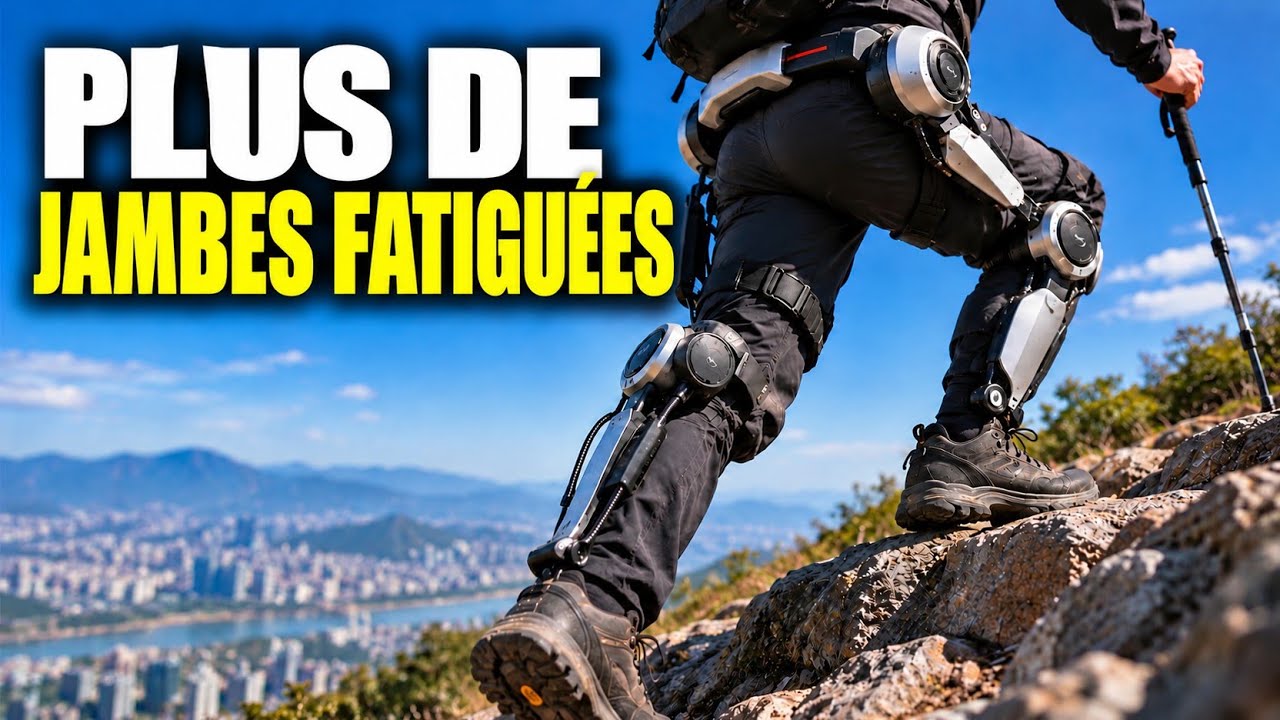
La Chine A Créé Des Jambes Robotiques Qui Te Rendent 40 % Plus Fort
China Created Robotic Legs That Make You 40% Stronger
Title history
- La Chine A Créé Des Jambes Robotiques Qui Te Rendent 40 % Plus Fort — observed on 20261031-2258 UTC (YouTube)
Keywords
Summary
178 words
Critical Evaluation
Value of the Information & Strength of the Argument
The video’s value lies in its systematic deconstruction of a marketing claim (40% strength) by separating technical specifications (motor torque) from practical experience (perceived effort). It supports its argument with a range of sources: company-published tests, independent media reviews, medical systematic reviews, and field observations from Mount Tai. The argumentation is coherent, avoiding overstatement, and explicitly addresses limitations such as battery life, comfort, and the difference between motor assistance and actual physiological relief. It also distinguishes between recreational, industrial, and medical exoskeletons, showing how the engineering priorities and evidence bases differ. The narrative is persuasive without being sensationalist, presenting a nuanced view that the technology is real but its benefits are context-dependent.
Scientific Rigor, Source Quality, Title Accuracy
The video demonstrates scientific rigor by citing specific studies and reviews, such as the Cochrane review on robot-assisted gait training after stroke and a randomized trial published in Stroke, while also referencing media testers like SlashGear and Expert Reviews. It notes the lack of transparency in some company claims (e.g., the small sample size of Hypershell’s oxygen test) and the absence of safety standards in China. The title matches the content, though it might over-emphasize the ‘40%’ claim; however, the video immediately contextualizes it. The narrative is well-sourced, but the reliance on a promotional eBook link in the description for further reading is a minor weakness. Overall, the title is fair, and the sources are diverse and credible.
245 words
Title / Content Match
The title accurately reflects the video's focus on the 40% strength claim and its critical examination, though it may be seen as slightly sensationalist.
Quality & Reliability
8/10
The video provides a balanced analysis, distinguishing between marketing claims and scientific evidence, citing multiple reputable sources such as Cochrane reviews, academic journals, and field tests, while acknowledging limitations and variations across applications.
Key Moments
Markers derived by PSI from the transcript: the creator did not define chapters.
- Introduction to the 40% strength claim and its caveat.
- Hypershell startup background and funding from Kickstarter and major investors.
- How the Hypershell device works: sensors, motor at the hip, and activation modes.
- Field tests from Expert Reviews and SlashGear, showing real effort reduction but battery and comfort issues.
- Mount Tai rental program: exoskeletons for tourists, including elderly users and cost analysis.
- ULS Robotics: industrial exoskeletons for workers, focusing on lifting and back support.
- Fourier Intelligence: medical exoskeletons for rehabilitation after stroke or spinal injury, with safety features.
- Medical evidence: Cochrane review and a Stroke trial show modest benefits, not a cure.
- User experiences and limitations including discomfort, misinterpretation, and learning curve.
- Pricing and availability in North America, tariffs, and buyer guidance.
Cited Sources
- Falling Behind eBook — Promotional product linked in description, not used as a scientific source.
Contribution & Novelties
The video adds value by clarifying the discrepancy between motor torque claims and real-world effort reduction, and by surveying the landscape of Chinese exoskeleton companies across recreational, industrial, and medical sectors. It provides a critical lens on marketing hype and underscores the importance of evidence-based evaluation.
Pour aller plus loin :
- Exoskeleton - Wikipedia — Overview of exoskeleton technology and classification.
- Robotic rehabilitation - Wikipedia — Background on robotic systems used in therapy.
- Cochrane Review on robot-assisted training after stroke (no URL provided) — Systematic evidence on efficacy and limitations.
90 words
Radar Profile
The scores show a balanced profile with high information quantity, quality, and reliability, while technical level is slightly lower, reflecting an accessible but well-informed presentation. The overall assessment is strong but not perfect, indicating a trustworthy source with minor caveats in depth.