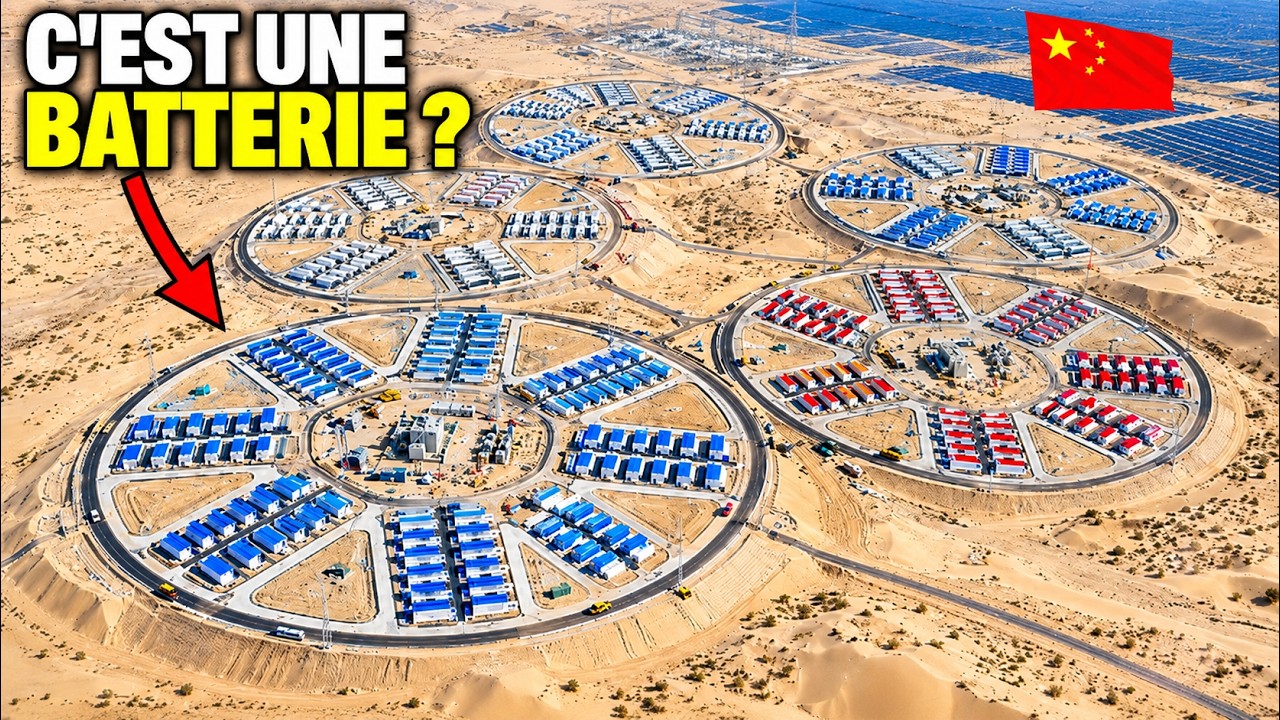
La Chine vient de construire quelque chose d'incroyable
China has just built something incredible
Title history
- La Chine vient de construire quelque chose d'incroyable — observed on 20261031-2254 UTC (YouTube)
Keywords
Summary
173 words
Critical Evaluation
Value of the Information & Strength of the Argument
The video provides substantial value by breaking down a complex energy storage project into clear technical and economic components. It effectively explains the rationale behind the remote desert location, the engineering choices, and the operational data. The argumentation is solid, supported by specific figures such as the 86% efficiency, the 367 cycles, and cost comparisons against the Oneida project. However, the creator also acknowledges limitations, including the modest grid-forming capacity and long-term degradation uncertainty. The analysis is balanced, not overselling the project’s capabilities, and provides a critical comparison with other facilities.
Scientific Rigor, Source Quality, Title Accuracy
The video relies on several secondary sources such as Solarbe, Rho Motion, ISS News, and official reports from China’s National Energy Administration. It clearly distinguishes between supplier claims and measured performance. The title accurately reflects the content, highlighting a remarkable engineering achievement without exaggerated claims. The adequacy between title and content is good, as the video delivers on the promise of exploring an incredible battery installation. However, the video could improve by providing direct links to its sources in the description, as only a promotional link is present.
194 words
Title / Content Match
The title is catchy and matches the content which highlights a remarkable Chinese battery project.
Quality & Reliability
8/10
The video provides detailed data and references, but relies on secondary sources and may have biases.
Key Moments
Markers derived by PSI from the transcript: the creator did not define chapters.
- Introduction to the five giant rings in the desert.
- Construction design: circular platforms adapted to dunes to minimize earthworks.
- The solar curtailment problem in Xinjiang and the need for storage.
- Explanation of gigawatts and gigawatthours, and the battery components.
- Grid-forming vs. grid-following inverters, and the small share of grid-forming in this station.
- Performance data: 367 cycles and 86% round-trip efficiency, compared to the planned 91%.
- Cost comparison with the Oneida project in Ontario, highlighting the cost advantage of Chinese systems.
- China's battery storage boom, including 136 GW installed by end of 2025, and increasing exports.
- Impact on North America: tariffs on Chinese batteries and market dynamics.
- Limitations: four-hour storage cannot cover multi-day low-renewable periods, and long-term degradation remains unproven.
Cited Sources
- Ebook Falling Behind — Promotional material referenced in description.
Contribution & Novelties
The video provides an original synthesis of publicly available data on a specific energy storage project, offering context that goes beyond the initial announcement. It clarifies the technical differences between grid-following and grid-forming capabilities, and places the project within China’s broader storage boom. The cost comparison with North American projects is particularly enlightening, though it acknowledges the caveats. For viewers, it adds value by interpreting raw numbers into meaningful implications.
Pour aller plus loin :
- Lithium iron phosphate battery — Relevant to the cell chemistry discussed.
- Grid-forming inverter — Explains the technology used to stabilize grids.
- Curtailment (electricity) — Describes the problem of unused renewable generation.
106 words
Radar Profile
The radar profile shows a well-rounded video with strong scores in information quantity and quality, but slightly lower technical depth and reliability due to reliance on secondary sources.