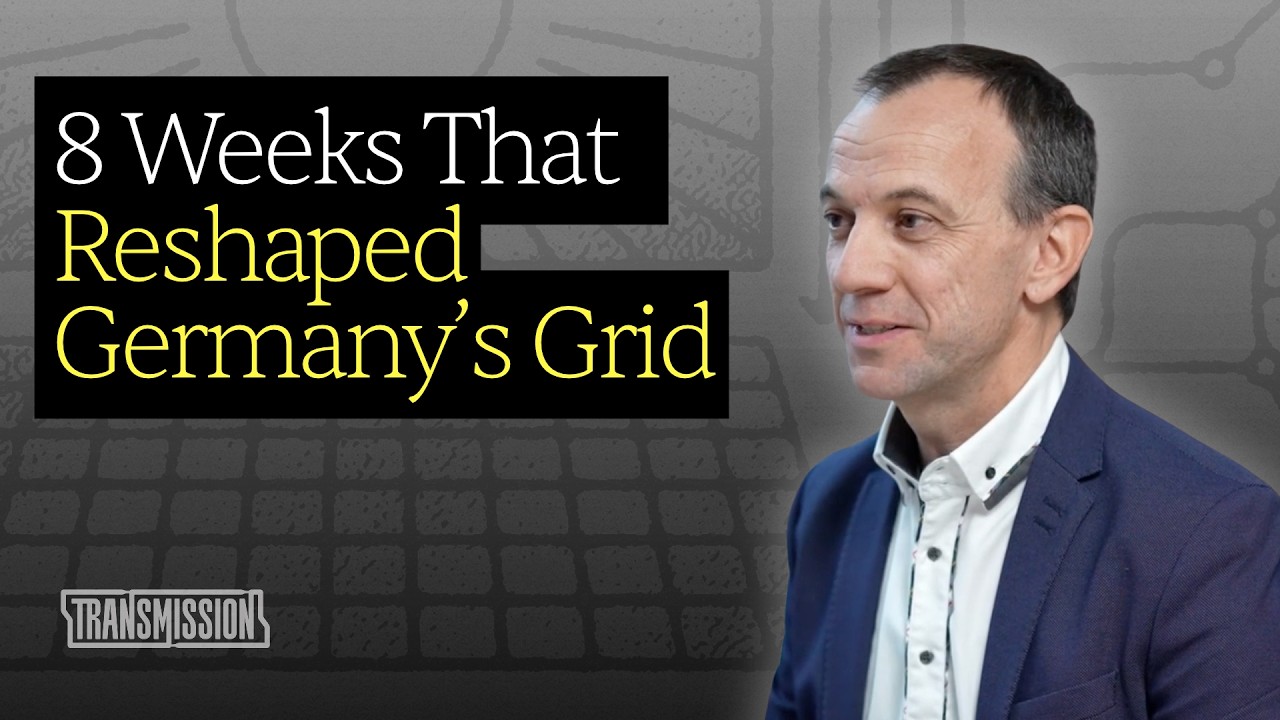
Why Batteries Need Rules to Scale in Germany - ECO STOR
Keywords
Summary
231 words
Critical Evaluation
Value of the Information & Strength of the Argument
The value lies in the detailed, first-hand perspective of an active developer on the practical challenges and regulatory frictions in the German battery market. Gallmetzer provides concrete examples (Bollingstedt, capacity auction results) and quantifies potential gains (30–40% grid capacity via curative dispatch). The argumentation is coherent, emphasizing the need for mutual trust between grid operators and developers, and systematically dissects the unintended consequences of market design (clawback, frozen schedules). The discussion is well-structured, moving from general misconceptions to specific technical and regulatory mechanisms, supported by references to recent events and data from Modo Energy’s analytics.
Scientific Rigor, Source Quality, Title Accuracy
The content is rigorous for a practitioner podcast, with clear explanations of technical concepts like curative dispatch and FCA. Sources are primarily internal to the podcast (previous episode with 50Hertz) and market data from Modo Energy, but no external academic or regulatory references are cited in the description. The only link provided is to Modo’s Ko tool, which is product-related. The title accurately represents the content, focusing on the necessity of rules for battery scaling. The discussion is technically consistent and avoids oversimplification, though the inherent bias of an industry insider should be noted. No public comments were provided, so audience reception was not assessed.
215 words
Title / Content Match
The title accurately reflects the core theme: the need for clear rules (FCAs) to enable battery scaling in Germany, which is thoroughly addressed.
Quality & Reliability
8/10
The content is an expert interview with the managing director of a major battery developer, providing detailed insights into German grid connection and capacity market mechanics. Claims are grounded in recent market events (auction results, regulatory changes) and the discussion is technically consistent. However, the host's affiliation with Modo Energy introduces a potential commercial bias, though no specific product promotion occurs beyond a brief mention of their AI tool.
Chapters
- Intro
- What Governments Get Wrong About Batteries
- What Grid Operators Get Wrong: Curative Dispatch
- Where BESS Developers Went Wrong
- Germany's First Gas Capacity Auction
- Dunkelflaute and Resource Adequacy
- Battery Duration: From 30 Minutes to 4 Hours
- The Clawback Problem
- Who Pays? The Impact on German Consumers
- Germany's Single Price Zone and Its Workarounds
- Frozen Intraday Schedules
- Building the Battery Business Case
- Revenues, Debt and Tolling
- Lessons From Bollingstedt
- The Rabbit and the Poisonous Snake
- Contrarian View: Let Grid Operators Stay in Control
Cited Sources
- Ko - Modo Energy's AI analyst — Referenced in the introduction as a tool for FCA-restricted asset benchmarks and revenue forecasts.
Contribution & Novelties
The episode offers a fresh perspective on the German battery market by synthesizing three common misconceptions and proposing that FCAs are the key to unlocking scale. It highlights the clawback mechanism as a significant regulatory flaw that raises battery bids and consumer costs—an analysis that aligns with Modo’s data-driven insights. The discussion of frozen intraday schedules as a consequence of avoiding price zone splits adds nuance to the debate on market design. The ‘rabbit and poisonous snake’ metaphor elegantly captures the need for balanced incentives in grid connection.
Pour aller plus loin :
- Flexible connection agreements — Explanation of flexibility in grid connections, though not a direct FCA reference.
- Capacity market — Overview of mechanisms like the German capacity auction, relevant to the clawback discussion.
- Grid energy storage — Context for battery duration evolution and system benefits.
- Dunkelflaute — Concept of prolonged low wind/solar periods, central to resource adequacy debates.
150 words
Radar Profile
The radar profile shows high scores in information quantity, quality, and technical level, indicating a dense, expert-focused discussion. The slightly lower 'global reliability' score reflects the inherent commercial perspective of the guest and the lack of external source diversity. Overall, the podcast serves as an authoritative inside look at German battery market dynamics.