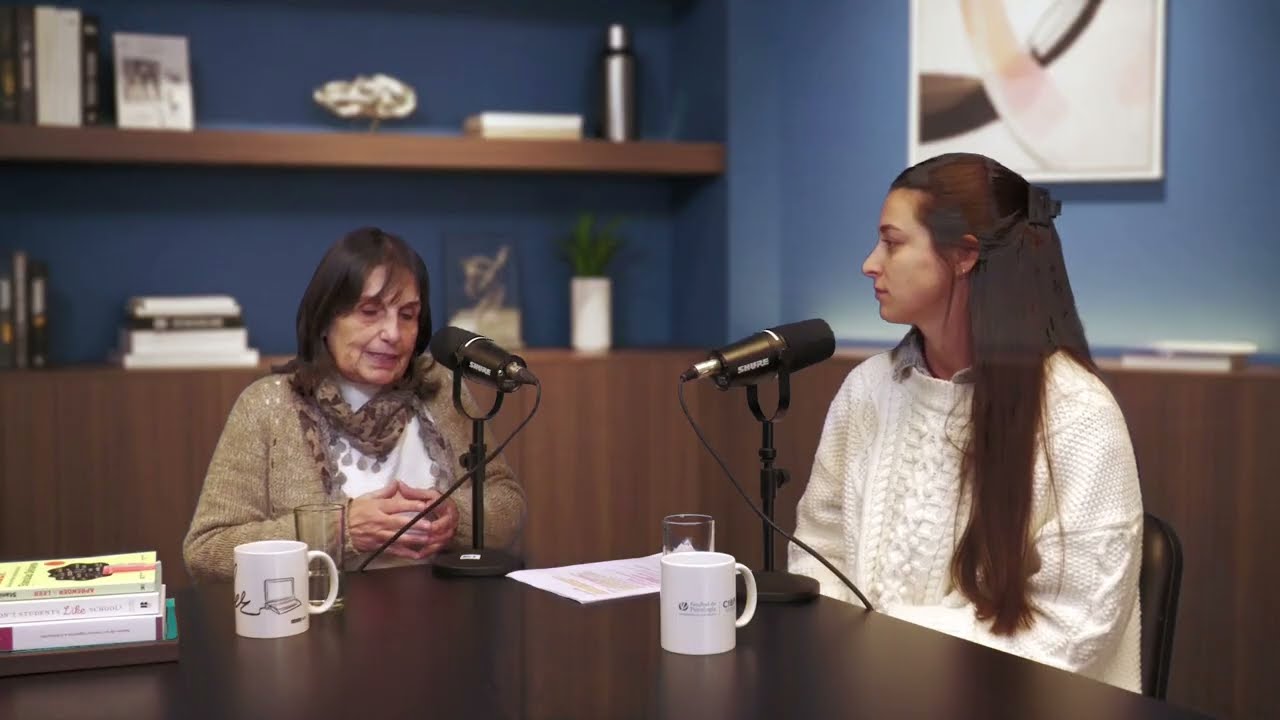
Método Natural Integral: entrevista a Susana Bonilla
Natural Integral Method: interview with Susana Bonilla
Keywords
Summary
167 words
Critical Evaluation
Value of the Information & Strength of the Argument
The video offers valuable, first-hand qualitative insights into a specific educational methodology, explaining its conceptual foundations and everyday implementation. The argumentation is coherent and passionate, grounded in decades of practical experience and direct observation of Cledia Melo’s work. However, the case is presented without empirical data or comparative studies, relying on anecdotal evidence and personal conviction. The interviewee openly acknowledges alternative viewpoints but does not engage with them critically, which limits the scientific robustness of the claims. The value lies in documenting an insider’s perspective that could inform further research, but it does not attempt to prove the method’s efficacy beyond anecdotal testimonies.
Scientific Rigor, Source Quality, Title Accuracy
The video references several pedagogical figures and theories (e.g., Piaget, Freire, Dewey, Cledia Melo) but without providing specific citations or verifiable sources. The description mentions a research project funded by the university, but no links to publications are given. The title is precise and faithful to the content, which is an interview about the method. The scientific rigor is moderate: it is a subjective account from an expert, not a peer-reviewed study. The lack of counterpoints or external validation means the information must be assessed cautiously, though the interviewee demonstrates deep practical knowledge. Overall, the title aligns well with the actual content.
220 words
Title / Content Match
The title accurately reflects the content: an interview dedicated to the Natural Integral Method.
Quality & Reliability
7/10
Expert interview with substantial practical insight, but one-sided without critical counterpoints or empirical evidence.
Key Moments
Markers derived by PSI from the transcript: the creator did not define chapters.
- Introduction of Susana Bonilla and the interview's purpose.
- Origin of the method through Cledia Melo, and critique of the analytical-synthetic method.
- Definition of 'natural' and 'integral' aspects, and the principle of starting from the child's experience.
- Detailed description of a typical classroom day, including group conversation and dictation practices.
- Reflections on the method's resistance through history and its current revival.
Contribution & Novelties
This interview provides a comprehensive oral history and practical explanation of the Natural Integral Method, a specific Uruguayan literacy pedagogy. It situates the method within the country’s educational history and highlights its principles and practices in a way not commonly documented. The novelty lies in the detailed insider account that bridges theory and classroom reality.
Pour aller plus loin :
- Phonological awareness — Relates to the method’s emphasis on phoneme-grapheme correspondence.
- Whole language approach — Similar to the method’s focus on meaningful language and texts.
- Piaget’s theory of cognitive development — The interviewee references Piaget’s structures that the method builds upon.
- Paulo Freire — Mentioned as an influence, emphasizing learning from experience.
112 words
Radar Profile
The radar profile shows high quantity of information, moderate quality and reliability, and a technical level suited to practitioners rather than researchers. This suggests an informative but not scientifically rigorous source.