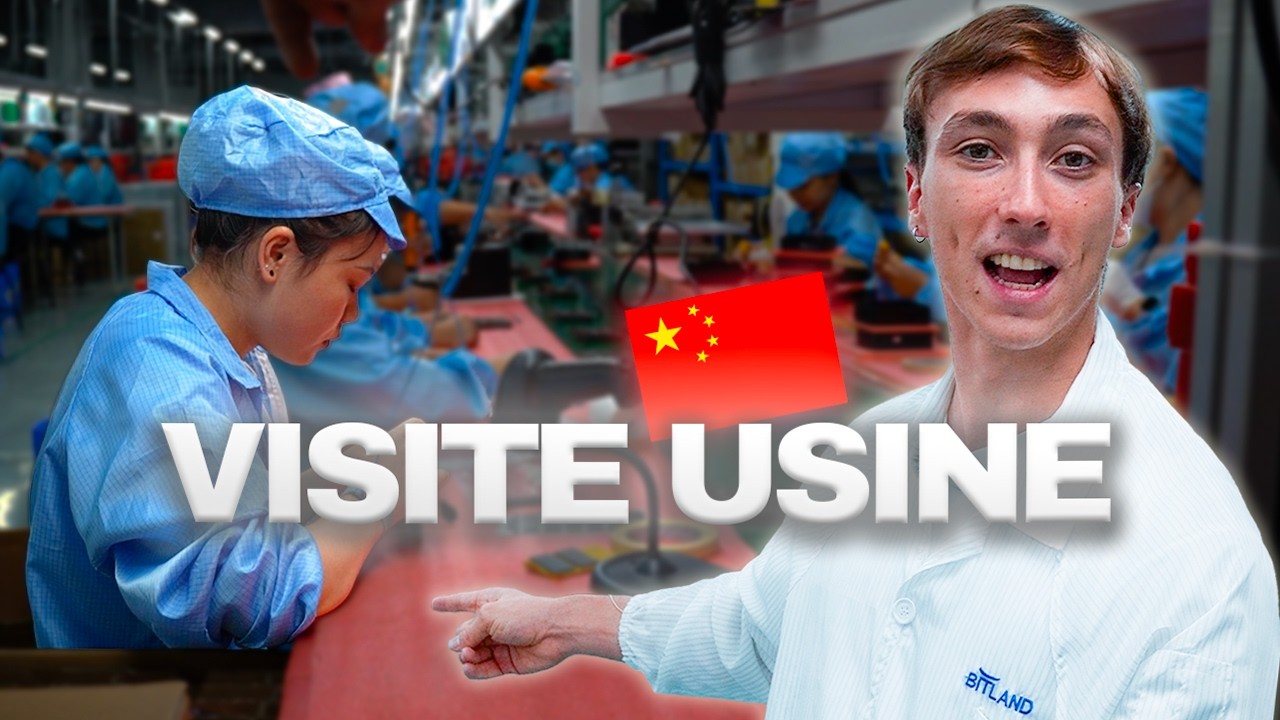
J’ai visité une usine d’IA en Chine 🇨🇳
I visited an AI computer factory in China 🇨🇳
Title history
- J’ai visité une usine d’IA en Chine 🇨🇳 — observed on 20261116-1354 UTC (YouTube)
Keywords
Summary
146 words
Critical Evaluation
Value of the Information & Strength of the Argument
The value lies in providing a concrete look at the manufacturing side of AI hardware and explaining practical benefits of local AI, such as sovereignty, lower latency, and reduced cloud dependency. The argument is persuasive because it combines personal experience (visiting the factory, using the products) with clear reasoning about the trade-offs between local and cloud AI. However, the argumentation occasionally falls into promotional language, especially when praising Beelink products, and does not critically evaluate limitations such as performance gaps versus cloud models or the effort required to set up these systems. The creator acknowledges that local models are less capable but argues they suffice for many routine tasks, a claim that is reasonable but not backed by systematic benchmarks.
Scientific Rigor, Source Quality, Title Accuracy
The title is accurate as the video is indeed a visit to an AI computer factory. The rigor is moderate: the content relies heavily on the creator’s own observations and company-provided information, with few external references. The sources cited are all from the video description (product pages, Kickstarter, a previous video, and a masterclass), which are relevant but not independent. The creator explicitly states the video is not sponsored, but the inclusion of product links and a masterclass promotion suggests a commercial relationship. The video does not engage with expert opinions or independent tests, and the technical claims (e.g., token speeds, model compatibility) are presented without detailed verification.
243 words
Title / Content Match
The title accurately reflects the video's main content: a visit to a Chinese factory specialized in AI computers.
Quality & Reliability
6/10
The video is based on a firsthand visit to the Beelink factory in China, offering genuine observations, but it includes promotional elements (product endorsements, Kickstarter links) and lacks independent verification of the claims made about hardware performance and data sovereignty.
Chapters
Cited Sources
- Beelink ME Pro NAS on Kickstarter — The creator mentions this is where the NAS shown in the video is available for backing.
- Beelink GTR9 Pro product page — Reference to a mini PC capable of running AI models locally, which the creator plans to test.
- Why you need a NAS for your AI — A previous video explaining the rationale for using a NAS for AI workflows.
- Masterclass AI and Second Brain — The creator promotes his masterclass at the end of the video, though it is not the main topic.
Contribution & Novelties
The video offers a rare behind-the-scenes look at a Chinese electronics factory producing AI-oriented hardware, and it connects this to broader concepts of local AI sovereignty and personal data management. It provides practical guidance on setting up a NAS and running local AI models, though much of this is based on the presenter’s own experience rather than novel research.
Pour aller plus loin :
- Data sovereignty — Core concept underlying the video’s argument for local storage and processing.
- Network-attached storage — Technical background on NAS devices mentioned extensively.
- Local large language model — Overview of running LLMs locally, relevant to the inference section.
103 words
Radar Profile
The profile shows moderate to high scores in quantity and quality of information, with a lower score in reliability due to potential bias. The technical level is moderate, reflecting a practical yet non-expert approach.