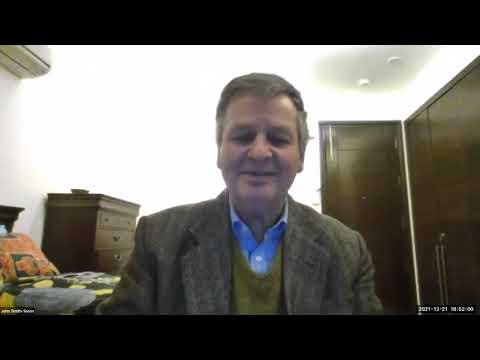
SAREP Partnership Fund (SPF) Request for Applications: CURTAIN RAISER Event December 21, 2021
Keywords
Summary
219 words
Critical Evaluation
Value of the Information & Strength of the Argument
The value of the information lies in its official character and comprehensive coverage of the SAREP Partnership Fund’s design, objectives, and application process. The argumentation is clear and structured, leveraging the authority of USAID and RTI International to convince potential applicants of the fund’s legitimacy and strategic alignment with regional climate goals. The presenters provide concrete metrics and examples, such as India’s 500 GW renewable target and the 2030 Partnership Agenda, which substantiate the rationale for the fund. The logic is persuasive: the fund is positioned as a catalyst for market-based solutions, and the multiple rounds of RFA are framed as a way to encourage iterative learning and sustained engagement. While not a scientific debate, the presentation effectively builds a case for participation and demonstrates the program’s potential for impact.
Scientific Rigor, Source Quality, Title Accuracy
The scientific rigor is high from an institutional standpoint: the content is provided by official representatives of USAID and RTI, who are directly involved in the program. They refer to established agreements (Paris Agreement, COP26) and specific targets (India’s 500 GW by 2030), which are verifiable. However, no primary research or peer-reviewed sources are cited; the webinar is an informational announcement rather than a research presentation. The sources cited are limited to the program’s LinkedIn page, which serves as a contact channel but not a research reference. The title accurately reflects the content, and the structure of the webinar—welcome, keynote, technical overview, and application details—is coherent and meets the stated purpose of dissemination. The absence of a Q&A session is noted, but the information is presented clearly and systematically.
274 words
Title / Content Match
The title accurately reflects the content: a webinar announcing the first Request for Applications for the SAREP Partnership Fund, held on December 21, 2021.
Quality & Reliability
8/10
Official program announcement from USAID and RTI International, with structured presentation on fund objectives, eligibility, and process. Highly reliable institutional source, but not a peer-reviewed scientific study.
Key Moments
Markers derived by PSI from the transcript: the creator did not define chapters.
- Introduction and housekeeping announcements; overview of the event.
- Nicole Barnes delivers welcome address, emphasizing innovation and partnership.
- John Smith keynote: US climate leadership, Paris Agreement, and regional context.
- Anurag Mishra presents SAREP's four technical objectives and five-year targets.
- Hira explains RFA eligibility, submission requirements, and deadlines.
Cited Sources
- South Asia Regional Energy Partnership (SAREP) on LinkedIn — Official LinkedIn page for SAREP, provided in the video description for further updates.
Contribution & Novelties
The webinar provides a first-hand, official introduction to the SAREP Partnership Fund, outlining its strategic alignment with regional clean energy targets and detailing the application process for the inaugural RFA. It offers specific eligibility criteria, financial expectations, and a timeline, which are not readily available elsewhere. The content is novel for potential applicants in South Asia seeking funding opportunities.
Pour aller plus loin :
- Renewable energy in India — Relevant for understanding India’s 500 GW renewable target and policy context.
- International Solar Alliance — An initiative mentioned in the speech, highlighting regional cooperation on solar energy.
- Paris Agreement — The global framework referenced in the keynote for climate commitments.
109 words
Radar Profile
The radar profile shows high scores (8) for quantity, quality, and reliability, with a moderate score (5) for technical level. This indicates a well-structured, authoritative presentation that is accessible to a general audience while still containing substantive policy and technical details. The balance suggests an informative event that prioritizes clarity over in-depth technical analysis.