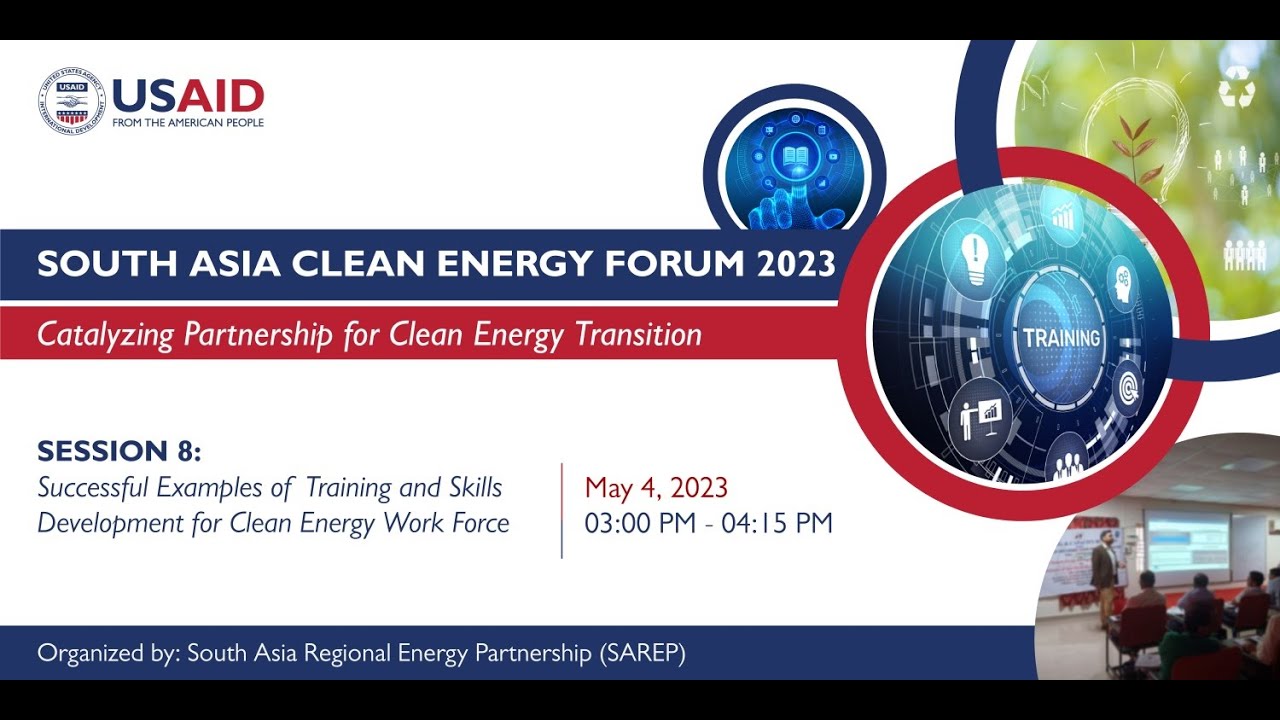
Training and Skills Development for Clean Energy Work Force | Session 8 at SACEF 2023
Keywords
Summary
162 words
Critical Evaluation
Value of the Information & Strength of the Argument
The value of the information lies in the concrete examples drawn from large-scale national programs, particularly India’s NSDC, which provides real figures on training and placement. The argumentation is generally persuasive, but relies heavily on the authority of the speakers rather than on independent evidence. The discussion on gender inclusion is backed by specific statistics, and the Panama case study offers a transferable model. However, some claims, such as the potential for 3.4 million jobs, are presented without detailed methodology, reducing their rigor.
Scientific Rigor, Source Quality, Title Accuracy
The session is a conference panel, so sources are primarily the speakers’ own institutional experiences. They reference studies by NRDC, IEA, and others, but without direct links or citations. The title matches the content well. No comments were provided for analysis.
139 words
Title / Content Match
The title accurately reflects the content, which focuses on training and skills development for the clean energy workforce.
Quality & Reliability
6/10
The session features expert speakers with relevant experience, but relies mostly on self-reported data and anecdotes rather than peer-reviewed evidence. Some specific statistics are cited without detailed methodology.
Key Moments
Markers derived by PSI from the transcript: the creator did not define chapters.
Cited Sources
- National Skill Development Corporation (NSDC) — Mentioned as the organization implementing India's skills training programs.
- Natural Resources Defense Council (NRDC) — Mentioned as the organization Poonam Sandhu worked with, conducting studies on clean energy jobs.
Contribution & Novelties
This session provides a multi-country perspective on clean energy workforce development, with concrete examples from India’s large-scale NSDC programs and a transferable case study from Panama. It highlights the often-overlooked gender dimension and the need for inclusive training. The discussion underscores the importance of regional cooperation and digital tools in scaling up skilling initiatives.
Pour aller plus loin :
- Green job - Wikipedia — Overview of green jobs and their role in sustainable economies.
- Training and development - Wikipedia — General framework for workforce skill development.
- Renewable energy in India - Wikipedia — Context for India’s clean energy targets and associated job creation.
103 words
Radar Profile
The radar profile shows moderate scores across all dimensions, with slightly higher reliability and information quantity than technical depth. This indicates a balanced but non-specialized presentation, suitable for a general audience interested in policy and workforce planning.