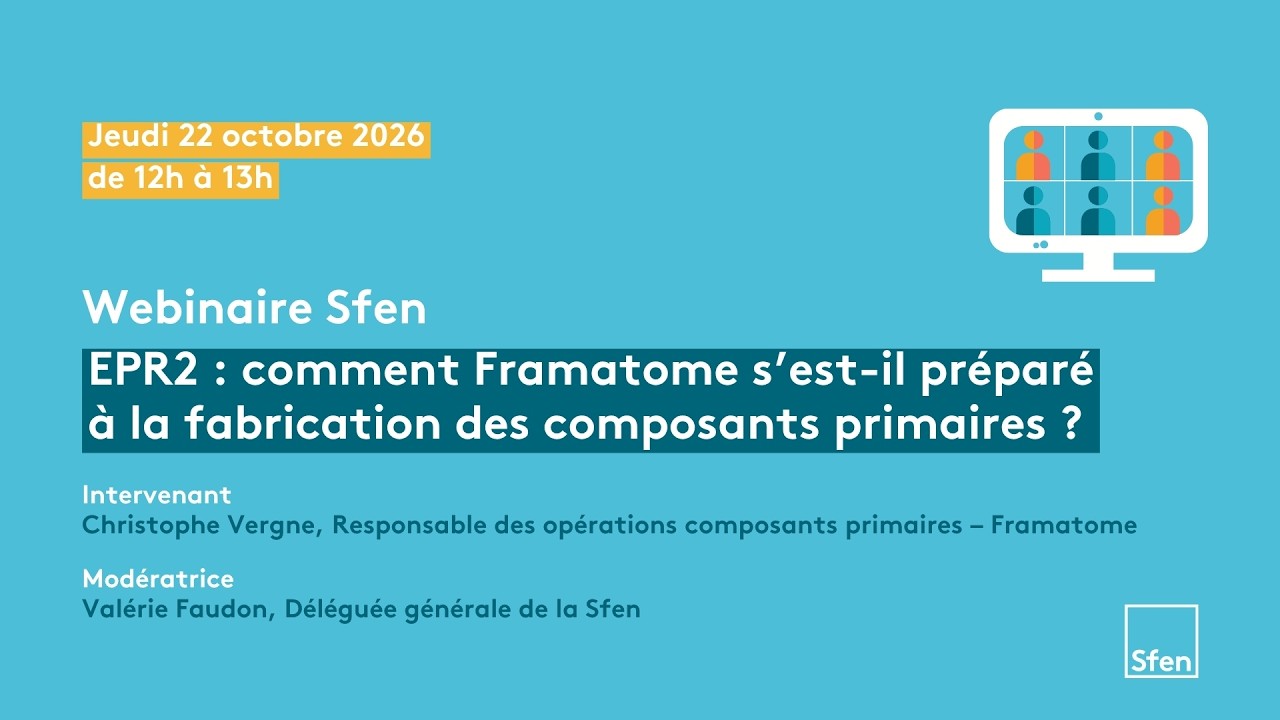
[Replay] EPR2 : comment Framatome s’est-il préparé à la fabrication des composants primaires ?
Title history
- [Replay] EPR2 : comment Framatome s’est-il préparé à la fabrication des composants primaires ? (PSI archive)
- [Replay] EPR2 : comment Framatome s’est-il préparé à la fabrication des composants primaires ? — observed on 20261106-1629 UTC (YouTube)
Keywords
Summary
199 words
Critical Evaluation
Value of the Information & Strength of the Argument
The information provided is highly valuable for understanding the practical and strategic steps taken by a major nuclear manufacturer ahead of a large-scale program. Vergne delivers a structured argumentation, supporting claims with specific initiatives and quantified outcomes (e.g., a threefold reduction in quality deviation frequency, recruiting rates, and capacity targets). The argumentation is coherent and logical, linking each pillar of the plan to measurable objectives. However, it remains a corporate perspective without external validation, and the focus is on internal efforts rather than independent benchmarking.
Scientific Rigor, Source Quality, Title Accuracy
The scientific rigor is moderate: the presentation is based on internal data and experience, but lacks citations to external studies or independent reports. No external sources are mentioned in the video or description. The title accurately reflects the content, and the presentation stays on topic. The adequacy between title and content is excellent, but the lack of verifiable external sources limits the overall reliability. As a professional update, it is useful, but it should be treated as a firsthand account rather than a peer-reviewed analysis.
185 words
Title / Content Match
The title accurately reflects the content, which focuses on Framatome's preparation for manufacturing EPR2 primary components, covering industrial plans, investments, and quality measures.
Quality & Reliability
7/10
The presentation offers detailed, specific information about Framatome's industrial transformation plans, including quantitative targets (e.g., 25% quality deviation reduction per year, 150 hires per year, doubling production capacity). However, it is a self-presentation by the company, which may introduce bias and lacks independent verification. The technical depth is adequate for an expert audience but not exhaustive on all aspects.
Key Moments
Markers derived by PSI from the transcript: the creator did not define chapters.
- Introduction by Valérie Faudon, presenting the webinar and the speaker Christophe Vergne.
- Overview of Framatome's business unit, listing sites and acquisitions.
- Explanation of the three-pillar industrial plan: operational performance, competencies, and industrial footprint.
- Detailed discussion on quality improvement efforts, including the 25% annual reduction target and QRQC methods.
- Focus on site extension projects: OPUS at Saint-Marcel and AUS at Jeumont, including timelines.
- Presentation of the internal vessel workshop and additive manufacturing center.
- Closing remarks highlighting remaining challenges and upcoming plans.
Contribution & Novelties
This video provides an insider view of Framatome’s industrial strategy for EPR2 manufacturing, detailing specific investments, internalization projects, and quality programs. It is valuable for understanding the practical steps taken to prepare for a new nuclear build program. The presentation includes concrete data on recruitment, plant extensions, and quality metrics, which are rarely made public in such detail.
Pour aller plus loin :
- EPR2 (Wikipedia) — Provides background on the EPR2 reactor design and its development context.
- Framatome — Official company website offering information on their nuclear manufacturing capabilities and recent news.
- Nuclear power in France — Contextualizes the EPR2 program within France’s nuclear energy policy.
106 words
Radar Profile
The profile shows strong quantitative information and technical detail, but moderate reliability due to the corporate perspective. Quality and technical scores are high, while overall reliability is slightly lower, reflecting the absence of independent sources.