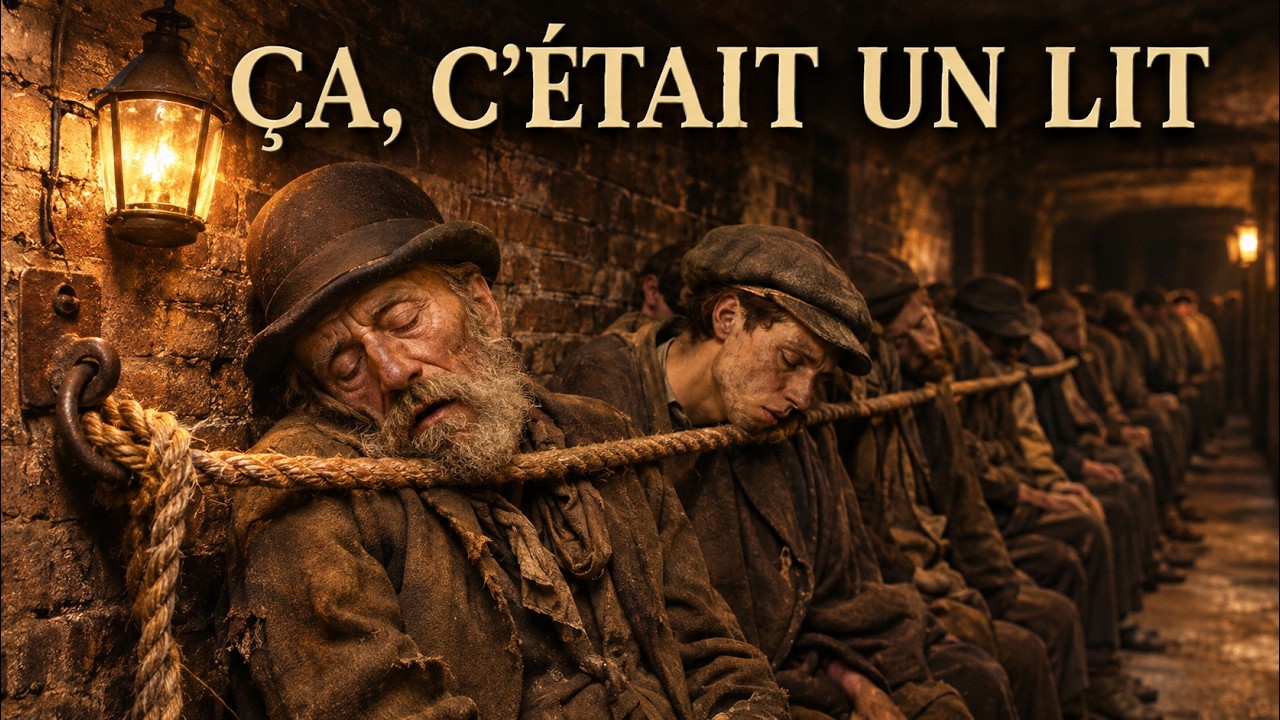
Avant les matelas, on dormait sur de la corde (littéralement)
Before mattresses, people slept on rope (literally)
Title history
- Avant les matelas, on dormait sur de la corde (littéralement) — observed on 20261117-1030 UTC (YouTube)
Keywords
Summary
149 words
Critical Evaluation
Value of the Information & Strength of the Argument
The video provides a rich narrative that combines historical anecdotes with concrete archaeological and documentary evidence. The argumentation is solid: it uses specific examples (e.g., the Three Beds of Tutankhamun, the lit clos breton) and distinguishes between verified facts and popular myths. The section on the ‘sleep tight’ expression is well-argued, showing etymological and chronological evidence against the popular myth. The video also connects historical inequalities to sleeping conditions, illustrating how the bed served as a social marker. The argument that modern comfort is the result of a long chain of innovations is persuasive and supported by examples from various periods.
Scientific Rigor, Source Quality, Title Accuracy
The video demonstrates scientific rigor by referencing a peer-reviewed publication (Wadley et al., 2011 in Science) for the Sibudu findings and by citing historical works such as Orwell’s memoir and academic books on medieval sleeping habits. It acknowledges uncertainty where appropriate (e.g., the prevalence of the Twopenny Hangover). The title accurately reflects the content, though it slightly exaggerates the literalness of the rope-bed claim; nevertheless, it is not misleading. The video includes a brief advertising segment for the channel itself, but it does not affect the informational value.
204 words
Title / Content Match
The title is catchy and accurate: it directly references the rope-based beds that are a central theme of the video, and the subtitle '(littéralement)' adds context.
Quality & Reliability
8/10
The video relies on well-documented historical and archaeological evidence, citing specific studies (e.g., Sibudu in Science), and discusses the origins of common myths like the 'sleep tight' expression. It is careful to distinguish facts from hypotheses and includes a balanced view of commercial prices.
Chapters
- Quand dormir confortablement semblait naturel
- Le sommeil sur une corde raconté par Orwell
- Les premières couchettes de Sibudu
- Les lits de l'Égypte, de Rome et du Moyen Âge
- Le fonctionnement des lits à cordes
- Le lit, miroir des inégalités sociales
- L'invention des matelas modernes
- Ce que notre confort doit à nos ancêtres
Cited Sources
- Down and Out in Paris and London (George Orwell) — Mentioned as describing the Twopenny Hangover.
- Sibudu Cave (Wadley et al., 2011) — Described as the site of the world's oldest known beds, with insect-repellent leaves.
- Au lit au Moyen Âge (Chiara Frugoni) — Referenced for the social significance of beds in the Middle Ages.
- Poux, puces, punaises, la vermine de l'homme (Collard & Samama) — Cited for historical perspectives on bedbugs and other vermin.
- Memory foam (NASA-derived polyurethane) — Explained the origin of memory foam in NASA research and its later commercialization.
Contribution & Novelties
The video offers a comprehensive, humanized history of sleeping surfaces, connecting ancient practices to modern consumer products. It contributes by debunking popular myths (like ‘sleep tight’) and emphasizing the role of forgotten workers (e.g., matelassiers, Chouans) in the development of comfort. It also provides fresh context on the evolution from rope beds to spring and foam mattresses.
Pour aller plus loin :
108 words
Radar Profile
The radar profile shows high scores in information quantity and quality, with a slightly lower technical level, indicating the video is informative and reliable but not deeply technical. The overall fiabilité is strong, making it a trustworthy source for general audiences.