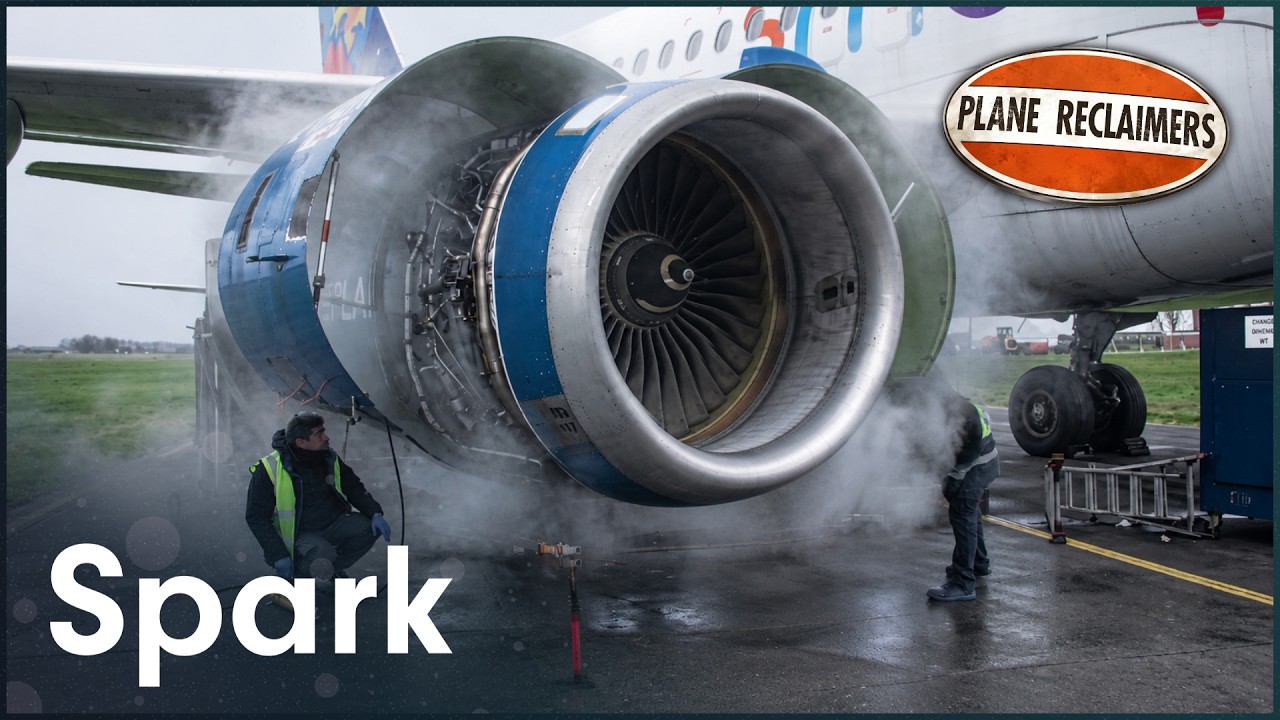
48 Hours To Save A $6 Million Airbus Engine From The Scrapyard
Title history
- 48 Hours To Save A $6 Million Airbus Engine From The Scrapyard — observed on 20261115-2022 UTC (YouTube)
Keywords
Summary
152 words
Critical Evaluation
Value of the Information & Strength of the Argument
The video offers valuable insights into the practical aspects of aircraft engine maintenance and sales, showcasing real-world procedures like compressor washing and ground testing. The argumentation is grounded in authentic footage and explanations from industry professionals, which lends credibility to the presented information. The narrative is structured around a clear timeline, building tension around the engine test outcome, which engages the viewer while delivering technical content. However, the video lacks critical analysis or alternative perspectives, focusing primarily on the operational challenges rather than broader industry implications.
Scientific Rigor, Source Quality, Title Accuracy
The video is a factual documentary with no citation of external studies or reports. The information presented is based on direct observation and expert commentary from the team members. The title accurately reflects the content, with the 48-hour deadline central to the plot. No external sources are referenced, but the technical details are explained in a comprehensible manner, and the procedures shown are consistent with known aviation maintenance practices. The absence of explicit source documentation is typical for documentary content of this nature, but it limits the ability to independently verify specific claims.
194 words
Title / Content Match
The title accurately captures the central narrative: a limited-time effort to test and clean a multi-million-dollar engine to avoid scrapping it.
Quality & Reliability
8/10
The video is a documentary showing real operations at an aircraft recycling facility. Technical procedures are explained by professionals and the footage is authentic. No external sources are cited, but the content is verifiable through the observed practices.
Key Moments
Markers derived by PSI from the transcript: the creator did not define chapters.
- Introduction to the engine buyer and the detection of deposits on compressor blades.
- Engine removal reversed; reattachment process begins for a ground run.
- APU troubleshooting: Bob and Khalil fix a leaking pylon line and start valve fault.
- Compressor wash cycles begin, with Carl measuring particle levels after each wash.
- Final compressor wash successful; engine passes inspection and is prepared for shipping.
Contribution & Novelties
The video provides a rare behind-the-scenes look at the aircraft recycling industry, specifically the detailed process of selling a used engine under time pressure. It highlights technical procedures such as compressor washing and APU fault diagnosis, offering practical insight that is not commonly seen in mainstream media. The auction segment also illustrates the economics of buying ground equipment from bankrupt airlines.
Pour aller plus loin :
- Aircraft recycling — Overview of the industry, including processes and environmental considerations.
- Compressor washing — Explanation of the technique used to clean engine compressor blades, including its importance for performance and emissions.
- Gas turbine engine — Technical background on the engine type that is the subject of the washing and testing.
117 words
Radar Profile
The radar profile shows balanced scores across information quantity, quality, and reliability, with a slightly lower technical level, indicating that the video is accessible to a general audience while still providing substantive technical details.