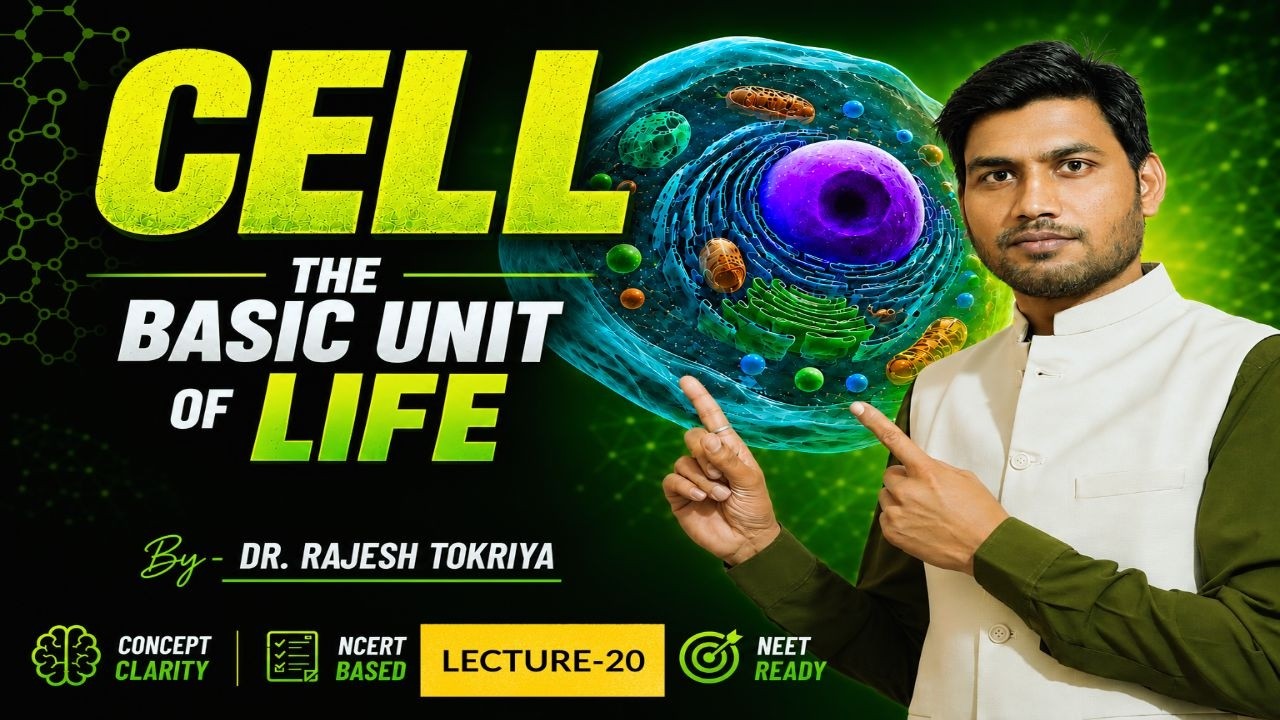
L-20 (Part-2) Nucleus Structure, Functions & Components
Keywords
Summary
168 words
Critical Evaluation
Value of the Information & Strength of the Argument
The video offers a clear and didactic explanation of chromatin structure, building from fundamental principles to a coherent model. The use of simple analogies makes complex molecular interactions accessible. Arguments are logically structured, emphasizing the electrostatic attraction between DNA and histones as the driving force for compaction. However, the presentation lacks experimental evidence or references, limiting its scientific depth to an educational level.
Scientific Rigor, Source Quality, Title Accuracy
The scientific rigor is appropriate for an introductory course, with no major factual errors identified. The content aligns with standard cell biology textbooks, covering nucleosome structure, histone modifications, and the role of scaffold proteins. No external sources are cited, but the information is consistent with established knowledge. The title accurately reflects the video’s scope, which is dedicated to nucleus anatomy and molecular details. No public comments are provided for analysis.
148 words
Title / Content Match
The title perfectly matches the content, which details the structure, functions, and components of the nucleus, including chromatin and chromosomes.
Quality & Reliability
8/10
The video provides an accurate and well-structured explanation of the nucleus and its components, particularly chromatin and nucleosome formation. It covers essential concepts in cell biology without significant errors, but it remains an introductory educational lecture rather than a primary research source.
Key Moments
Markers derived by PSI from the transcript: the creator did not define chapters.
- Introduction and recap of previous lecture on nuclear envelope and pores.
- Explanation of DNA length and the need for compaction using thread-and-spool analogy.
- Description of histone proteins, their positive charge, and amino acid composition.
- Formation of nucleosome: DNA wrapping around histone octamer, role of H1 and linker DNA.
- Transition from chromatin to chromosome: role of non-histone scaffold proteins and condensation.
Contribution & Novelties
The video provides a pedagogical synthesis of chromatin organization, making the abstract concept of DNA compaction tangible through relatable analogies. It systematically breaks down each structural level, from nucleosome to chromosome, which is valuable for reinforce learning.
Pour aller plus loin :
- Nucleosome — Detailed article on the nucleosome structure and its role in DNA packaging.
- Histone — Overview of histone protein families and their post-translational modifications.
- Chromatin — Comprehensive resource on chromatin architecture and dynamic regulation.
77 words
Radar Profile
The radar profile shows high scores in quality and reliability, reflecting accurate content and clear presentation. The moderate technical level indicates suitability for beginners, while the high quantity of information is balanced by systematic detail. Overall, the video performs well as an educational resource.