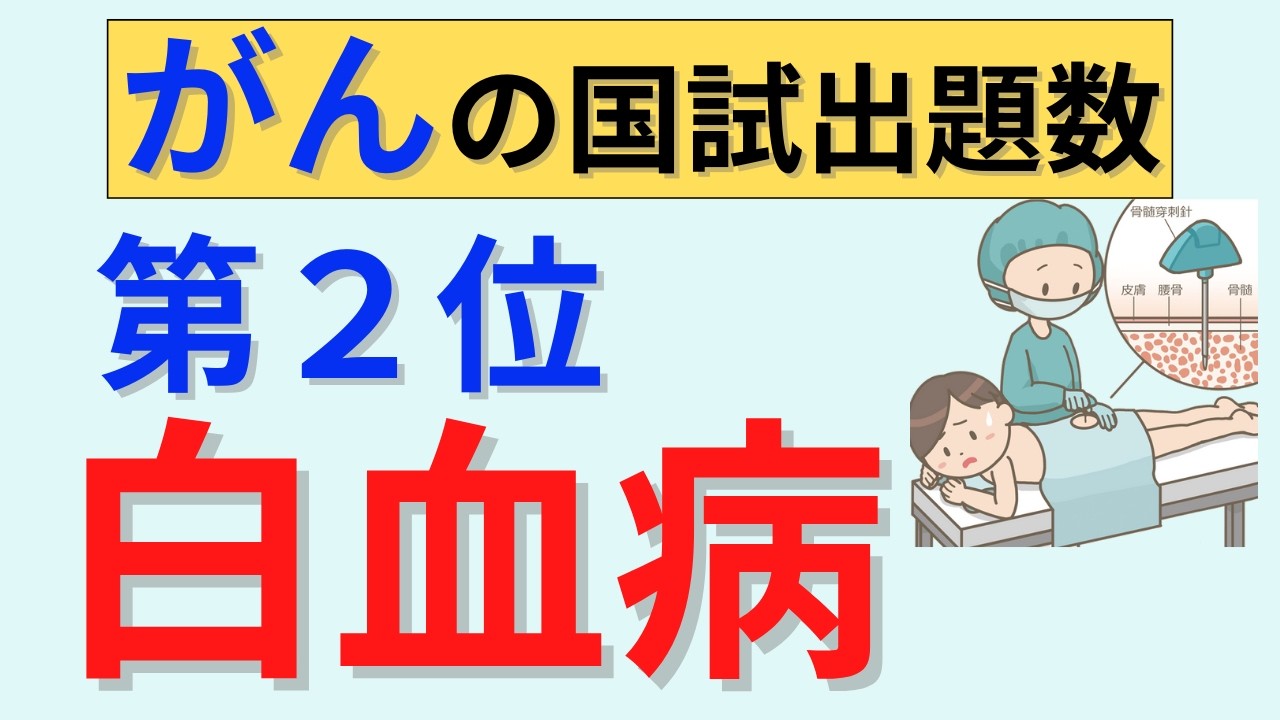
【解説時間30分】白血病など造血器腫瘍について解説(以前の動画の修正版です)
【Explanation time 30 minutes】Explaining hematopoietic tumors such as leukemia (revised version of previous video)
Title history
- 【解説時間30分】白血病など造血器腫瘍について解説(以前の動画の修正版です) — observed on 20261111-1007 UTC (YouTube)
Keywords
Summary
172 words
Critical Evaluation
Value of the Information & Strength of the Argument
The video offers significant educational value by providing a clear and systematic overview of a complex hematological topic. The instructor uses logical frameworks, such as differentiating between myeloid and lymphoid origins, to build understanding. The argumentation is consistent and well-paced, with repeated summaries that reinforce learning. The inclusion of exam-style questions with detailed answer explanations helps apply theoretical knowledge to clinical scenarios. However, the approach is purely educational and does not introduce new scientific data. The presentation effectively clarifies common misconceptions, such as the difference in cellular maturity between acute and chronic leukemias.
Scientific Rigor, Source Quality, Title Accuracy
The video cites two articles from Medic Media, a recognized Japanese nursing education portal, and a YouTube playlist of related educational content. While these are not primary scientific sources, they are appropriate for the target audience and indicate alignment with professional nursing education. The content is accurate based on current medical understanding, though it is limited to established knowledge without referencing recent research. The title falsely promises a 30-minute explanation, while the actual video exceeds 1 hour 46 minutes, which may mislead viewers. This discrepancy is aggravated by the presence of a 1-hour exam practice section, but does not affect the core educational content’s quality.
213 words
Title / Content Match
The title mentions a 30-minute explanation, but the actual video duration is over 1 hour 46 minutes, including exam question sections. The content matches the topic, but the claimed duration is inaccurate.
Quality & Reliability
8/10
The video is a structured educational review of hematologic malignancies, covering pathophysiology, diagnosis, treatment, and nursing care. Content aligns with established medical knowledge and is presented systematically with revision mechanisms. No novel research is presented, but the educational accuracy appears high, supported by reputable nursing education references.
Chapters
Cited Sources
- Medic Media - Nursing education article (2025/03/34845) — Referred to as the official site of Medic Media for nursing students, likely containing related educational materials.
- Medic Media - Nursing education article (2025/10/34641) — Another reference to Medic Media's nursing education articles.
- YouTube playlist: Important anatomy, disease, and treatment — Recommended playlist for related study content.
Contribution & Novelties
The video’s original contribution is its pedagogically optimized presentation of hematologic oncology, specifically tailored for nursing students. It clarifies the classification of hematologic malignancies by lineage and maturity, a common source of confusion. The integration of exam questions directly reinforces learning. The content is derivative of standard medical education but is expertly organized and explained.
Pour aller plus loin :
- Acute myeloid leukemia — Provides a thorough overview of the disease, including pathophysiology and treatment, complementing the video’s explanation.
- Philadelphia chromosome — Details the genetic abnormality associated with chronic myeloid leukemia, a key point highlighted in the video.
- Graft-versus-host disease — Explains the immune reaction that is a major complication of bone marrow transplantation, as described in the video.
- Hematopoietic stem cell transplantation — Offers in-depth information on the procedure, indications, and risks, expanding on the video’s content.
138 words
Radar Profile
The radar profile shows a well-balanced distribution across the four dimensions, with slightly lower technical depth compared to the high quantity and quality of information. The video provides a substantial amount of reliable educational content appropriate for nursing students, but does not reach the technical sophistication of primary medical literature. The fiabilité score is high, reflecting the use of established knowledge and credible educational references.