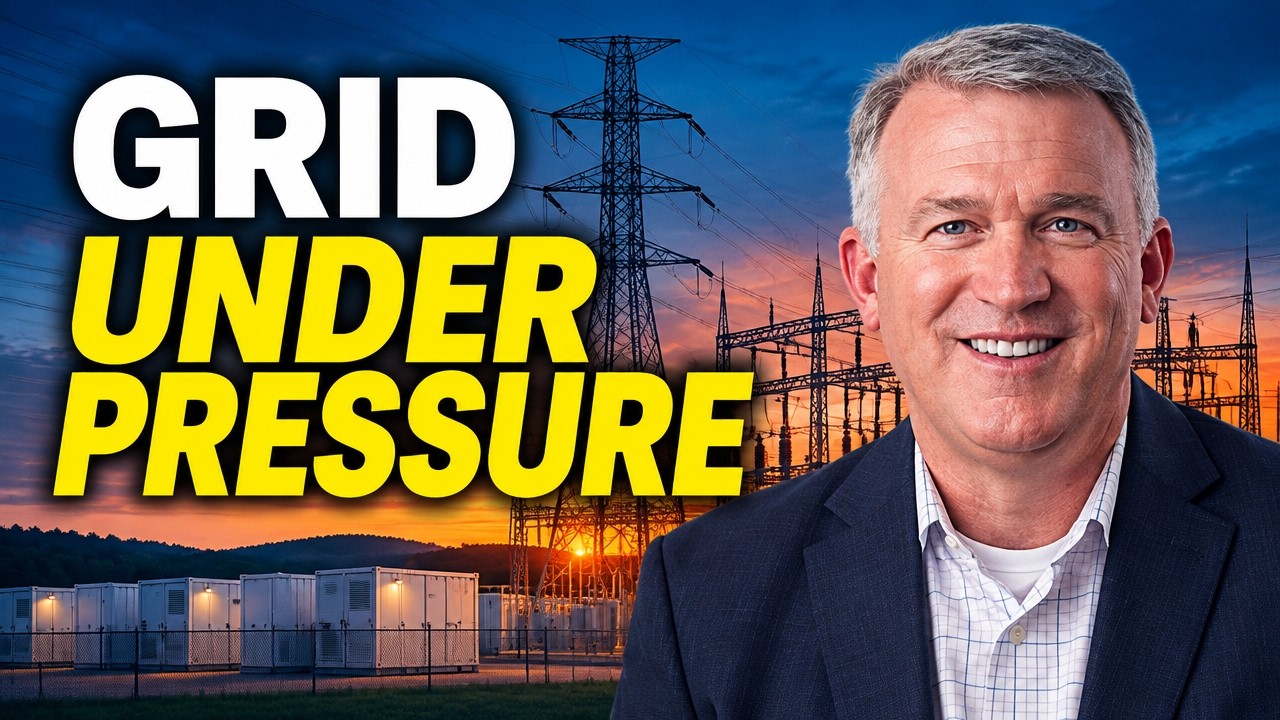
How Tennessee's Public Utilities Are Embracing Solar, Storage & Grid Resilience | Brian Solsbee
Title history
- How Tennessee's Public Utilities Are Embracing Solar, Storage & Grid Resilience | Brian Solsbee — observed on 20261112-1139 UTC (YouTube)
Keywords
Summary
192 words
Critical Evaluation
Value of the Information & Strength of the Argument
The video provides valuable insider perspective on Tennessee’s public power model, particularly TVA’s flexibility programs that enable municipal utilities to adopt solar and storage. The argumentation is grounded in Solsbee’s extensive experience and specific examples, such as the storm response comparisons and utility-scale projects. However, the discussion is largely anecdotal, lacking quantitative analysis or independent verification. The value lies in the practical understanding of how policy and economics interact in a regulated utility environment, though the lack of data limits its scientific rigor.
Scientific Rigor, Source Quality, Title Accuracy
The video is an interview, not a peer-reviewed study, and relies primarily on the expert’s testimony. No formal sources are cited beyond the description’s links, which include promotional material. The title accurately reflects the content, and no comment analysis is possible due to absence of comment data. Embedded sponsor segments are present, but they do not compromise the factual information presented. Overall, while the content is credible given the expert’s role, the absence of external references and data reduces its scientific rigor.
180 words
Title / Content Match
The title accurately describes the video's focus on how Tennessee's public utilities are adopting solar, storage, and resilience measures.
Quality & Reliability
7/10
The interview features a credible expert with 20+ years in the industry, but relies on anecdotal evidence and lacks peer-reviewed citations. Information is specific and likely accurate, but overall reliability is moderate.
Chapters
Cited Sources
- Tennessee Municipal Electric Power Association — Official website of TMEPA, the organization led by Brian Solsbee.
- Brian Solsbee LinkedIn — LinkedIn profile of the interviewee, providing professional background.
External References
Contribution & Novelties
The video offers an original look at the intersection of public power, TVA’s regulatory framework, and the adoption of solar and storage in Tennessee. It sheds light on niche policy mechanisms like Flex 1.0 and 2.0, which are not widely covered. The expert’s first-hand perspective adds unique value for stakeholders navigating the energy transition in the region.
Pour aller plus loin :
- Tennessee Valley Authority — Provides historical and operational context for TVA, essential to understanding the video’s subject.
- Grid resilience — Explores the concept of grid resilience, directly relevant to the discussion of storms and infrastructure.
- Battery storage power station — Details the technology and applications of battery storage, a key topic in the interview.
116 words
Radar Profile
The radar profile shows a balanced but modest performance across all dimensions. Information quantity and reliability are moderate, while technical depth is lower, reflecting the interview's focus on policy and economics rather than engineering details. Overall, the video is informative for its niche audience but does not excel in scientific rigor.