BRUJULA DIGITAL - MEMS Y NEMS - ESTUDIANTES ISC
DIGITAL COMPASS - MEMS AND NEMS - ISC STUDENTS
Title history
- BRUJULA DIGITAL - MEMS Y NEMS - ESTUDIANTES ISC — observed on 20261028-0743 UTC (YouTube)
Keywords
Summary
154 words
Critical Evaluation
Value of the Information & Strength of the Argument
The information presented has educational value for beginners in embedded systems and sensor integration. The argumentation is straightforward, following a logical progression from objectives to implementation. However, the scientific rigor is limited; explanations are sometimes vague, and quantitative results (e.g., sensor accuracy, calibration impact) are not measured or presented. The reliance on a single sensor example reduces the generalizability of the conclusions, but the practical demonstration supports the claims adequately. The lack of comparison with other methods or error analysis weakens the overall argumentative depth.
Scientific Rigor, Source Quality, Title Accuracy
The video does not cite any external sources or references, which undermines its scientific credibility. However, the content is internally consistent with standard engineering practices for building a digital compass. The title appropriately reflects the focus on MEMS/NEMS technology and the digital compass application, with no significant mismatch. As a student project, the technical accuracy appears adequate, but the absence of citations and limited literature review prevent it from being a rigorous scientific reference. The video is best viewed as a tutorial or classroom presentation rather than a research contribution.
190 words
Title / Content Match
The title accurately reflects the content: a digital compass using MEMS/NEMS concepts is presented and demonstrated.
Quality & Reliability
6/10
Clear student project presentation with practical implementation details, but limited scientific depth and no external references.
Key Moments
Markers derived by PSI from the transcript: the creator did not define chapters.
- Introduction to project objectives: measuring Earth's magnetic field and building a digital compass.
- Explanation of MEMS magnetic sensors and their role in modern devices.
- Details on the HMC5883L sensor: three-axis magnetometer using I2C communication.
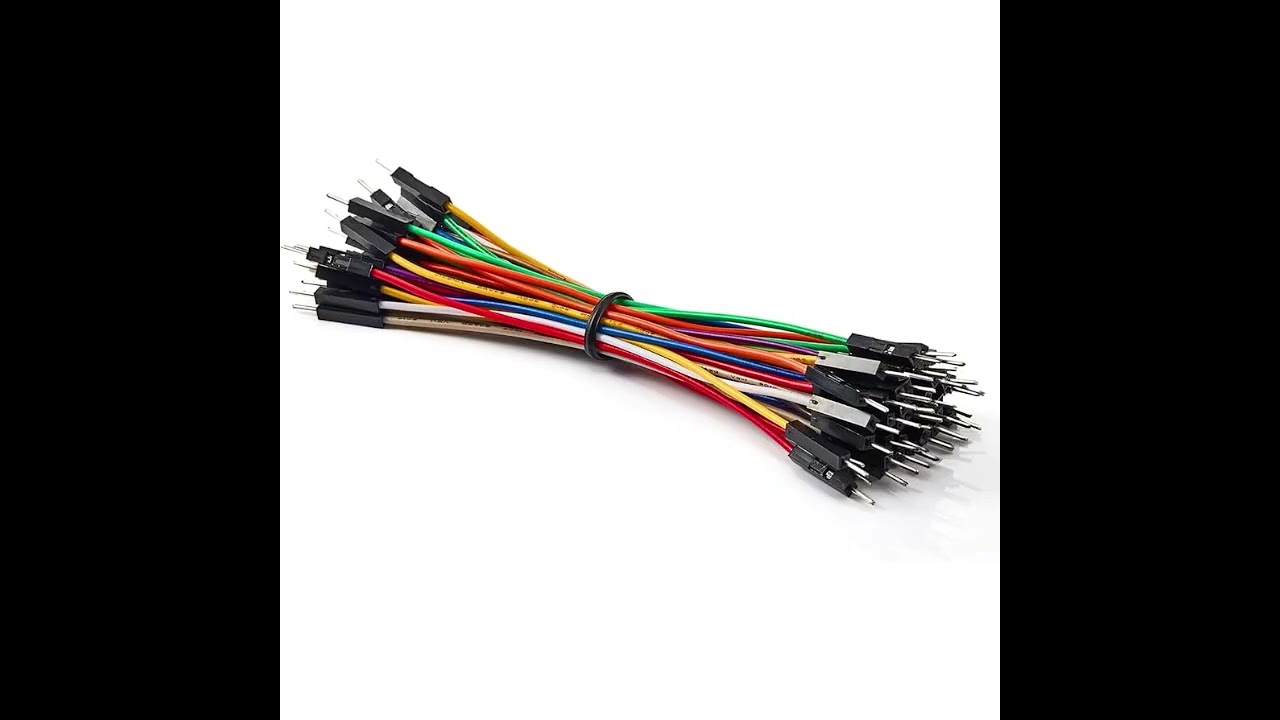
- List of materials: HMC5883L, ESP32, Dupont wires, circular LCD, and battery holder.
- Hardware assembly and setup of the Arduino environment with necessary libraries.
- Initial sensor testing and verification of serial output before display integration.
- Programming the ESP32: adapting libraries, calibrating offsets, and computing heading.
- Results and conclusions: functional digital compass achieved, with emphasis on applications.
Concurring Sources
- MEMS sensors in consumer electronics — Wikipedia article supporting the general principles of MEMS sensors mentioned in the video.
Contribution & Novelties
This video contributes a practical, hands-on demonstration of building a low-cost digital compass using MEMS technology, which can serve as an educational example for students. It integrates sensor interfacing, calibration, and real-time display, providing a complete, replicable system. However, it lacks novel scientific contributions or advanced techniques. The main value lies in its pedagogical clarity and the explicit connection between theoretical principles and implemented hardware.
Pour aller plus loin :
- MEMS on Wikipedia — Provides background on MEMS technology and its applications in sensors.
- HMC5883L Magnetometer — Detailed specifications and usage of the specific sensor used in the project.
- I2C Communication Protocol — Explains the I2C bus used to interface the sensor with the microcontroller.
115 words
Radar Profile
The radar profile indicates a balanced but moderate performance, with slightly higher technical accuracy and lower information quantity and source reliability. This reflects a practical project with adequate implementation but limited scientific depth.