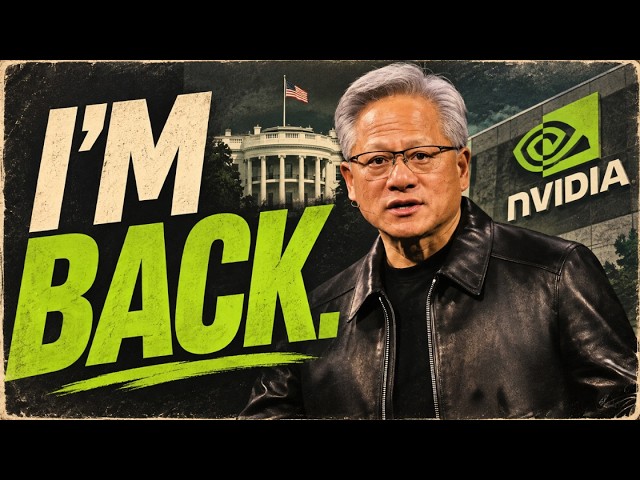
Jensen is Back as CEO After White House Advocacy
Keywords
Summary
165 words
Critical Evaluation
Value of the Information & Strength of the Argument
The value of the information lies in its comprehensive retelling of a fast-moving corporate and political story, with direct quotes from key figures and social media posts that help the viewer follow the timeline. The host also brings in perspectives from market analysts and political figures, allowing the audience to see multiple angles. However, the argumentation is heavily opinionated, as the host explicitly states that he is not attempting to present a balanced view but rather to show the momentum that led to Huang’s return. This limits the objectivity and weakens the analytical depth. The video does succeed in highlighting the systemic importance of Nvidia and the entanglement of corporate decisions with state interests, but the reasoning often veers into speculation and rhetorical questions.
Scientific Rigor, Source Quality, Title Accuracy
The video references well-known outlets like The New York Times, Bloomberg, and statements from public officials, which adds to its credibility. It also cites specific social media posts and quotes that are verifiable. However, the host relies heavily on a handful of commentators (e.g., Bology, Ben Thompson) and does not always clearly distinguish between fact and opinion. The title is accurate and directly reflects the content, and the video stays on topic throughout. The inclusion of sponsor messages is clearly separated from the main content. Overall, the sourcing is decent for a news-commentary format, though it lacks formal citations for some claims.
241 words
Title / Content Match
The title accurately reflects the main topic: Jensen Huang's return as Nvidia CEO following White House involvement.
Quality & Reliability
7/10
The video provides a detailed chronological account of the events, citing multiple public sources and quotes, but also includes clear personal opinion and speculative analysis. The core facts are presented with reasonable accuracy, though the commentary is heavily opinionated.
Key Moments
Markers derived by PSI from the transcript: the creator did not define chapters.
- Introduction and sponsor announcements
- Recap of Jensen Huang's scandal and resignation
- Details of the letter and petition to reinstate Huang
- Quotes from analysts predicting White House involvement
- Treasury Secretary Scott Bessant's interview defense of Huang
- Market surge and record gains after reinstatement
- Discussion of "too big to fail" and government interventions
- Criticism from Senator Warren and political implications
Cited Sources
- The AI Daily Brief website — Official site for the show, mentioned in the description.
- Podcast link — Subscription link for the podcast version of the show.
Contribution & Novelties
The video provides a highly detailed, real-time analysis of the Jensen Huang saga, compiling numerous public statements and social media reactions into a coherent narrative. It uniquely frames the events as a case study of the growing interdependence between the US government and the AI industry, drawing parallels to the concept of “too big to fail” and questioning the boundaries of state power. The host also highlights the market dynamics and the political forces at play, offering a comprehensive overview that is rarely found in traditional news.
Pour aller plus loin :
- Too big to fail - Wikipedia — The concept is central to the video’s argument about Nvidia’s systemic importance.
- Founder CEO - Wikipedia — Discusses the role and influence of founder-led companies, relevant to the debate over Huang’s removal.
- Export controls - Wikipedia — The video mentions compliance with export controls; this explains the broader regulatory framework.
149 words
Radar Profile
The radar profile shows a moderately strong performance in information quantity and reliability, with lower scores for technical depth and overall quality. This reflects the video's focus on news and opinion rather than technical explanation, and its reliance on a single narrative perspective.