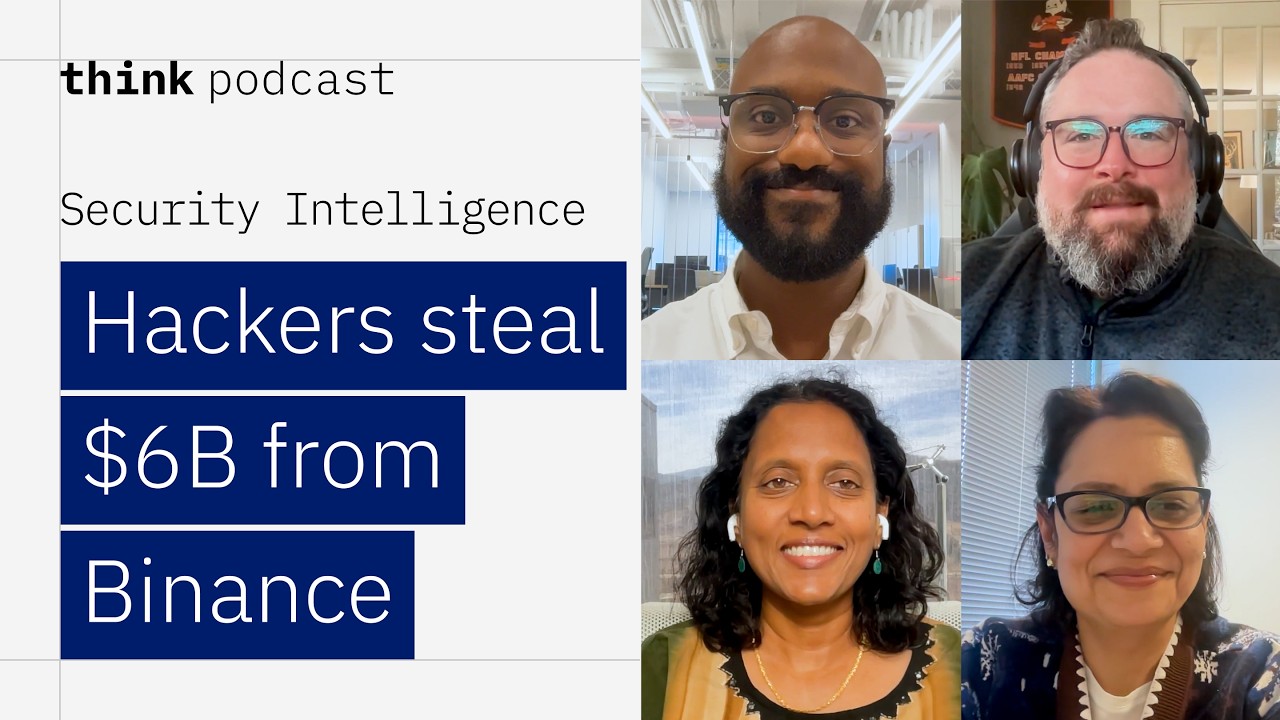
The $6B Binance heist, Meta’s AI bug tests and looming quantum deadlines
Title history
- The $6B Binance heist, Meta’s AI bug tests and looming quantum deadlines — observed on 20261111-0937 UTC (YouTube)
Keywords
Summary
182 words
Critical Evaluation
Value of the Information & Strength of the Argument
The value of the information lies in the practical, expert-driven analysis of real-world cybersecurity incidents and trends. The panelists offer actionable insights such as automating containment, segmenting high-value systems, and adopting zero-trust principles. The argumentation is solid, based on the known facts of the Binance heist and Meta’s published findings, while also drawing on the panelists’ extensive experience. They present a balanced view of human vs. AI oversight, acknowledging risks like loss of context and system drift. The discussion of post-quantum migration is well-grounded in the looming 2030 deadlines and the importance of lifecycle management. The argumentation is coherent and persuasive, supported by concrete examples and analogies like the SARS (Oceans 11) reference and the ‘six degrees of separation’ to emphasize attacker proximity.
Scientific Rigor, Source Quality, Title Accuracy
The panel relies on publicly reported news stories and Meta’s own blog post (not directly cited in the podcast) as primary sources. They do not cite academic papers or independent verifications, but they correctly reference the NIST standards timeline and the harvest-now-decrypt-later threat. The discussion is consistent with known cybersecurity best practices, though it lacks direct source citations within the episode. The title accurately encapsulates the three main topics, and the episode structure follows clear chapters. The content is rigorous in its reasoning, but the sources are secondary reports rather than primary research. The panelists’ professional backgrounds lend credibility, but the episode would benefit from explicit citations to the original reports. Overall, the title-content alignment is strong, and the scientific rigor is acceptable for a news-review podcast.
265 words
Title / Content Match
The title accurately reflects the three major topics covered: the Binance security breach, Meta's AI-based bug testing, and the upcoming quantum cryptography deadlines.
Quality & Reliability
8/10
The discussion is led by experienced cybersecurity professionals, providing informed analysis. The content is based on recent public reports and is not original research, but the insights are grounded in industry expertise.
Chapters
Cited Sources
- Security Intelligence podcast page — Referenced in the video description as a source for more AI content and episodes.
- IBM AI newsletter signup — Mentioned in the description as a way to receive monthly AI updates from IBM.
Contribution & Novelties
This podcast provides a consolidated expert perspective on three pressing cybersecurity topics, translating breaking news into actionable enterprise strategies. It underscores the evolution of social engineering with AI, the need for playbook updates, and the urgency of post-quantum readiness. The discussion on human-on-the-loop vs. human-in-the-loop in AI testing offers nuanced guidance for organizations adopting AI-driven development.
Pour aller plus loin :
- Social engineering (security) — Useful to understand the attack vectors employed in the Binance heist.
- Post-quantum cryptography — Provides background on the quantum threats and migration challenges.
- Zero trust security model — Relevant to the recommended mitigation strategies and access controls discussed.
103 words
Radar Profile
The profile shows strong quality and reliability ratings, with moderate quantity and technical depth, indicating a well-structured expert discussion that provides valuable insights but lacks in-depth technical details.