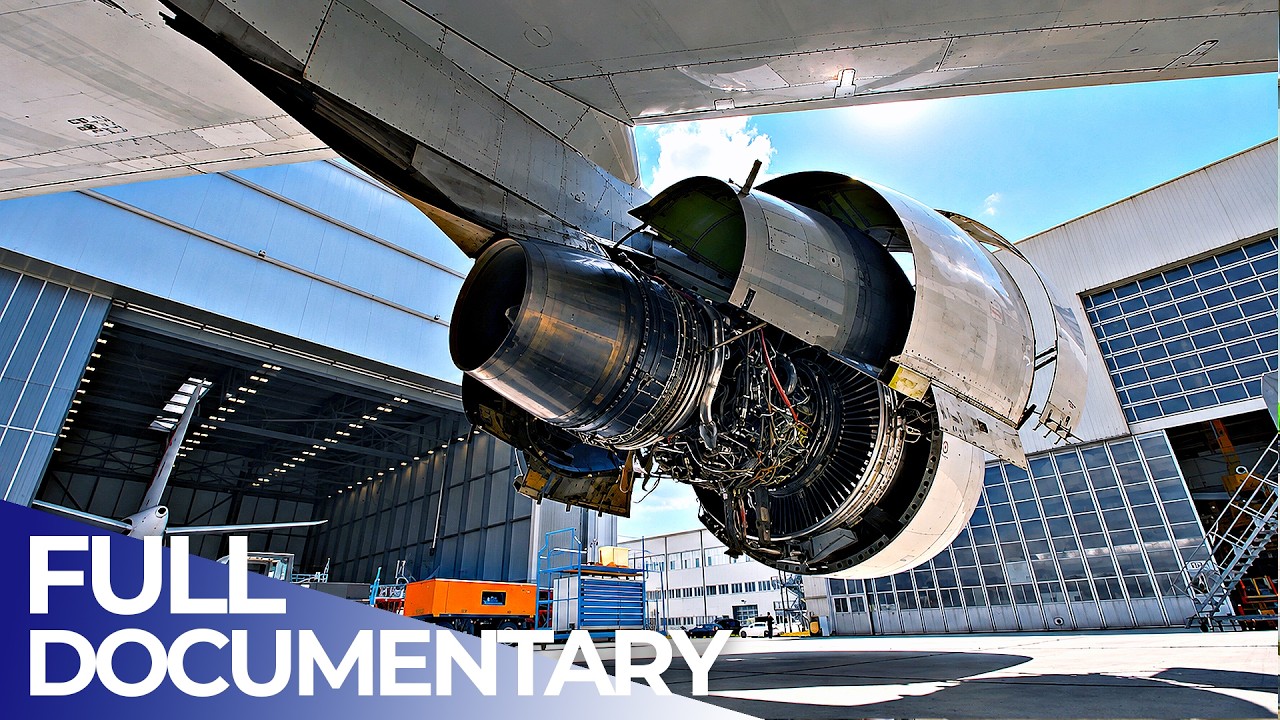
Airbus A330 Mega Conversion: From Passenger Jet to Cargo Plane | FD Engineering
Keywords
Summary
206 words
Critical Evaluation
Value of the Information & Strength of the Argument
The video excels in its detailed visual documentation of a complex engineering procedure, offering unprecedented access to the hangar floor. It explains the structural logic behind each modification—how cutting a 30-square-meter opening in the fuselage requires reinforcement to redistribute loads, why doublers and replacement formers are necessary, and how the new cargo door’s installation is staged to prevent collapse. The argumentation is grounded in specific figures: 62 tons payload, 600 kg door, 3,000 PSI hydraulic pressure, and a conversion cost of $18 million versus $200 million for a new plane. The economic reasoning is compelling, as it contrasts the operational efficiency of converted freighters for short-haul cargo networks. However, the narrative is inherently promotional, focusing on the capabilities of EFW without discussing potential drawbacks or risks extensively. While the experts provide technical justifications, they do not engage with alternative conversion methods or independent performance data. The argumentation is solid within its scope but lacks critical counterpoints, making the video excellent for understanding the ‘how’ but not the ‘why’ from a neutral perspective.
Scientific Rigor, Source Quality, Title Accuracy
The scientific rigor is moderate; the video presents real engineering practices but does not cite external studies or regulatory documents. The main source is EFW’s in-house expertise, which, while credible, is not independently verified. The title matches the content precisely, focusing on the mega conversion and the engineering aspects. The production quality is high, with clear explanations of technical terms, but the absence of references to airworthiness standards (e.g., EASA, FAA) or maintenance manuals limits its scholarly value. The historical segment is accurate but digresses from the core subject. Overall, the content is informative and visually compelling, but it would benefit from citations to technical documentation or industry data to strengthen its authoritative position.
301 words
Title / Content Match
The title accurately reflects the content, as the video comprehensively documents the step-by-step conversion of an Airbus A330 passenger jet into a cargo freighter.
Quality & Reliability
8/10
High technical detail and insider access to EFW Dresden's P2F conversion process, supported by interviews with engineers. However, the content is promotional in nature, relies on company-supplied information, and lacks independent verification or external scientific citations.
Key Moments
Markers derived by PSI from the transcript: the creator did not define chapters.
- Ground crew detects smoke from landing gear on arrival; fire department responds but it turns out to be from heavy braking.
- Scaffolding is erected around the A330; workers begin cutting the fuselage skin with angle grinders and removing the roof section.
- Engine removal procedure: cowlings are lifted off, all lines disconnected, and a six-ton engine is lowered onto a cradle using chain hoists.
- Workers seal 94 windows with aluminum dummy fittings and install insulating mats to manage temperature differences.
- Historical segment covers Dresden's aviation industry, including the B-152 jet and the eventual shutdown of aircraft production in the GDR.
Cited Sources
- Airbus A380 Mega Aircraft - Inside the World’s Biggest Passenger Jet — Referenced in the video description as related content, not directly cited in the documentary.
Contribution & Novelties
This documentary provides an extraordinarily detailed, behind-the-scenes look at passenger-to-freighter (P2F) conversion, a niche but growing sector in aviation. It demystifies the engineering complexities, such as structural reinforcement, and offers real-world context through cost comparisons and operational rationales. The video’s contribution lies in its visual and narrative clarity, making technical procedures accessible to a broad audience. Its originality stems from the unprecedented access to EFW’s Dresden facility, documenting a process rarely shown in such depth.
Pour aller plus loin :
- Cargo aircraft — This article covers the history and types of freighter aircraft, including converted passenger planes, providing background context to the video’s subject.
- Airbus A330 — The base aircraft model, offering specifications, variants, and operational history that complement the conversion discussion.
- Aircraft maintenance — Explains the broader maintenance and inspection procedures, including non-destructive testing methods like X-ray and eddy current, which are mentioned in the video.
- Passenger-to-freighter conversion — A specific article on this process, outlining the typical steps and companies involved, alongside the information presented in the documentary.
170 words
Radar Profile
The radar profile shows high scores in quantity, quality, technical level, and reliability, with quantity at 9 and the others at 8. This indicates a very informative and technically sound production, though it falls short of top scores due to the lack of external corroboration and its promotional undertone. The balance suggests a strong educational value with minor caveats regarding independent verification.