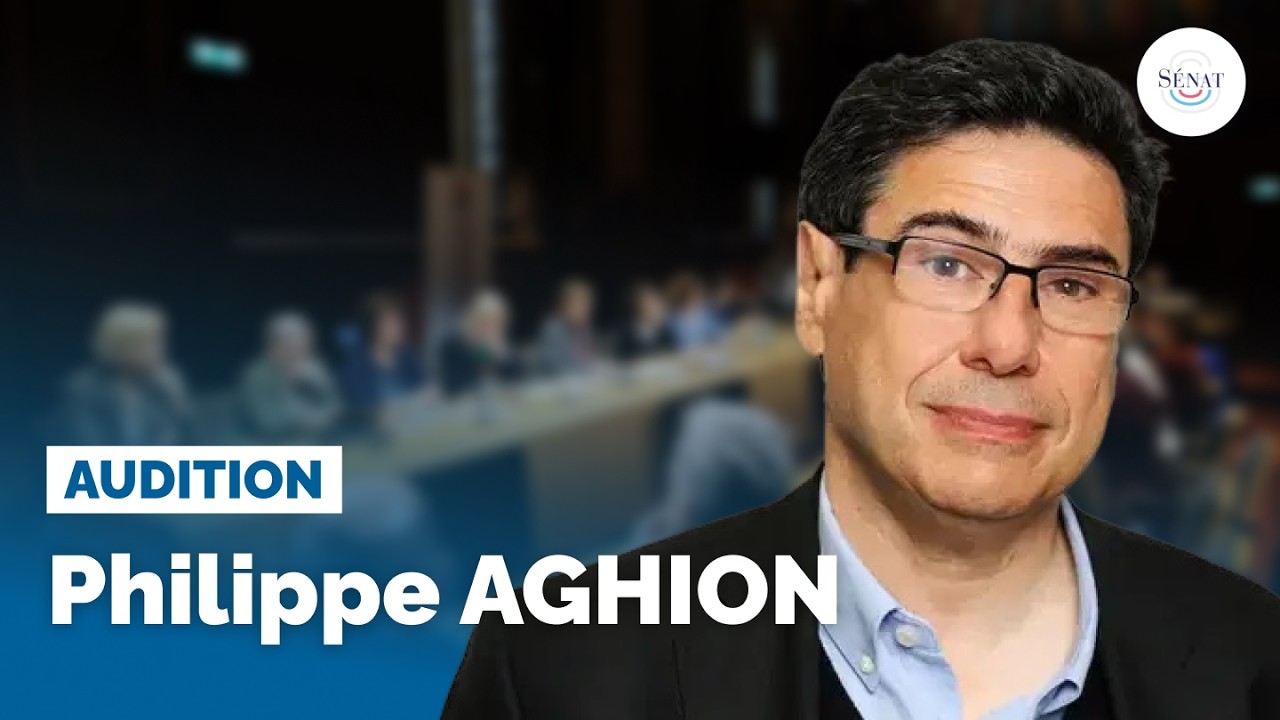
Audition de Philippe Aghion, Prix Nobel d'économie
Audition of Philippe Aghion, Nobel Prize in Economics
Title history
- Audition de Philippe Aghion, Prix Nobel d'économie — observed on 20261120-1039 UTC (YouTube)
Keywords
Summary
179 words
Critical Evaluation
Value of the Information & Strength of the Argument
The value is high as it offers the insights of a leading economist on a critical issue. Aghion’s argumentation builds on his own theoretical work on Schumpeterian growth, connecting it to concrete policy failures in Europe. He provides a coherent framework linking lack of innovation to market fragmentation and inadequate funding. However, his arguments are largely opinion-based, without detailed data or references to empirical studies, aside from anecdotal examples. The reasoning is logical and consistent, though some claims are debatable and would benefit from empirical support.
Scientific Rigor, Source Quality, Title Accuracy
The video itself is a formal Senate hearing, not a peer-reviewed presentation. Aghion references the Draghi and Letta reports and mentions his own academic work, but does not provide specific citations or URLs. The title accurately describes the content, as it is a hearing of Philippe Aghion, Nobel laureate in economics. No external sources are linked in the description, limiting the ability to verify claims independently. The scientific rigor is moderate: the arguments are grounded in recognized economic theory, but the presentation is conversational and lacks systematic evidence. The title is fully adequate.
194 words
Title / Content Match
The title exactly matches the content: a formal hearing of Philippe Aghion, Nobel Prize in Economics.
Quality & Reliability
8/10
The content is presented by a Nobel laureate in economics, with strong theoretical grounding and concrete policy references. However, it is an oral testimony without rigorous citations or data presentation, which slightly limits verifiability.
Key Moments
Markers derived by PSI from the transcript: the creator did not define chapters.
- Introduction of Philippe Aghion by Senate members.
- Aghion begins explaining his Schumpeterian growth theory.
- Diagnosis of Europe's mid-tech trap and innovation decline.
- Discussion of lack of DARPA equivalents and market fragmentation.
- Proposal for a coalition of willing countries and flexicurity policies.
Cited Sources
- Draghi Report — Aghion discusses its recommendations on competitiveness and industrial policy.
- Letta Report — Referenced as a European policy document on the single market.
- Bocconi Report — Mentioned as a third report, likely from Bocconi University, also influential.
- Aghion's Schumpeterian growth theory — His own academic work underlying his arguments.
Contribution & Novelties
The original contribution of this hearing lies in Aghion’s application of his Schumpeterian growth framework to the current European situation, proposing concrete policy changes like European DARPA agencies and a coalition of willing countries. He adds a social dimension by advocating flexicurity, which is underemphasized in official reports.
Pour aller plus loin :
- DARPA — Relevant as Aghion calls for European equivalents.
- Flexicurity — A concept Aghion promotes to protect workers during technological change.
- European Research Council — Aghion suggests extending long-term research funding similar to the ERC.
88 words
Radar Profile
The profile shows high information quantity and quality, moderate technical level, and strong reliability, reflecting a substantive expert presentation.